

How to Spot an Undercover Cop & Unmarked Police Cars
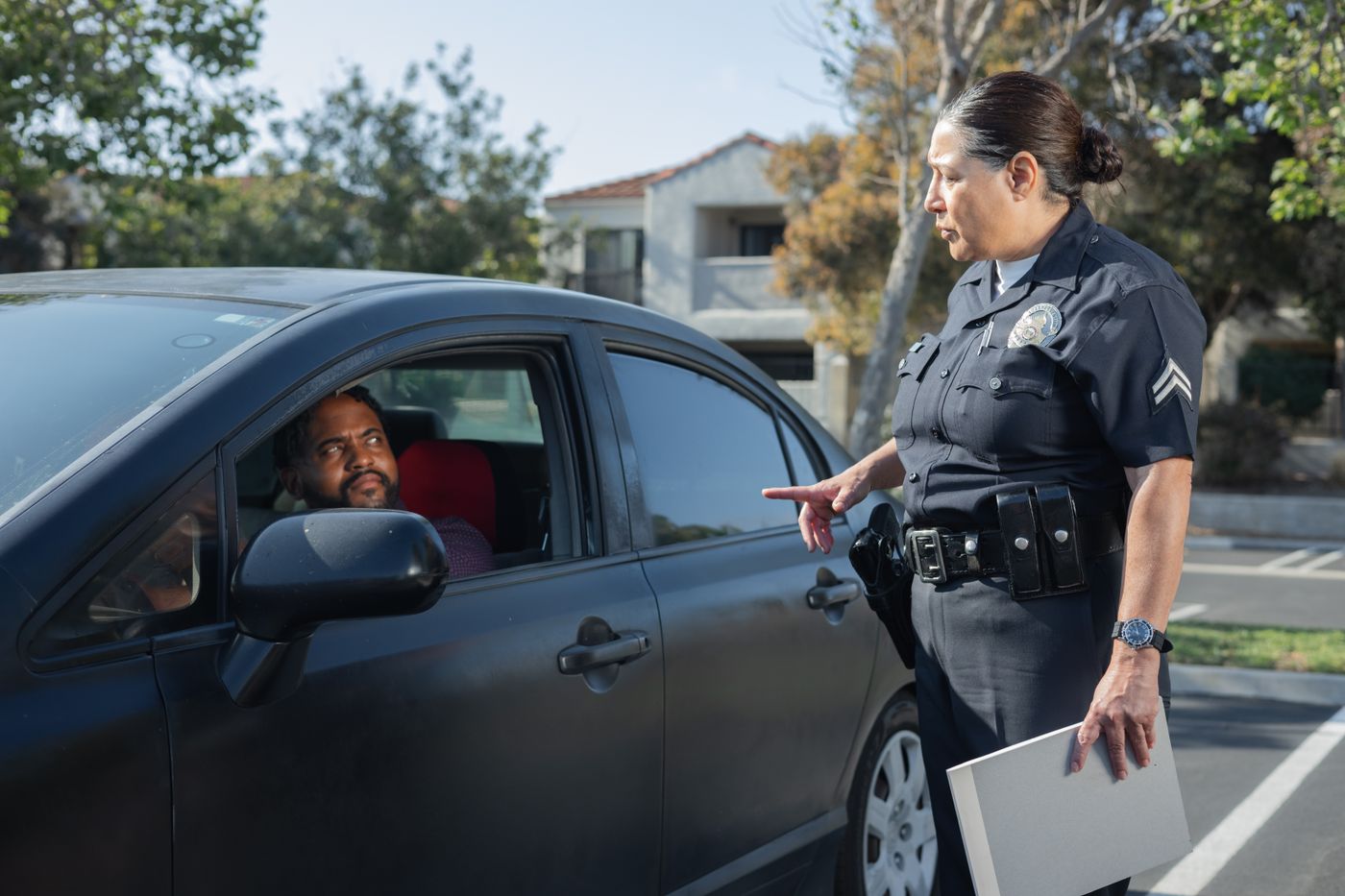 A legitimate stop is verified through official procedure, not by guessing from a vehicle model Photo via Pexels.
People often use “undercover,” “plainclothes,” and “unmarked” as if they mean the same thing, but they describe different things. An undercover officer is concealing law-enforcement identity for an investigation. A plainclothes officer may be performing police work without a standard uniform. An unmarked police vehicle lacks the usual exterior graphics yet may still be equipped and authorized for enforcement. None of these categories can be identified with certainty by a single antenna, wheel style, license plate, light placement, haircut, or behavior.
This guide does not teach readers how to expose undercover personnel, defeat surveillance, or evade a lawful stop. Those actions can endanger officers, informants, bystanders, and the person attempting them. Instead, it explains how to recognize the limits of visual guessing, how legitimate unmarked stops are commonly conducted, how to respond when emergency lights activate, and how to verify an officer through 911 or the agency dispatcher when circumstances genuinely appear suspicious.
Vehicle laws and agency policies differ by state. Some jurisdictions restrict the use of unmarked vehicles for routine traffic enforcement; others permit it. The safest nationwide principle is to acknowledge the signal, reduce speed, turn on hazard lights when appropriate, call 911 hands-free if possible, and follow the dispatcher’s instructions while proceeding to a reasonably safe, public, well-lit location. Do not accelerate, weave, hide, or lead the vehicle on a prolonged route.
Visual clues are best treated as reasons to verify, not proof. Real officers may use ordinary-looking vehicles and plain clothing, while impersonators can buy lights, badges, uniforms, radios, and decals. Dispatch confirmation, official identification, a marked backup unit, and a documented event number provide a stronger basis for safety than internet checklists.
Safety boundary: Do not follow, photograph, confront, identify online, or publish the suspected identity of an undercover officer. If an unmarked vehicle attempts to stop you and you are uncertain, signal that you are complying, call 911, state your exact location and vehicle description, and follow dispatch instructions.
Quick Answer
An undercover officer cannot be reliably “spotted” from appearance alone. An unmarked police car may have concealed emergency lights, government or ordinary plates, communications equipment, extra mirrors, or multiple antennas, but civilians can buy or imitate many of those features. During a stop, slow down, activate hazards, keep doors locked and windows mostly closed until you understand the situation, call 911 to verify, ask for a marked unit if dispatch advises, and keep your hands visible. Challenge an unlawful stop afterward through a lawyer, court, or complaint process rather than by fleeing.
Part 1: Understand What You Are Actually Looking At
1. Separate undercover officers from unmarked patrol vehicles
What to do: Treat “undercover” as an investigative role and “unmarked” as a vehicle description. A detective in plain clothes may arrive in a marked car, while a uniformed traffic officer may use an unmarked unit. Start by identifying the situation—traffic enforcement, emergency response, surveillance, or a later contact—rather than trying to label the person from clothing alone.
Why it matters: The distinction changes the safe response. A person being stopped needs to verify authority and comply safely; a bystander who notices a possible surveillance vehicle generally has no need to investigate or interfere.
Apply it carefully: Do not post photographs, plates, locations, or personal descriptions online. Misidentification can expose an innocent person or compromise a lawful investigation.
Practical standard: During an encounter, the lowest-risk approach is usually to make your intentions visible, avoid sudden movements, and save legal arguments for a safer setting. Compliance with a physical command does not waive the right to challenge the stop, search, arrest, or use of force later.
2. Know why visual “cop car clues” are weak evidence
What to do: Notice concealed grille lights, rear-window lights, push bumpers, partition cages, radios, spotlights, antennas, or heavy-duty wheels only as contextual clues. Many legitimate unmarked units lack several of them, and many civilian or security vehicles can copy them.
Why it matters: A checklist can create false certainty. Vehicle fleets change, agencies rent vehicles, investigators use seized or ordinary vehicles, and technology is increasingly compact.
Apply it carefully: Never approach a parked vehicle to inspect the cabin, photograph equipment at close range, or test whether someone reacts like an officer.
Practical standard: If local rules differ, follow the instruction of the dispatcher or agency with jurisdiction. Keep the focus on immediate safety, then preserve names, badge numbers, vehicle descriptions, video, witness details, and the event number for later review.
3. Recognize that plates vary widely
What to do: Government plates, exempt plates, ordinary passenger plates, temporary plates, and confidential registrations may all appear on law-enforcement vehicles depending on jurisdiction and assignment.
Why it matters: Plate appearance is not a national authentication system. An impersonator may use stolen or fake plates, and a real officer may have an ordinary-looking registration.
Apply it carefully: Give the plate to dispatch when safe, but do not delay the stop while trying to read every character or use an online lookup service.
Practical standard: Do not turn a verification step into evasion. Signal that you are responding, reduce speed, choose a reasonably safe place, and contact emergency dispatch when you genuinely doubt that the person is an officer.
4. Focus on conduct, not demographics
What to do: Evaluate whether the person clearly signals a stop, identifies the agency, explains the reason when appropriate, produces credentials, communicates with dispatch, and follows recognizable procedures.
Why it matters: Race, gender, age, accent, body type, tattoos, hairstyle, or clothing style cannot establish whether someone is an officer. Profiling creates risk and distracts from verifiable behavior.
Apply it carefully: Use neutral language: “I want to verify this stop through dispatch,” not “You do not look like a cop.”
Practical standard: During an encounter, the lowest-risk approach is usually to make your intentions visible, avoid sudden movements, and save legal arguments for a safer setting. Compliance with a physical command does not waive the right to challenge the stop, search, arrest, or use of force later.
Part 2: Respond Safely to an Unmarked Traffic Stop
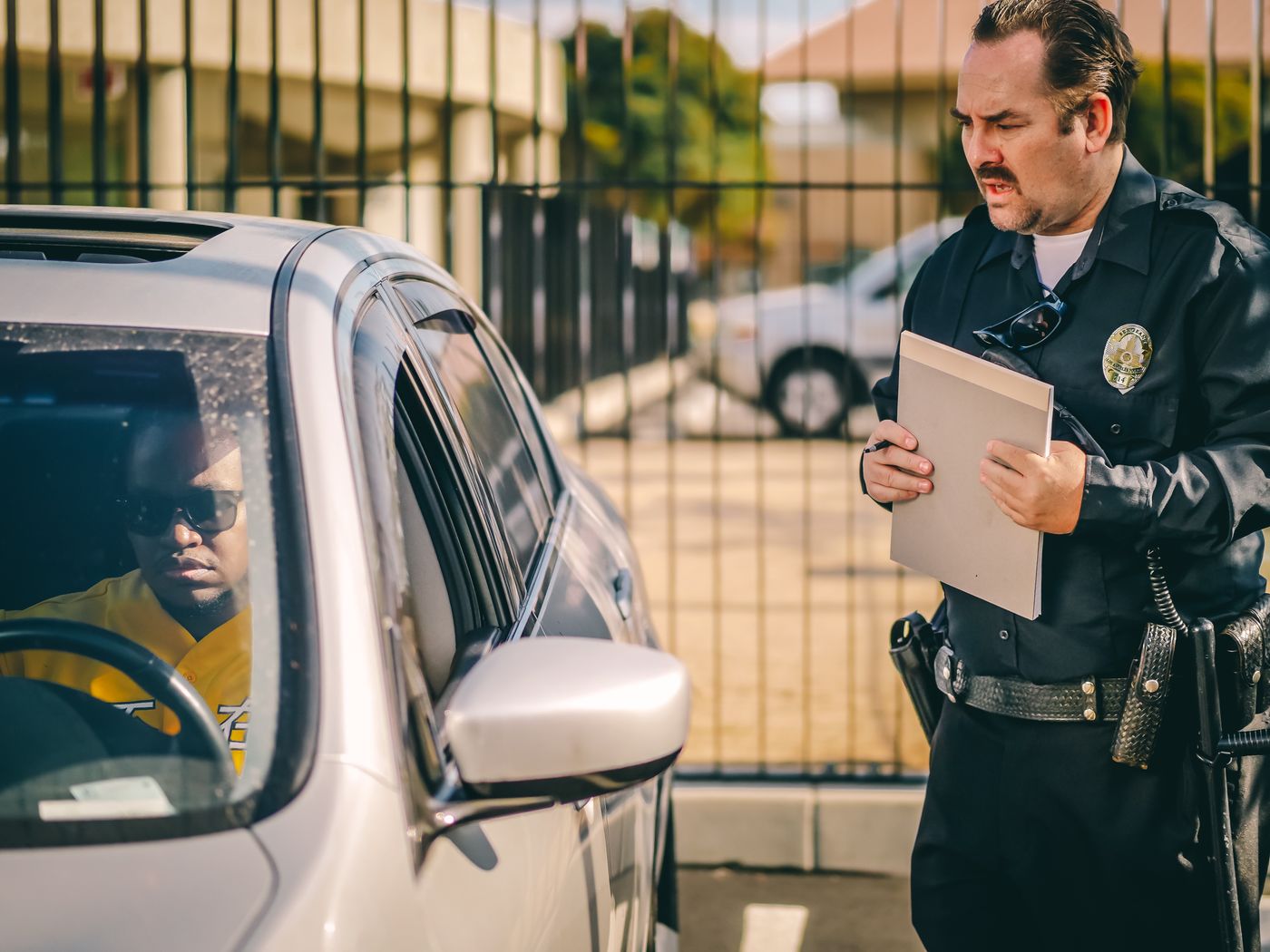 Marked equipment, identification, location, and dispatch verification matter more than stereotypes Photo via Pexels.
5. Acknowledge the emergency signal promptly
What to do: Reduce speed, activate the turn signal or hazard lights, and move toward the nearest location where you can stop safely without creating a traffic hazard. This communicates that you see the vehicle and are not attempting to escape.
Why it matters: A delayed stop may be interpreted as evasion, while an abrupt stop on a blind curve or narrow shoulder can endanger everyone.
Apply it carefully: Do not speed up, make sudden turns, drive home, or lead the vehicle to a distant station unless the dispatcher specifically instructs you.
Practical standard: If local rules differ, follow the instruction of the dispatcher or agency with jurisdiction. Keep the focus on immediate safety, then preserve names, badge numbers, vehicle descriptions, video, witness details, and the event number for later review.
6. Call 911 and describe the situation
What to do: Use hands-free calling when possible. Give your exact road, direction, vehicle description, plate if visible, and tell the dispatcher that an unmarked vehicle is signaling you to stop. Ask whether an officer is conducting a stop at your location.
Why it matters: Emergency dispatch can check active calls, contact nearby units, and send a marked vehicle. A recorded call also demonstrates your intent to comply and verify.
Apply it carefully: Do not hold the phone in violation of driving law, livestream the pursuit, or call friends instead of the proper dispatcher.
Practical standard: Do not turn a verification step into evasion. Signal that you are responding, reduce speed, choose a reasonably safe place, and contact emergency dispatch when you genuinely doubt that the person is an officer.
7. Choose a reasonably safe stopping place
What to do: Prefer a visible shoulder, parking lot, gas station, or other lighted public area that is close enough to show prompt compliance. Stop the vehicle, shift to park, turn off the engine, and remain inside unless instructed otherwise.
Why it matters: Lighting and witnesses can reduce risk, while adequate distance from moving traffic protects both driver and officer.
Apply it carefully: A “safe place” is not a license to continue for many miles. Follow local law and dispatch directions because officers may have safety reasons for choosing the initial location.
Practical standard: During an encounter, the lowest-risk approach is usually to make your intentions visible, avoid sudden movements, and save legal arguments for a safer setting. Compliance with a physical command does not waive the right to challenge the stop, search, arrest, or use of force later.
8. Keep hands visible and announce movements
What to do: Place your hands on the steering wheel, ask passengers to keep hands visible, and say what you are doing before reaching for a license, registration, insurance card, glove compartment, bag, or phone.
Why it matters: Officers cannot immediately know who is inside the vehicle or what an unseen movement means. Visible hands and clear narration reduce uncertainty without surrendering legal rights.
Apply it carefully: Do not reach between seats, under clothing, into a console, or toward a lawful firearm until the officer gives clear instructions.
Practical standard: If local rules differ, follow the instruction of the dispatcher or agency with jurisdiction. Keep the focus on immediate safety, then preserve names, badge numbers, vehicle descriptions, video, witness details, and the event number for later review.
Part 3: Verify the Person Claiming Police Authority
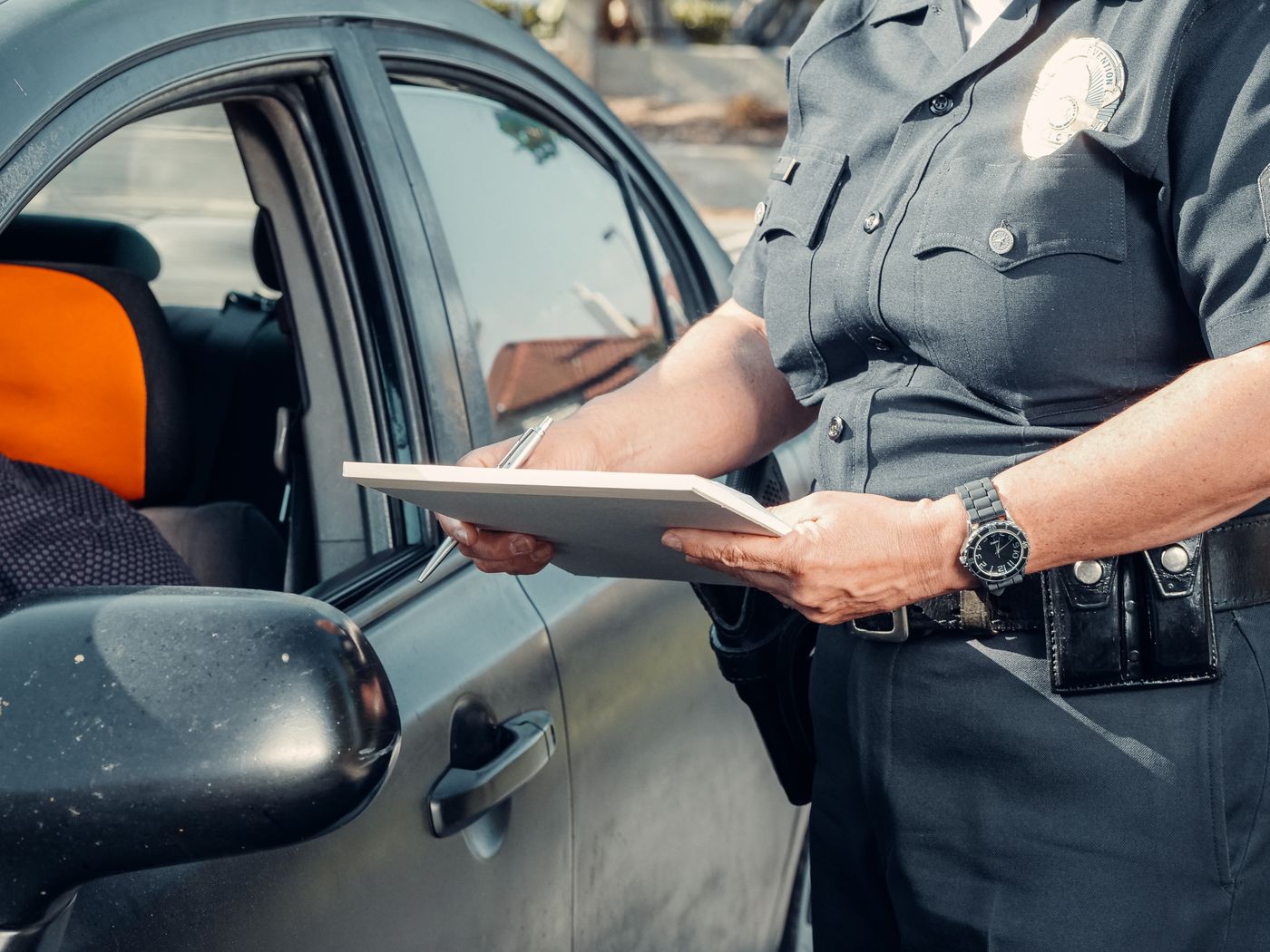 Drivers should signal compliance and choose a safe stopping location without attempting to flee Photo via Pexels.
9. Ask for agency identification calmly
What to do: Request the officer’s name, agency, badge or identification number, and a chance to view official credentials when the person is in plain clothes. Keep the request short and non-confrontational.
Why it matters: Real officers should expect reasonable verification questions, although the exact timing may depend on an active safety situation.
Apply it carefully: A badge alone is not conclusive because replicas can be purchased. Combine identification with dispatch confirmation and the surrounding circumstances.
Practical standard: Do not turn a verification step into evasion. Signal that you are responding, reduce speed, choose a reasonably safe place, and contact emergency dispatch when you genuinely doubt that the person is an officer.
10. Request a marked unit when circumstances are unusual
What to do: If dispatch cannot immediately verify the person, ask whether a marked unit can respond. Remain in the locked vehicle unless the dispatcher or verified officer directs otherwise.
Why it matters: A marked unit provides additional authentication and a safer, documented resolution.
Apply it carefully: Do not use the request as a tactic to refuse every instruction indefinitely. Follow 911 guidance and state law.
Practical standard: During an encounter, the lowest-risk approach is usually to make your intentions visible, avoid sudden movements, and save legal arguments for a safer setting. Compliance with a physical command does not waive the right to challenge the stop, search, arrest, or use of force later.
11. Notice high-risk impersonation behavior
What to do: Treat demands for cash, gift cards, immediate electronic payment, sexual contact, entry into your home without explanation, movement to an isolated place, surrender of passwords, or confiscation of a phone without a clear lawful basis as serious warning signs.
Why it matters: Legitimate fines and court obligations are not normally settled through roadside cash, cryptocurrency, or gift-card payment. Impersonators often create urgency and isolation.
Apply it carefully: Do not argue or attempt a citizen’s arrest. Preserve distance, call 911, and prioritize escape from immediate danger.
Practical standard: If local rules differ, follow the instruction of the dispatcher or agency with jurisdiction. Keep the focus on immediate safety, then preserve names, badge numbers, vehicle descriptions, video, witness details, and the event number for later review.
12. Verify unexpected home or telephone contacts separately
What to do: If someone arrives at your door or calls claiming to be police, do not rely on the number displayed or a phone number they provide. Find the agency’s official published number independently and ask dispatch to verify the officer or case.
Why it matters: Caller ID can be spoofed, and uniforms or badges can be copied. Independent contact breaks the impersonator’s control over the verification channel.
Apply it carefully: Do not reveal Social Security numbers, banking credentials, one-time codes, or the location of a wanted family member merely because the caller sounds authoritative.
Practical standard: Do not turn a verification step into evasion. Signal that you are responding, reduce speed, choose a reasonably safe place, and contact emergency dispatch when you genuinely doubt that the person is an officer.
Part 4: Document and Challenge Problems Afterward
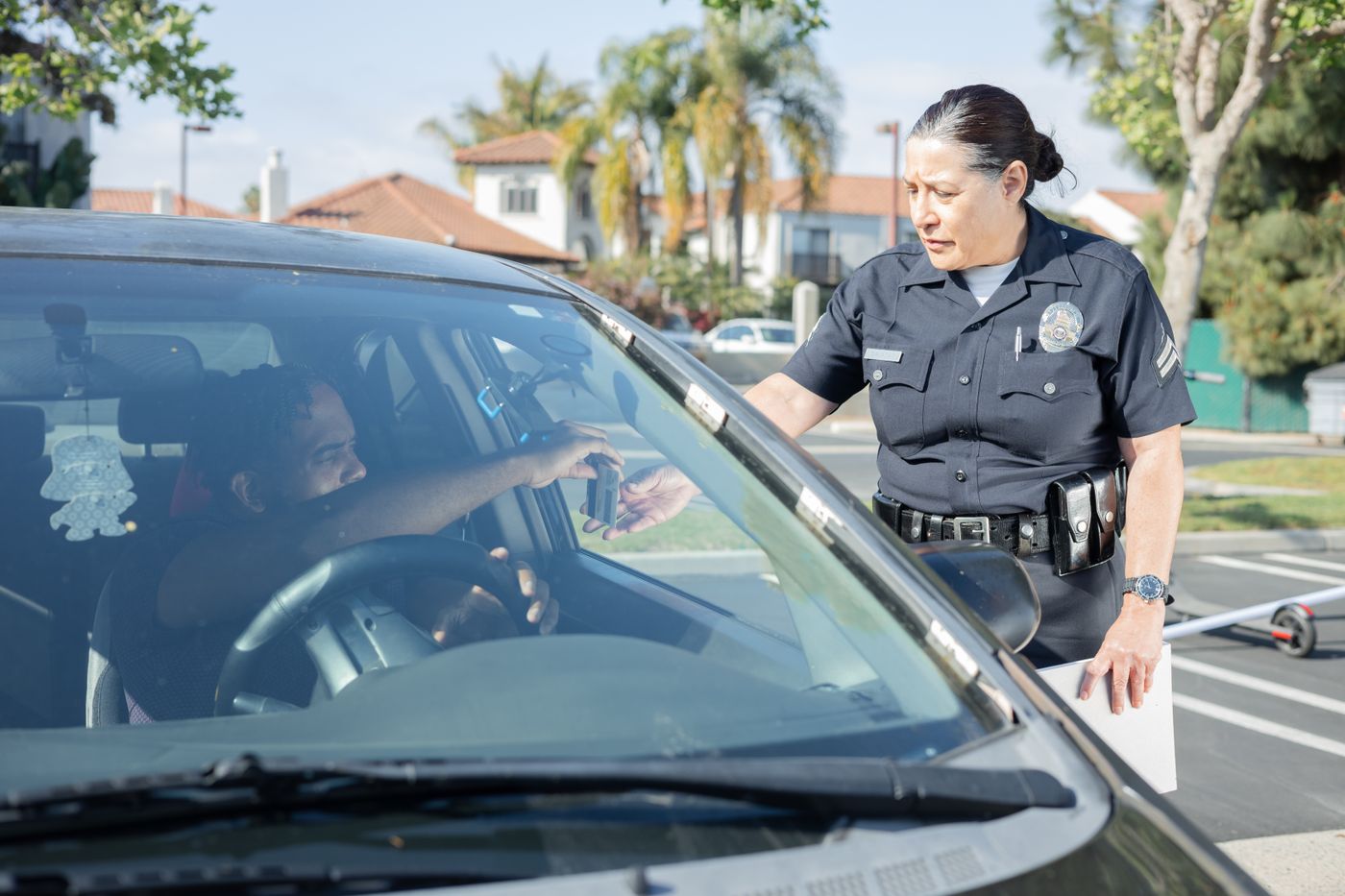 Keep hands visible and explain movements before reaching for documents Photo via Pexels.
13. Preserve objective details
What to do: After the encounter ends, write the time, location, vehicle description, lights used, statements made, officer name, badge number, agency, witness contacts, dispatch call time, and event or report number. Save lawful video and dash-camera footage.
Why it matters: Contemporaneous details are more reliable than memory after stress. They help police identify an impersonator or help counsel evaluate a disputed stop.
Apply it carefully: Do not edit recordings, add dramatic captions, or publish identifying information before investigators can preserve evidence.
Practical standard: During an encounter, the lowest-risk approach is usually to make your intentions visible, avoid sudden movements, and save legal arguments for a safer setting. Compliance with a physical command does not waive the right to challenge the stop, search, arrest, or use of force later.
14. Report suspected impersonation quickly
What to do: Contact the agency with jurisdiction and provide the facts, not a conclusion. If the person displayed a weapon, conducted a stop, demanded money, touched someone, or attempted abduction, tell dispatch clearly.
Why it matters: Impersonators may repeat the conduct with other victims, so vehicle, location, and timing information can be urgent.
Apply it carefully: Do not wait for social-media confirmation or attempt to locate the vehicle yourself.
Practical standard: If local rules differ, follow the instruction of the dispatcher or agency with jurisdiction. Keep the focus on immediate safety, then preserve names, badge numbers, vehicle descriptions, video, witness details, and the event number for later review.
15. Use complaint and court channels for a real officer
What to do: If the stop was verified but you believe the officer violated policy or law, request body-camera preservation, obtain the report, consult a lawyer, contest the citation, or file an internal-affairs or civilian-oversight complaint.
Why it matters: The roadside is a poor place to litigate legality. Formal channels create records and protect the ability to seek review.
Apply it carefully: Meet filing deadlines and preserve the original footage. Avoid threatening the officer or making knowingly false allegations.
Practical standard: Do not turn a verification step into evasion. Signal that you are responding, reduce speed, choose a reasonably safe place, and contact emergency dispatch when you genuinely doubt that the person is an officer.
16. Teach household members one shared plan
What to do: Agree that family members will signal compliance, call 911, move to a nearby safe area, keep hands visible, and avoid confrontation. Store insurance and registration where they can be reached without searching.
Why it matters: A practiced plan reduces panic, especially for young drivers, older adults, disabled drivers, and people who have experienced traumatic police encounters.
Apply it carefully: Adapt the plan for hearing, speech, mobility, autism, language, or medical needs and consider carrying a communication card where lawful.
Practical standard: During an encounter, the lowest-risk approach is usually to make your intentions visible, avoid sudden movements, and save legal arguments for a safer setting. Compliance with a physical command does not waive the right to challenge the stop, search, arrest, or use of force later.
Detailed Planning Worksheets and Advanced Guidance
Deep Dive 1: Build a verification matrix instead of a visual checklist
Purpose and context: Separate observations into vehicle features, person identification, claimed agency, behavior, dispatch confirmation, and independent evidence. A grille light or antenna belongs only in the first column and should never decide the outcome alone. This is most useful when written down before the situation becomes urgent, because stress reduces memory and makes people rely on habit.
Step-by-step method: Write down what you can see without approaching: vehicle make, color, plate, emergency-light color and placement, clothing, badge wording, location, time, and exact commands. Then add what dispatch confirms and whether a marked unit arrives. Review the result for completeness, identify who has authority to act, and set a specific follow-up date instead of leaving the issue open-ended.
Example: A dark SUV uses internal lights at night. The visual column is inconclusive; the driver signals, calls 911, and stops where dispatch directs. Confirmation—not the SUV model—resolves the question. The example is not a universal rule; it shows how to translate the principle into a small, observable action that another person can verify.
Risk control: Do not convert the matrix into a public “undercover spotting guide.” Its purpose is safe verification during direct contact, not identifying surveillance teams or exposing officers. When facts, policy, or safety conditions change, stop and obtain updated instructions rather than forcing the original plan to fit.
Documentation practice: Record facts in chronological order and separate direct observation from assumption. Use official channels, preserve originals, and avoid creating a public accusation before the information is verified.
Deep Dive 2: Use a short 911 verification script
Purpose and context: Prepare one sentence that communicates compliance and concern: “I am driving east on Route 8 near Exit 14. An unmarked black sedan with red and blue lights is signaling me to stop. I have slowed down and turned on hazards. Can you confirm the stop and tell me where to pull over?” This is most useful when written down before the situation becomes urgent, because stress reduces memory and makes people rely on habit.
Step-by-step method: Stay on the line, follow the dispatcher’s location instructions, and describe changes without narrating every fear. If dispatch confirms the unit, stop and place hands in view. If it cannot, ask for marked backup. Review the result for completeness, identify who has authority to act, and set a specific follow-up date instead of leaving the issue open-ended.
Example: A young driver on an isolated road uses the script rather than calling a parent first. The recorded call shows the driver acknowledged the signal and sought immediate official confirmation. The example is not a universal rule; it shows how to translate the principle into a small, observable action that another person can verify.
Risk control: Do not read a long prepared speech while driving. Safety, location, direction, and the vehicle behind you are the essential facts. When facts, policy, or safety conditions change, stop and obtain updated instructions rather than forcing the original plan to fit.
Documentation practice: Record facts in chronological order and separate direct observation from assumption. Use official channels, preserve originals, and avoid creating a public accusation before the information is verified.
Deep Dive 3: Adapt the plan for disability, language, and trauma
Purpose and context: Create a communication card or phone note that briefly states hearing loss, autism, limited English, speech disability, panic response, mobility limits, or a medical condition. Include a request such as “Please give one instruction at a time.” This is most useful when written down before the situation becomes urgent, because stress reduces memory and makes people rely on habit.
Step-by-step method: Tell dispatch about the need before the officer reaches the window when possible. Keep the card in a visible, predictable location and announce before reaching for it. A passenger can interpret only if the officer permits and the arrangement is safe. Review the result for completeness, identify who has authority to act, and set a specific follow-up date instead of leaving the issue open-ended.
Example: A deaf driver points to a dashboard card after receiving permission. The card asks the officer to face the driver and use written instructions. This reduces confusion without requiring the driver to explain under stress. The example is not a universal rule; it shows how to translate the principle into a small, observable action that another person can verify.
Risk control: Never present a card as legal immunity or make a sudden movement to retrieve it. The plan should reduce uncertainty, not create another surprise. When facts, policy, or safety conditions change, stop and obtain updated instructions rather than forcing the original plan to fit.
Documentation practice: Record facts in chronological order and separate direct observation from assumption. Use official channels, preserve originals, and avoid creating a public accusation before the information is verified.
Deep Dive 4: Create an encounter evidence log
Purpose and context: After the stop, record the time, road, direction, reason stated, names, badge numbers, agency, vehicle description, citation or warning, dispatcher call, witnesses, and where video is stored. Preserve the original file before editing or sharing. This is most useful when written down before the situation becomes urgent, because stress reduces memory and makes people rely on habit.
Step-by-step method: Send a written preservation request promptly when body-camera, dash-camera, surveillance, or 911 audio could matter. Retention periods vary, and waiting until a court date can be too late. Review the result for completeness, identify who has authority to act, and set a specific follow-up date instead of leaving the issue open-ended.
Example: A driver disputes whether the unmarked unit used emergency lights. The driver saves dash-camera footage, the 911 call time, and nearby business-camera locations instead of relying on memory. The example is not a universal rule; it shows how to translate the principle into a small, observable action that another person can verify.
Risk control: Do not post an edited accusation first and seek evidence later. Public claims can trigger harassment, complicate witness memory, and make correction harder. When facts, policy, or safety conditions change, stop and obtain updated instructions rather than forcing the original plan to fit.
Documentation practice: Record facts in chronological order and separate direct observation from assumption. Use official channels, preserve originals, and avoid creating a public accusation before the information is verified.
Deep Dive 5: Write a household or workplace unmarked-stop policy
Purpose and context: Families with new drivers and businesses with fleet vehicles should adopt one page of instructions: signal, slow, call 911, stop nearby, remain inside, keep hands visible, verify, and report concerns afterward. Include local agency numbers and disability needs. This is most useful when written down before the situation becomes urgent, because stress reduces memory and makes people rely on habit.
Step-by-step method: Train people with short scenarios rather than fear-based warnings. Review the policy annually because phone laws, agency practices, routes, and emergency systems change. Review the result for completeness, identify who has authority to act, and set a specific follow-up date instead of leaving the issue open-ended.
Example: A delivery company places the policy in each vehicle and instructs drivers not to livestream, pursue suspicious cars, or call dispatchers from unofficial numbers. The example is not a universal rule; it shows how to translate the principle into a small, observable action that another person can verify.
Risk control: A policy must not advise employees to ignore emergency signals or continue to a distant corporate location. Local law and emergency dispatch control the immediate response. When facts, policy, or safety conditions change, stop and obtain updated instructions rather than forcing the original plan to fit.
Documentation practice: Record facts in chronological order and separate direct observation from assumption. Use official channels, preserve originals, and avoid creating a public accusation before the information is verified.
Real-World Scenarios
Scenario 1: A sedan with dashboard lights signals on a rural road
Turn on hazards, reduce speed, call 911, give the road and direction, and ask whether a unit is behind you. Follow dispatch instructions and stop at the nearest reasonably safe location. Do not accelerate toward a distant destination or confront the driver.
Scenario 2: A plainclothes person approaches after a collision
Keep a safe distance, ask which agency they represent, and contact emergency dispatch. A real off-duty or plainclothes officer may be assisting, but you do not need to hand over money, unlock your phone, or enter another vehicle without verification.
Scenario 3: Someone claiming to be a detective calls about a warrant
End the call without providing sensitive data, independently locate the agency’s official number, and ask for the named person or case. Police do not resolve arrest warrants through gift cards, wire transfers, or cryptocurrency payments.
Scenario 4: You later learn the stop was legitimate but believe force was excessive
Seek medical care, preserve clothing and video, write the timeline, request records and body-camera preservation, and consult counsel promptly. Do not alter footage or contact witnesses with a suggested story.
Action Checklist
- Signal that you see the emergency lights
- Reduce speed and choose a nearby safe location
- Call 911 when legitimacy is genuinely uncertain
- Keep doors locked until the situation is understood
- Keep hands visible and narrate movements
- Ask for name, agency, and identification
- Request a marked unit through dispatch when appropriate
- Preserve the event number and objective details
- Report suspected impersonation without pursuing the person
- Use legal and complaint channels after a verified stop
Common Mistakes to Avoid
- Trying to expose or follow suspected undercover officers
- Assuming one antenna, plate, or vehicle model proves police ownership
- Driving for a long distance without signaling compliance
- Relying on a badge or uniform alone
- Paying cash, gift cards, or cryptocurrency to avoid arrest
- Posting plates and faces online before verification
- Reaching suddenly for documents or a weapon
- Arguing the legality of the stop while danger is rising
Frequently Asked Questions
Can an unmarked police car legally pull me over?
It depends on state law and agency policy. Some jurisdictions permit routine traffic enforcement by unmarked units; others restrict it. Signal compliance and verify through 911 rather than assuming the stop is invalid.
Can I drive to a police station before stopping?
Continuing for a long distance can create legal and safety problems. Call 911, explain the concern, acknowledge the signal, and follow the dispatcher’s instruction about the nearest safe place.
Does an officer have to show a badge?
Identification rules vary by jurisdiction and situation. A reasonable request is appropriate, especially for a plainclothes person, but dispatch verification is stronger than visually inspecting a badge.
Are government plates required on unmarked cars?
No universal rule requires one plate style. Confidential or ordinary registration may be used in some assignments.
Should I get out of the car to verify?
Usually remain inside with hands visible unless a verified officer directs you to exit. Exiting unexpectedly can increase risk.
What if 911 cannot confirm the vehicle?
Ask for a marked unit and follow the dispatcher’s instructions. If the person attempts forced entry, abduction, robbery, or assault, clearly state the emergency and move toward immediate safety.
Can I record the encounter?
Recording laws and practical risks vary. Where lawful, recording from a secured device can preserve evidence, but do not make sudden movements or interfere with duties.
What should I do with dash-camera footage?
Save the original file, make a backup, note the time and location, and provide a copy to investigators or counsel without editing the source.
Official and Authoritative Resources
- AAMVA — What to Do When Stopped by Law Enforcement
- Michigan State Police — What to Expect During a Traffic Stop
- Seattle Police — Traffic Stops
- Arizona DPS — Warning About Police Impersonation
- USAGov — Report a Crime
Final Takeaway
You cannot reliably identify an undercover officer from appearance, and you should not attempt to expose one. Treat unmarked-vehicle clues as context, signal compliance, verify through official dispatch, keep movements visible, and use marked backup or formal complaint channels when necessary. The goal is neither blind trust nor roadside confrontation; it is a documented, proportionate process that protects immediate safety and preserves legal options.