

Do Cops Always Touch the Taillight When Pulling People Over?
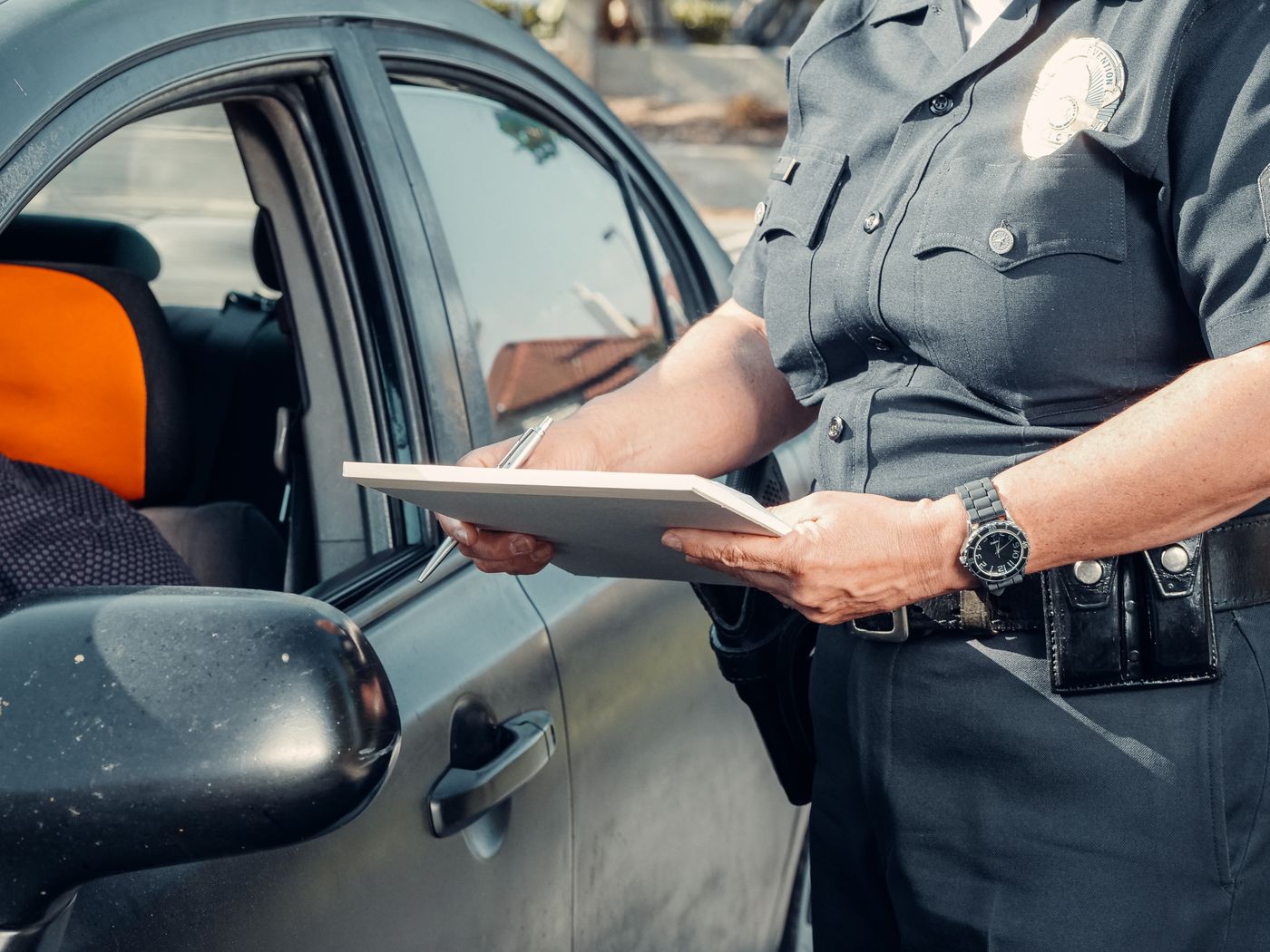 Some officers touch a vehicle during an approach, but it is not a universal requirement Photo via Pexels.
No, police officers do not always touch a taillight, trunk, bumper, or rear panel during a traffic stop. Some officers were trained to make brief contact with a vehicle as they approached, some developed the habit informally, and many never do it. Modern agency tactics may favor passenger-side approaches, staying away from the direct rear of the vehicle, or using body-camera and dash-camera documentation instead.
Several explanations are commonly given. The best-known is that touching the vehicle leaves a fingerprint linking the officer to the car if something later happens. Another is that the officer quickly checks whether the trunk is closed, reducing the possibility that someone could emerge from it. A third is that the tap may alert or momentarily surprise occupants, making concealment or sudden movement harder. These explanations describe historical or individual practices, not one nationwide rule.
Police training differs among departments, and roadside conditions change tactics. A narrow highway shoulder, heavy traffic, darkness, multiple occupants, suspected weapons, vehicle height, weather, and the officer’s position can all change how the approach occurs. Some officers approach from the passenger side because it provides distance from passing traffic and a different view into the vehicle.
For drivers, the presence or absence of a taillight touch has no reliable meaning. It does not prove that the officer is real, that the car is under investigation, that drugs are suspected, or that an arrest is coming. Focus instead on pulling over safely, keeping hands visible, waiting before reaching for documents, and following clear instructions.
Myth versus procedure: The taillight touch is a known practice, but no national rule requires it and no single reason explains every officer’s behavior. Agency policy and modern safety tactics take priority over internet folklore.
Quick Answer
Some officers touch the rear of a stopped vehicle to leave evidence of contact, check the trunk, orient themselves, or follow an old habit. Others do not because cameras already document the stop or because standing directly behind the vehicle can be unsafe. The action is not universal, legally required, or a secret signal. Drivers should not change behavior based on whether it happens.
Part 1: Understand the Traditional Explanations
1. Consider the fingerprint explanation carefully
What to do: The traditional claim is that an officer leaves a fingerprint on the vehicle, creating physical evidence that the officer encountered that specific car. Before widespread cameras and automated records, this could have seemed useful if an officer disappeared or the driver fled.
Why it matters: The explanation is plausible as a historical safety habit and is frequently repeated in training culture.
Apply it carefully: A fingerprint may be smudged, weathered, difficult to recover, or placed on a part that is later touched by others, so it is not a perfect tracking system.
Practical standard: Slang rarely has one documented inventor. Separate what the expression means today from the competing stories about where it began, and do not present a popular internet theory as a proven historical fact.
2. Understand the trunk-check explanation
What to do: A brief push or touch near the trunk can confirm that it is latched rather than slightly open. The theory is that an unlatched trunk could conceal a person or create another hazard during the approach.
Why it matters: Officers assess more than the driver; they consider passengers, hidden areas, traffic, and escape routes.
Apply it carefully: Modern vehicles, hatchbacks, SUVs, pickup trucks, and electronic latches make the exact usefulness different from car to car.
Practical standard: Radio codes vary among agencies, so a code used in one jurisdiction is weak evidence for a nationwide slang origin. Media, music, regional speech, and social networks can spread a term even when its original source is uncertain.
3. Recognize the attention or startle theory
What to do: Some explanations say the tap causes occupants to pause or reveals movement as the officer approaches. A small unexpected sound may interrupt someone attempting to hide an item.
Why it matters: Traffic-stop tactics often seek information about occupants’ hands and behavior before the officer reaches the window.
Apply it carefully: A tap is not evidence that the officer suspects a particular crime. It may simply be habit.
Practical standard: Use the term with awareness of audience and context. A word that functions as casual slang among friends may sound hostile, confusing, or disrespectful in a formal report, courtroom, workplace, or direct police interaction.
4. Include the simple-habit explanation
What to do: An officer may touch the car because an academy instructor taught it, a field-training officer modeled it, or the movement became part of a consistent approach routine.
Why it matters: Repeated physical routines can help professionals remember positioning and observation steps under stress.
Apply it carefully: Do not invent a dramatic meaning for an ordinary habit.
Practical standard: Slang rarely has one documented inventor. Separate what the expression means today from the competing stories about where it began, and do not present a popular internet theory as a proven historical fact.
Part 2: See Why Many Officers Do Not Do It
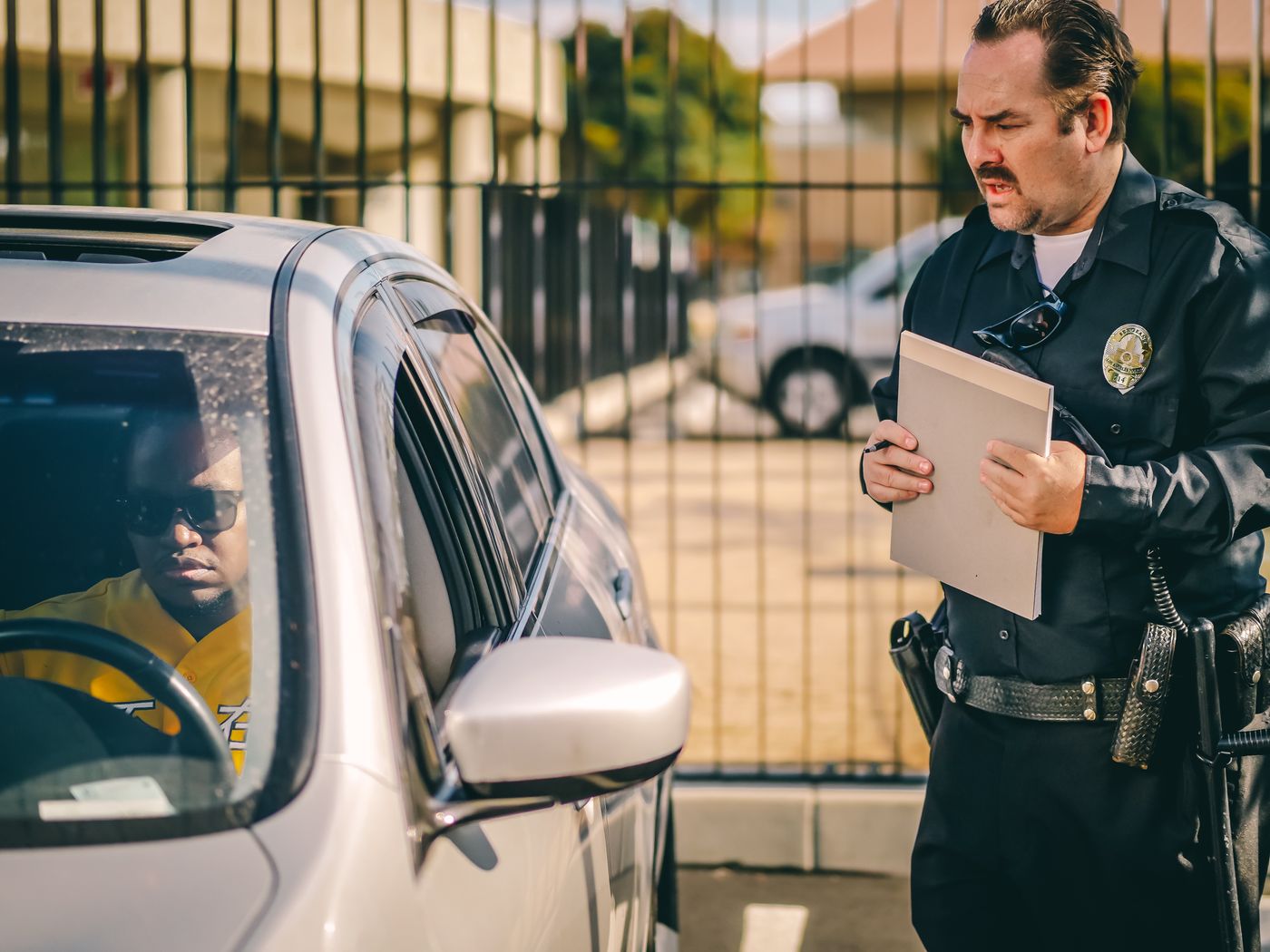 Traffic-stop tactics vary by agency, road, officer, and safety conditions Photo via Pexels.
5. Account for body-worn and dash cameras
What to do: Modern traffic stops are commonly documented by vehicle cameras, body-worn cameras, dispatch logs, automatic vehicle location, license-plate records, and computer-aided dispatch.
Why it matters: These systems provide stronger, time-stamped evidence of which officer stopped which vehicle.
Apply it carefully: Technology can fail or be unavailable, but its presence reduces the unique value of a fingerprint tap.
Practical standard: Radio codes vary among agencies, so a code used in one jurisdiction is weak evidence for a nationwide slang origin. Media, music, regional speech, and social networks can spread a term even when its original source is uncertain.
6. Understand the risk of standing behind a vehicle
What to do: An officer directly behind a car may be vulnerable if the driver reverses, the trunk opens, or another vehicle strikes the stopped car.
Why it matters: Modern training emphasizes positioning, cover, visibility, and traffic hazards.
Apply it carefully: A tactic that was taught historically may be discouraged in a particular agency or road environment.
Practical standard: Use the term with awareness of audience and context. A word that functions as casual slang among friends may sound hostile, confusing, or disrespectful in a formal report, courtroom, workplace, or direct police interaction.
7. Recognize passenger-side approaches
What to do: Some officers approach the passenger side to reduce exposure to passing traffic, observe the cabin differently, or use roadside cover.
Why it matters: The approach side changes whether touching the driver-side taillight would make any sense.
Apply it carefully: Drivers should look toward the officer’s voice rather than assuming the officer will appear at the driver window.
Practical standard: Slang rarely has one documented inventor. Separate what the expression means today from the competing stories about where it began, and do not present a popular internet theory as a proven historical fact.
8. Expect tactics to change with circumstances
What to do: Multiple occupants, tinted windows, a high-risk vehicle, nighttime, road geometry, weather, a reported weapon, or backup position can all change the approach.
Why it matters: Professional tactics are adaptive rather than ceremonial.
Apply it carefully: Do not use one viral video as proof of a universal method.
Practical standard: Radio codes vary among agencies, so a code used in one jurisdiction is weak evidence for a nationwide slang origin. Media, music, regional speech, and social networks can spread a term even when its original source is uncertain.
Part 3: Interpret What the Touch Does and Does Not Mean
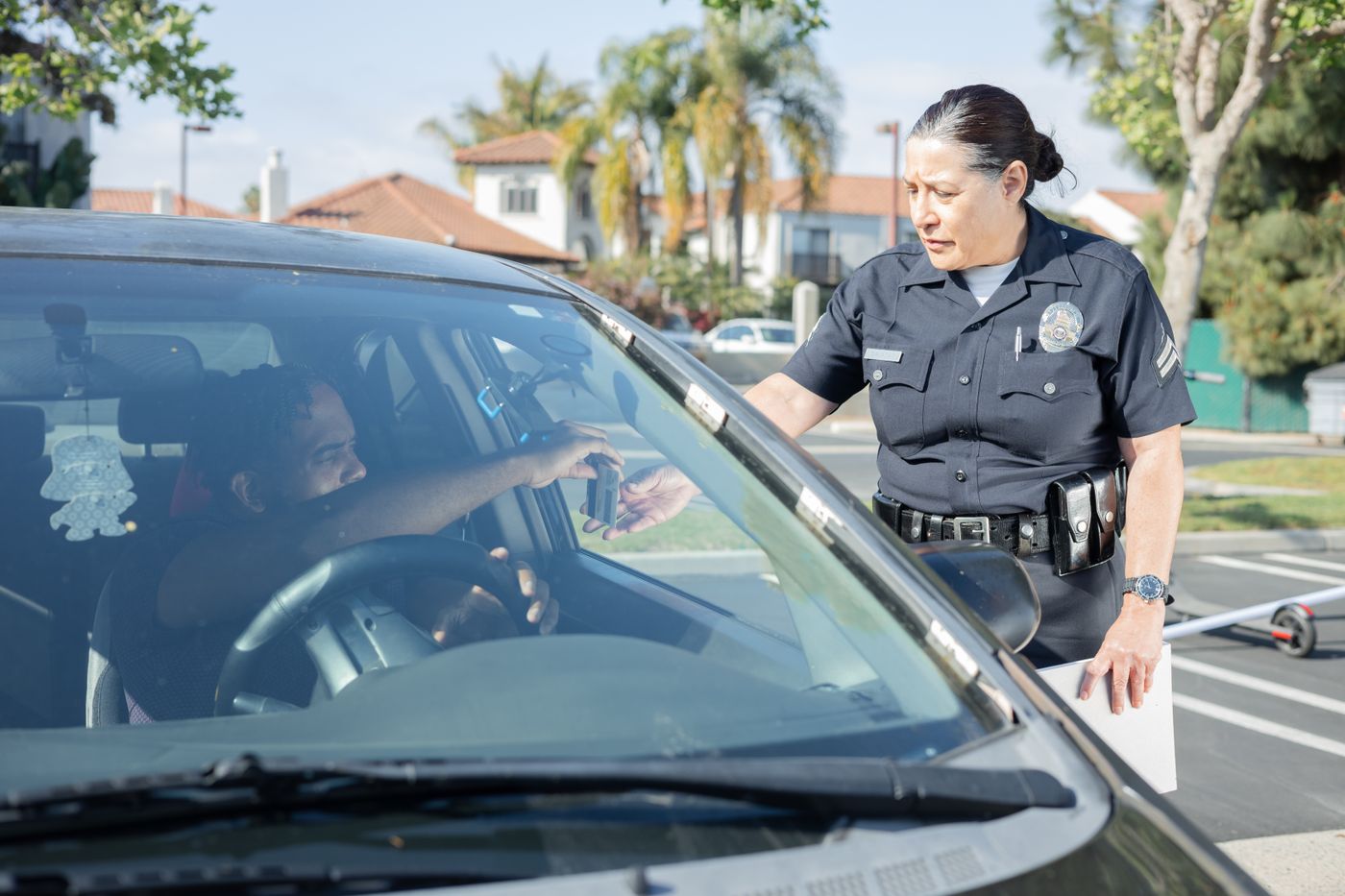 The driver’s safest focus is visible hands and clear communication—not watching for a taillight tap Photo via Pexels.
9. Do not treat the tap as authentication
What to do: A real officer may touch the vehicle or may not. An impersonator could imitate the gesture after watching videos.
Why it matters: Verification comes from emergency lights, agency identification, dispatch, credentials, and official procedure—not one motion.
Apply it carefully: If legitimacy is uncertain, call 911 and follow dispatch instructions.
Practical standard: Use the term with awareness of audience and context. A word that functions as casual slang among friends may sound hostile, confusing, or disrespectful in a formal report, courtroom, workplace, or direct police interaction.
10. Do not assume it means arrest or suspicion
What to do: The touch does not establish that the officer smelled drugs, saw a weapon, plans to search, or intends to arrest.
Why it matters: Many officers use the same approach routine for ordinary speeding warnings and serious investigations.
Apply it carefully: Respond to actual questions and instructions rather than guessing from body language.
Practical standard: Slang rarely has one documented inventor. Separate what the expression means today from the competing stories about where it began, and do not present a popular internet theory as a proven historical fact.
11. Do not inspect or erase the touched area during the stop
What to do: Keep hands visible and avoid getting out to look at the taillight, wiping the car, or reaching behind you.
Why it matters: Unexpected movement can increase confusion and interfere with the stop.
Apply it carefully: After the stop, there is no practical need to preserve a routine touch unless a lawyer or investigator tells you otherwise.
Practical standard: Radio codes vary among agencies, so a code used in one jurisdiction is weak evidence for a nationwide slang origin. Media, music, regional speech, and social networks can spread a term even when its original source is uncertain.
12. Do not argue about the practice roadside
What to do: Whether the officer touched the vehicle has little bearing on the validity of a citation or stop.
Why it matters: Legal challenges focus on reasonable suspicion, probable cause, search authority, evidence, and procedure.
Apply it carefully: Ask for the officer’s name and report information calmly, then raise legal issues through court or counsel.
Practical standard: Use the term with awareness of audience and context. A word that functions as casual slang among friends may sound hostile, confusing, or disrespectful in a formal report, courtroom, workplace, or direct police interaction.
Part 4: Focus on the Driver Behaviors That Matter
 Modern traffic stops use radios, databases, dash cameras, body cameras, and varied approach tactics Photo via Pexels.
13. Pull over in a safe nearby location
What to do: Signal promptly, reduce speed, and stop where both vehicles are reasonably protected from traffic.
Why it matters: The location of a stop is a major safety issue for officers, drivers, passengers, and passing motorists.
Apply it carefully: Do not stop on a blind curve or continue for miles without communicating.
Practical standard: Slang rarely has one documented inventor. Separate what the expression means today from the competing stories about where it began, and do not present a popular internet theory as a proven historical fact.
14. Keep hands visible while the officer approaches
What to do: Place hands on the wheel and ask passengers to keep their hands visible. Wait before retrieving documents.
Why it matters: Visible hands reduce uncertainty regardless of the officer’s chosen approach tactic.
Apply it carefully: Do not turn around repeatedly to watch whether the officer touches the car.
Practical standard: Radio codes vary among agencies, so a code used in one jurisdiction is weak evidence for a nationwide slang origin. Media, music, regional speech, and social networks can spread a term even when its original source is uncertain.
15. Announce movements and document locations
What to do: Say where the license, registration, or insurance is located and wait for permission to reach.
Why it matters: A predictable movement is safer than a sudden search in a console or bag.
Apply it carefully: Do not reach toward a weapon or a container holding both documents and a weapon.
Practical standard: Use the term with awareness of audience and context. A word that functions as casual slang among friends may sound hostile, confusing, or disrespectful in a formal report, courtroom, workplace, or direct police interaction.
16. Evaluate the stop through facts afterward
What to do: If there is a dispute, record the reason stated, citation, officer identity, time, place, statements, and any video.
Why it matters: These facts matter more than a taillight gesture in complaints or court.
Apply it carefully: Do not build a legal claim around a myth that the touch is mandatory.
Practical standard: Slang rarely has one documented inventor. Separate what the expression means today from the competing stories about where it began, and do not present a popular internet theory as a proven historical fact.
Detailed Planning Worksheets and Advanced Guidance
Deep Dive 1: Separate documented practice from folklore
Purpose and context: List each explanation—fingerprint, trunk check, startle, balance, habit—and ask what kind of evidence supports it: academy material, officer interview, policy, or repeated internet claim. This is most useful when written down before the situation becomes urgent, because stress reduces memory and makes people rely on habit.
Step-by-step method: Several explanations can be true for different officers. The error is turning a known habit into one universal official reason. Review the result for completeness, identify who has authority to act, and set a specific follow-up date instead of leaving the issue open-ended.
Example: An officer may say a field trainer taught the tap for orientation, while another department discourages it because of rear-vehicle exposure. The example is not a universal rule; it shows how to translate the principle into a small, observable action that another person can verify.
Risk control: Do not manufacture a single secret meaning because it makes a better headline. When facts, policy, or safety conditions change, stop and obtain updated instructions rather than forcing the original plan to fit.
Evidence practice: Preserve the distinction between documented use, plausible influence, regional memory, and later popular explanation. Uncertainty should be described, not hidden.
Deep Dive 2: Understand how documentation technology changed the context
Purpose and context: Dash cameras, body cameras, computer-aided dispatch, GPS, plate queries, and electronic citations create time-stamped records of the stop. This is most useful when written down before the situation becomes urgent, because stress reduces memory and makes people rely on habit.
Step-by-step method: A physical fingerprint on the car is less central when multiple systems already identify the vehicle, officer, location, and time. Review the result for completeness, identify who has authority to act, and set a specific follow-up date instead of leaving the issue open-ended.
Example: A modern unit activates lights, automatically logs location, and records approach video even when the officer never touches the car. The example is not a universal rule; it shows how to translate the principle into a small, observable action that another person can verify.
Risk control: Technology does not eliminate all evidence gaps, but it changes the practical value of old habits. When facts, policy, or safety conditions change, stop and obtain updated instructions rather than forcing the original plan to fit.
Evidence practice: Preserve the distinction between documented use, plausible influence, regional memory, and later popular explanation. Uncertainty should be described, not hidden.
Deep Dive 3: Analyze the geometry of a safe approach
Purpose and context: Consider traffic lane, shoulder width, barriers, lighting, vehicle height, number of occupants, trunk type, passenger-side access, and available cover. This is most useful when written down before the situation becomes urgent, because stress reduces memory and makes people rely on habit.
Step-by-step method: An officer’s safest route may not pass the driver-side taillight at all. Passenger-side approaches can reduce danger from passing traffic. Review the result for completeness, identify who has authority to act, and set a specific follow-up date instead of leaving the issue open-ended.
Example: On a narrow freeway shoulder, the officer approaches from the passenger side and communicates through that window. The example is not a universal rule; it shows how to translate the principle into a small, observable action that another person can verify.
Risk control: Drivers should not turn or lean suddenly to follow the officer’s movement; listen and keep hands visible. When facts, policy, or safety conditions change, stop and obtain updated instructions rather than forcing the original plan to fit.
Evidence practice: Preserve the distinction between documented use, plausible influence, regional memory, and later popular explanation. Uncertainty should be described, not hidden.
Deep Dive 4: Teach drivers what actually matters
Purpose and context: Replace folklore with a short routine: pull over safely, park, engine off, hands visible, wait to reach, communicate document locations, and ask calm questions. This is most useful when written down before the situation becomes urgent, because stress reduces memory and makes people rely on habit.
Step-by-step method: These actions address the shared risks of traffic, unseen hands, and unclear movement regardless of the officer’s personal habit. Review the result for completeness, identify who has authority to act, and set a specific follow-up date instead of leaving the issue open-ended.
Example: A driver who never notices the rear tap still completes the stop safely because the routine does not depend on interpreting it. The example is not a universal rule; it shows how to translate the principle into a small, observable action that another person can verify.
Risk control: Do not wipe, inspect, or photograph the taillight while the stop is active. When facts, policy, or safety conditions change, stop and obtain updated instructions rather than forcing the original plan to fit.
Evidence practice: Preserve the distinction between documented use, plausible influence, regional memory, and later popular explanation. Uncertainty should be described, not hidden.
Deep Dive 5: Write a myth-checking sidebar
Purpose and context: Use three columns: claim, what is known, and what remains uncertain. Example: “All officers tap”—false; “some were trained to”—true; “the only reason is fingerprints”—unsupported as a universal claim. This is most useful when written down before the situation becomes urgent, because stress reduces memory and makes people rely on habit.
Step-by-step method: This format helps readers retain nuance and reduces the spread of confident misinformation. Review the result for completeness, identify who has authority to act, and set a specific follow-up date instead of leaving the issue open-ended.
Example: A sidebar can also explain that no tap is proof of neither a fake officer nor a policy violation. The example is not a universal rule; it shows how to translate the principle into a small, observable action that another person can verify.
Risk control: Avoid citing anonymous social-media comments as official training standards. When facts, policy, or safety conditions change, stop and obtain updated instructions rather than forcing the original plan to fit.
Evidence practice: Preserve the distinction between documented use, plausible influence, regional memory, and later popular explanation. Uncertainty should be described, not hidden.
How to Evaluate a Traffic-Stop Claim Without Turning Folklore Into Fact
Traffic-stop customs spread quickly because drivers remember unusual details and repeat them as universal rules. A taillight touch is a good example: some officers have used it, some departments have taught it, and many officers never do it at all. To evaluate a claim responsibly, begin with the agency involved. A state patrol, city police department, sheriff’s office, campus police unit, and tribal police agency can use different equipment, training, staffing, and approach tactics. A practice observed in one decade or one jurisdiction should not be presented as a national requirement.
Separate a habit from a legal requirement
A habit is something an officer may choose because it feels useful, familiar, or consistent with prior training. A policy is a written or formally taught agency expectation. A legal requirement comes from a statute, regulation, court ruling, or constitutional rule. The three are not interchangeable. There is no general rule requiring an officer to touch every vehicle’s rear light before speaking with the driver. Likewise, the absence of a touch does not indicate that a stop is fake, unlawful, or incomplete.
Consider how technology changes older explanations
One popular explanation says an officer touches the vehicle to leave fingerprints. That explanation may describe part of the historical logic in some settings, but modern traffic stops are commonly documented through dispatch logs, computer-aided dispatch, body-worn cameras, dashboard cameras, automatic vehicle-location systems, radio traffic, plate queries, and electronic citations. Technology does not eliminate every reason an officer might touch a car, but it makes it misleading to claim that fingerprints are the only or primary way to connect an officer with a stopped vehicle.
Recognize officer-safety reasons without trying to predict tactics
An officer approaching a vehicle may observe whether the trunk or hatch is fully closed, look for movement, assess passengers, choose a driver-side or passenger-side approach, and position the patrol vehicle according to roadway conditions. Those choices are influenced by traffic speed, shoulder width, lighting, weather, number of occupants, reported hazards, and agency training. A driver should not attempt to interpret each movement as a secret signal. The safer focus is to stop in a reasonably safe place, remain in the vehicle unless directed otherwise, keep hands visible, avoid sudden reaching, and communicate before moving toward documents.
Use primary sources when writing or sharing the claim
For a factual article, begin with current agency traffic-stop pages, state driver manuals, training materials released by a public agency, and statements attributable to named officials. Treat anonymous social-media posts, entertainment videos, and “former officer” anecdotes as leads rather than proof. Record the publication date because policies and equipment change. When sources conflict, write that the practice varies rather than choosing the most dramatic version.
Know what the gesture does not prove
A taillight touch does not prove probable cause, justify a search, waive anyone’s rights, identify the driver as dangerous, or determine whether a ticket will be issued. Those questions depend on the reason for the stop, observed conduct, law, consent, warrants, and other facts. If a driver believes a stop was improper, the safer path is to avoid roadside confrontation, note the time and location, preserve video lawfully, request the report or citation record, and use the agency complaint or court process afterward.
The practical lesson is simple: the gesture is an interesting piece of police culture, not a code that drivers need to decode. Reliable information comes from current policy and documented practice, while personal safety comes from calm, visible, predictable conduct during the encounter.
Real-World Scenarios
Scenario 1: The officer walks straight to the window without touching the car
Nothing unusual is established. Keep hands visible and follow the ordinary stop process.
Scenario 2: The officer taps the trunk twice
It may be habit, a trunk check, or a positioning cue. It does not by itself indicate a search or arrest.
Scenario 3: The officer approaches on the passenger side
Turn your attention carefully toward that side, keep hands visible, and avoid leaning suddenly across the cabin.
Scenario 4: A social-media post says every real officer leaves fingerprints
Treat that as an overstatement. Verification should come from dispatch and official identification, not a ritual an impersonator could copy.
Action Checklist
- Remember the practice is optional
- Separate historical explanations from current policy
- Do not treat the touch as proof of authenticity
- Expect passenger-side or varied approaches
- Keep hands visible
- Wait before reaching for documents
- Focus on instructions rather than folklore
- Preserve meaningful facts if disputing the stop
Common Mistakes to Avoid
- Claiming every officer must touch the taillight
- Assuming no touch means a fake officer
- Assuming a touch means drugs or arrest
- Turning around or exiting to inspect the car
- Wiping the area during the stop
- Ignoring modern cameras and dispatch records
- Treating one department’s practice as national policy
- Using the myth as a legal defense
Frequently Asked Questions
Do all police academies teach the taillight touch?
No. Training varies, and some modern tactics may discourage standing directly behind the vehicle.
Is the main reason to leave fingerprints?
That is the most repeated explanation, but trunk checking, attention, positioning, and habit are also cited. No single reason applies universally.
Do body cameras make the practice unnecessary?
Cameras and dispatch records provide better documentation, though individual officers may still retain the habit.
Does a touch mean the officer will search the car?
No. The gesture alone does not establish suspicion, consent, probable cause, or a search decision.
Can a driver feel the tap?
Sometimes, but many touches are too light to notice inside the vehicle.
Should I mention the tap to the officer?
There is usually no reason. Focus on the stop and ask relevant questions calmly.
Why approach from the passenger side?
It can reduce exposure to traffic and give the officer a different view into the vehicle.
Can an impersonator copy the behavior?
Yes. A gesture cannot authenticate a person claiming police authority; use dispatch verification.
Official and Authoritative Resources
- AAMVA — What to Do When Stopped by Law Enforcement
- Office of Justice Programs — Traffic Stop Safety
- Michigan State Police — What to Expect During a Traffic Stop
- Seattle Police — Traffic Stops
Final Takeaway
The taillight touch is a real but non-universal police habit with several plausible explanations. Modern equipment, agency policy, passenger-side approaches, and roadway risks mean many officers do not use it. Drivers gain nothing from decoding the gesture; safe stopping, visible hands, clear movements, and accurate post-stop documentation matter far more.