

Last reviewed: August 2026
How to Write a Character Affidavit for Child Custody
Create a truthful, specific custody affidavit based on firsthand observations rather than generic praise, hearsay, or attacks on the other parent.
Family-law paperwork often fails for a simple reason: the writer starts with a template before identifying the legal purpose, the correct court, and the facts that must be proved. This guide takes the opposite approach. It is designed for relatives, neighbors, teachers, coaches, caregivers, and other witnesses asked to provide a sworn statement in a custody case. The objective is to prepare a credible affidavit that explains the witness’s foundation, observations, and relevance to the child’s best interests.
Important legal notice: This article provides general educational information for the United States and is not legal advice. Guardianship and custody rules vary by state, county, case type, and existing court order. An affidavit is sworn evidence. False or reckless statements can expose the signer to penalties, cross-examination, credibility damage, and harm to the child. The witness should never sign language written to say things the witness does not personally know. Use the official website of the court with jurisdiction and obtain advice from a licensed family-law attorney or legal-aid organization when safety, interstate jurisdiction, contested parentage, abuse, relocation, immigration, or major property is involved.
 A county courthouse exterior. Image credit: Montross courthouse, public domain via Wikimedia Commons.
Quick answer
The safest method is to begin with the official court or agency requirements, identify the exact legal authority or decision you need, build a dated record from firsthand facts, use the mandatory form when one exists, and treat any personal letter or supporting statement as evidence—not as a substitute for a court order. Keep the child’s safety, stability, education, health, and important relationships at the center of every paragraph.
Before you begin: build a one-page case map
Create a private one-page map before drafting or filing anything. List the child’s full legal name, current residence, parents and legal custodians, all existing case numbers, the court that issued each order, the precise result requested, the next known deadline, and the people who must receive notice. This map is not necessarily filed; it is an error-prevention tool.
Next, separate your materials into four folders: authority (orders and statutes), identity (names and relationships), facts (chronology and observations), and procedure (forms, filing, service, and deadlines). Never place original identity records or irreplaceable certified orders into a packet that may be mailed away unless the receiving office specifically requires the original.
- Write the exact question you need the court or institution to answer.
- Confirm whether an existing order already addresses that question.
- Find the official form and local instructions before writing a narrative.
- List the facts you know personally and separate them from information reported by others.
- Plan how confidential details will be redacted, sealed, or submitted on protected forms.
Step 1: Confirm that an affidavit is permitted and useful
Why this matters: Some courts prefer live testimony, declarations on official forms, or limited exhibits. This step establishes the foundation for everything that follows. In family-law matters, the reader usually has limited time and must distinguish facts, legal authority, and requested action. A precise approach reduces misunderstandings and helps the next person verify the information rather than guessing what the writer intended.
How to do it: Ask the requesting attorney or party how the affidavit will be used and read the local rules for format, deadlines, notarization, and page limits. Work from official instructions and the current order before adapting sample language. Write down the source of each important fact, use calendar dates when possible, and mark any point that still needs confirmation. If a fact is uncertain, say that it is uncertain instead of making the sentence sound more definite than the evidence allows.
What to collect: Case caption, issue, hearing date, and exact filing requirement. Keep the original records unchanged and create working copies for highlighting or redaction. Name digital files consistently—for example, 2026-03-12-school-attendance-record.pdf—and maintain a simple exhibit index showing the date, source, and fact each item supports. This small organizational step makes review easier and limits accidental disclosure of irrelevant private information.
Common mistake to avoid: Writing a lengthy affidavit without knowing whether the court accepts it may waste effort. Courts and agencies respond better to a clear record than to volume. One reliable document tied to a specific statement is normally more useful than twenty pages of unorganized material. Do not alter screenshots, crop away context that changes meaning, or sign a statement that contains a claim you cannot truthfully defend under questioning.
Practical checkpoint: Before moving on, be able to answer three questions in one sentence each: What fact am I establishing? How do I personally know it? What document or witness can verify it?
Step 2: Protect your independence as a witness
Why this matters: A useful character witness is not merely repeating a parent’s litigation narrative. This is where a strong case or document becomes distinguishable from a generic internet template. In family-law matters, the reader usually has limited time and must distinguish facts, legal authority, and requested action. A precise approach reduces misunderstandings and helps the next person verify the information rather than guessing what the writer intended.
How to do it: Draft from your own memory and records. Ask for context, not a script. Refuse statements you cannot verify. Work from official instructions and the current order before adapting sample language. Write down the source of each important fact, use calendar dates when possible, and mark any point that still needs confirmation. If a fact is uncertain, say that it is uncertain instead of making the sentence sound more definite than the evidence allows.
What to collect: Your own observations, dates, and relationship to the family. Keep the original records unchanged and create working copies for highlighting or redaction. Name digital files consistently—for example, 2026-03-12-school-attendance-record.pdf—and maintain a simple exhibit index showing the date, source, and fact each item supports. This small organizational step makes review easier and limits accidental disclosure of irrelevant private information.
Common mistake to avoid: Allowing a party to dictate your facts can make the affidavit appear biased or false. Courts and agencies respond better to a clear record than to volume. One reliable document tied to a specific statement is normally more useful than twenty pages of unorganized material. Do not alter screenshots, crop away context that changes meaning, or sign a statement that contains a claim you cannot truthfully defend under questioning.
Practical checkpoint: Before moving on, be able to answer three questions in one sentence each: What fact am I establishing? How do I personally know it? What document or witness can verify it?
Step 3: Establish your identity and foundation
Why this matters: The court must understand who you are and why you had an opportunity to observe parenting. The practical objective here is accuracy, not legal-sounding language. In family-law matters, the reader usually has limited time and must distinguish facts, legal authority, and requested action. A precise approach reduces misunderstandings and helps the next person verify the information rather than guessing what the writer intended.
How to do it: State your occupation where relevant, relationship to the child and adults, length of acquaintance, frequency of contact, and settings in which you observed them. Work from official instructions and the current order before adapting sample language. Write down the source of each important fact, use calendar dates when possible, and mark any point that still needs confirmation. If a fact is uncertain, say that it is uncertain instead of making the sentence sound more definite than the evidence allows.
What to collect: Regular school, neighborhood, family, activity, or caregiving contact. Keep the original records unchanged and create working copies for highlighting or redaction. Name digital files consistently—for example, 2026-03-12-school-attendance-record.pdf—and maintain a simple exhibit index showing the date, source, and fact each item supports. This small organizational step makes review easier and limits accidental disclosure of irrelevant private information.
Common mistake to avoid: A title or profession does not automatically make opinions outside your expertise admissible. Courts and agencies respond better to a clear record than to volume. One reliable document tied to a specific statement is normally more useful than twenty pages of unorganized material. Do not alter screenshots, crop away context that changes meaning, or sign a statement that contains a claim you cannot truthfully defend under questioning.
Practical checkpoint: Before moving on, be able to answer three questions in one sentence each: What fact am I establishing? How do I personally know it? What document or witness can verify it?
 An adult signing important family legal documents. Image credit: Signing family-related papers, Pexels.
Step 4: Identify the custody issue narrowly
Why this matters: Character is relevant only insofar as it connects to parenting and the child’s welfare. Treat this stage as a quality-control checkpoint rather than a formality. In family-law matters, the reader usually has limited time and must distinguish facts, legal authority, and requested action. A precise approach reduces misunderstandings and helps the next person verify the information rather than guessing what the writer intended.
How to do it: Learn whether the dispute concerns routine care, safety, communication, school, exchanges, substance use, domestic violence, relocation, or another issue. Work from official instructions and the current order before adapting sample language. Write down the source of each important fact, use calendar dates when possible, and mark any point that still needs confirmation. If a fact is uncertain, say that it is uncertain instead of making the sentence sound more definite than the evidence allows.
What to collect: The specific factual question the affidavit can genuinely illuminate. Keep the original records unchanged and create working copies for highlighting or redaction. Name digital files consistently—for example, 2026-03-12-school-attendance-record.pdf—and maintain a simple exhibit index showing the date, source, and fact each item supports. This small organizational step makes review easier and limits accidental disclosure of irrelevant private information.
Common mistake to avoid: A broad statement that one parent ‘deserves custody’ may invade the judge’s role and offer little evidence. Courts and agencies respond better to a clear record than to volume. One reliable document tied to a specific statement is normally more useful than twenty pages of unorganized material. Do not alter screenshots, crop away context that changes meaning, or sign a statement that contains a claim you cannot truthfully defend under questioning.
Practical checkpoint: Before moving on, be able to answer three questions in one sentence each: What fact am I establishing? How do I personally know it? What document or witness can verify it?
Step 5: Create an observation log
Why this matters: Specific examples are more persuasive than adjectives. This stage turns a broad concern into information a court, clerk, lawyer, school, or agency can actually use. In family-law matters, the reader usually has limited time and must distinguish facts, legal authority, and requested action. A precise approach reduces misunderstandings and helps the next person verify the information rather than guessing what the writer intended.
How to do it: List dates or approximate periods, location, people present, what the parent did, and the child’s observable response. Work from official instructions and the current order before adapting sample language. Write down the source of each important fact, use calendar dates when possible, and mark any point that still needs confirmation. If a fact is uncertain, say that it is uncertain instead of making the sentence sound more definite than the evidence allows.
What to collect: Repeated patterns and representative incidents. Keep the original records unchanged and create working copies for highlighting or redaction. Name digital files consistently—for example, 2026-03-12-school-attendance-record.pdf—and maintain a simple exhibit index showing the date, source, and fact each item supports. This small organizational step makes review easier and limits accidental disclosure of irrelevant private information.
Common mistake to avoid: Do not manufacture exact dates if you remember only a month or season; state uncertainty honestly. Courts and agencies respond better to a clear record than to volume. One reliable document tied to a specific statement is normally more useful than twenty pages of unorganized material. Do not alter screenshots, crop away context that changes meaning, or sign a statement that contains a claim you cannot truthfully defend under questioning.
Practical checkpoint: Before moving on, be able to answer three questions in one sentence each: What fact am I establishing? How do I personally know it? What document or witness can verify it?
Step 6: Describe positive parenting behavior concretely
Why this matters: Show qualities through actions. This step establishes the foundation for everything that follows. In family-law matters, the reader usually has limited time and must distinguish facts, legal authority, and requested action. A precise approach reduces misunderstandings and helps the next person verify the information rather than guessing what the writer intended.
How to do it: Explain examples of supervision, patience, school involvement, medical follow-through, age-appropriate discipline, emotional support, and encouragement of safe relationships. Work from official instructions and the current order before adapting sample language. Write down the source of each important fact, use calendar dates when possible, and mark any point that still needs confirmation. If a fact is uncertain, say that it is uncertain instead of making the sentence sound more definite than the evidence allows.
What to collect: Who did what, how often, and what you personally saw. Keep the original records unchanged and create working copies for highlighting or redaction. Name digital files consistently—for example, 2026-03-12-school-attendance-record.pdf—and maintain a simple exhibit index showing the date, source, and fact each item supports. This small organizational step makes review easier and limits accidental disclosure of irrelevant private information.
Common mistake to avoid: Words such as loving, responsible, or amazing require factual support. Courts and agencies respond better to a clear record than to volume. One reliable document tied to a specific statement is normally more useful than twenty pages of unorganized material. Do not alter screenshots, crop away context that changes meaning, or sign a statement that contains a claim you cannot truthfully defend under questioning.
Practical checkpoint: Before moving on, be able to answer three questions in one sentence each: What fact am I establishing? How do I personally know it? What document or witness can verify it?
Step 7: Describe concerns with the same precision
Why this matters: Negative facts require extra care because they can seriously affect a family. This is where a strong case or document becomes distinguishable from a generic internet template. In family-law matters, the reader usually has limited time and must distinguish facts, legal authority, and requested action. A precise approach reduces misunderstandings and helps the next person verify the information rather than guessing what the writer intended.
How to do it: State behavior, not labels. Record exact threats or impairment only if personally observed, identify dates, and explain what action you took. Work from official instructions and the current order before adapting sample language. Write down the source of each important fact, use calendar dates when possible, and mark any point that still needs confirmation. If a fact is uncertain, say that it is uncertain instead of making the sentence sound more definite than the evidence allows.
What to collect: Firsthand incidents and lawfully obtained documents. Keep the original records unchanged and create working copies for highlighting or redaction. Name digital files consistently—for example, 2026-03-12-school-attendance-record.pdf—and maintain a simple exhibit index showing the date, source, and fact each item supports. This small organizational step makes review easier and limits accidental disclosure of irrelevant private information.
Common mistake to avoid: Do not diagnose addiction, abuse, or mental illness unless qualified and based on authorized professional work. Courts and agencies respond better to a clear record than to volume. One reliable document tied to a specific statement is normally more useful than twenty pages of unorganized material. Do not alter screenshots, crop away context that changes meaning, or sign a statement that contains a claim you cannot truthfully defend under questioning.
Practical checkpoint: Before moving on, be able to answer three questions in one sentence each: What fact am I establishing? How do I personally know it? What document or witness can verify it?
 Parents supporting a child during study time at home. Image credit: Parents helping a child study, Pexels.
Step 8: Distinguish fact from opinion
Why this matters: Lay witnesses may offer limited opinions grounded in perception, but rules vary. The practical objective here is accuracy, not legal-sounding language. In family-law matters, the reader usually has limited time and must distinguish facts, legal authority, and requested action. A precise approach reduces misunderstandings and helps the next person verify the information rather than guessing what the writer intended.
How to do it: Use phrases such as ‘I observed’ for facts and identify the factual basis before any conclusion. Leave legal conclusions to the court. Work from official instructions and the current order before adapting sample language. Write down the source of each important fact, use calendar dates when possible, and mark any point that still needs confirmation. If a fact is uncertain, say that it is uncertain instead of making the sentence sound more definite than the evidence allows.
What to collect: Clear separation between events and your interpretation. Keep the original records unchanged and create working copies for highlighting or redaction. Name digital files consistently—for example, 2026-03-12-school-attendance-record.pdf—and maintain a simple exhibit index showing the date, source, and fact each item supports. This small organizational step makes review easier and limits accidental disclosure of irrelevant private information.
Common mistake to avoid: Saying a parent is ‘unfit’ is a legal conclusion and may be unsupported. Courts and agencies respond better to a clear record than to volume. One reliable document tied to a specific statement is normally more useful than twenty pages of unorganized material. Do not alter screenshots, crop away context that changes meaning, or sign a statement that contains a claim you cannot truthfully defend under questioning.
Practical checkpoint: Before moving on, be able to answer three questions in one sentence each: What fact am I establishing? How do I personally know it? What document or witness can verify it?
Step 9: Avoid hearsay traps
Why this matters: Statements made outside court can be restricted, though exceptions may apply. Treat this stage as a quality-control checkpoint rather than a formality. In family-law matters, the reader usually has limited time and must distinguish facts, legal authority, and requested action. A precise approach reduces misunderstandings and helps the next person verify the information rather than guessing what the writer intended.
How to do it: Focus on conduct you saw. If a statement is essential, quote it accurately, identify the speaker and context, and let the court decide admissibility. Work from official instructions and the current order before adapting sample language. Write down the source of each important fact, use calendar dates when possible, and mark any point that still needs confirmation. If a fact is uncertain, say that it is uncertain instead of making the sentence sound more definite than the evidence allows.
What to collect: Short, relevant statements connected to an event. Keep the original records unchanged and create working copies for highlighting or redaction. Name digital files consistently—for example, 2026-03-12-school-attendance-record.pdf—and maintain a simple exhibit index showing the date, source, and fact each item supports. This small organizational step makes review easier and limits accidental disclosure of irrelevant private information.
Common mistake to avoid: Repeating what the child or another adult allegedly said can create evidentiary and safety concerns. Courts and agencies respond better to a clear record than to volume. One reliable document tied to a specific statement is normally more useful than twenty pages of unorganized material. Do not alter screenshots, crop away context that changes meaning, or sign a statement that contains a claim you cannot truthfully defend under questioning.
Practical checkpoint: Before moving on, be able to answer three questions in one sentence each: What fact am I establishing? How do I personally know it? What document or witness can verify it?
Step 10: Address bias and limits candidly
Why this matters: Honesty about relationships increases credibility. This stage turns a broad concern into information a court, clerk, lawyer, school, or agency can actually use. In family-law matters, the reader usually has limited time and must distinguish facts, legal authority, and requested action. A precise approach reduces misunderstandings and helps the next person verify the information rather than guessing what the writer intended.
How to do it: Disclose if you are related, employed by a party, socially close, estranged, or have a dispute. State what you did not observe. Work from official instructions and the current order before adapting sample language. Write down the source of each important fact, use calendar dates when possible, and mark any point that still needs confirmation. If a fact is uncertain, say that it is uncertain instead of making the sentence sound more definite than the evidence allows.
What to collect: Balanced description of your opportunity and limitations. Keep the original records unchanged and create working copies for highlighting or redaction. Name digital files consistently—for example, 2026-03-12-school-attendance-record.pdf—and maintain a simple exhibit index showing the date, source, and fact each item supports. This small organizational step makes review easier and limits accidental disclosure of irrelevant private information.
Common mistake to avoid: Pretending to be neutral when an obvious relationship exists can undermine the entire affidavit. Courts and agencies respond better to a clear record than to volume. One reliable document tied to a specific statement is normally more useful than twenty pages of unorganized material. Do not alter screenshots, crop away context that changes meaning, or sign a statement that contains a claim you cannot truthfully defend under questioning.
Practical checkpoint: Before moving on, be able to answer three questions in one sentence each: What fact am I establishing? How do I personally know it? What document or witness can verify it?
Step 11: Organize numbered paragraphs
Why this matters: A sworn statement should be easy to cite and challenge. This step establishes the foundation for everything that follows. In family-law matters, the reader usually has limited time and must distinguish facts, legal authority, and requested action. A precise approach reduces misunderstandings and helps the next person verify the information rather than guessing what the writer intended.
How to do it: Use a caption, title, identity section, observation paragraphs, concise conclusion, exhibit list, oath, signature, and notary block where required. Work from official instructions and the current order before adapting sample language. Write down the source of each important fact, use calendar dates when possible, and mark any point that still needs confirmation. If a fact is uncertain, say that it is uncertain instead of making the sentence sound more definite than the evidence allows.
What to collect: One factual proposition per numbered paragraph. Keep the original records unchanged and create working copies for highlighting or redaction. Name digital files consistently—for example, 2026-03-12-school-attendance-record.pdf—and maintain a simple exhibit index showing the date, source, and fact each item supports. This small organizational step makes review easier and limits accidental disclosure of irrelevant private information.
Common mistake to avoid: Combining ten allegations into one paragraph makes responses and rulings difficult. Courts and agencies respond better to a clear record than to volume. One reliable document tied to a specific statement is normally more useful than twenty pages of unorganized material. Do not alter screenshots, crop away context that changes meaning, or sign a statement that contains a claim you cannot truthfully defend under questioning.
Practical checkpoint: Before moving on, be able to answer three questions in one sentence each: What fact am I establishing? How do I personally know it? What document or witness can verify it?
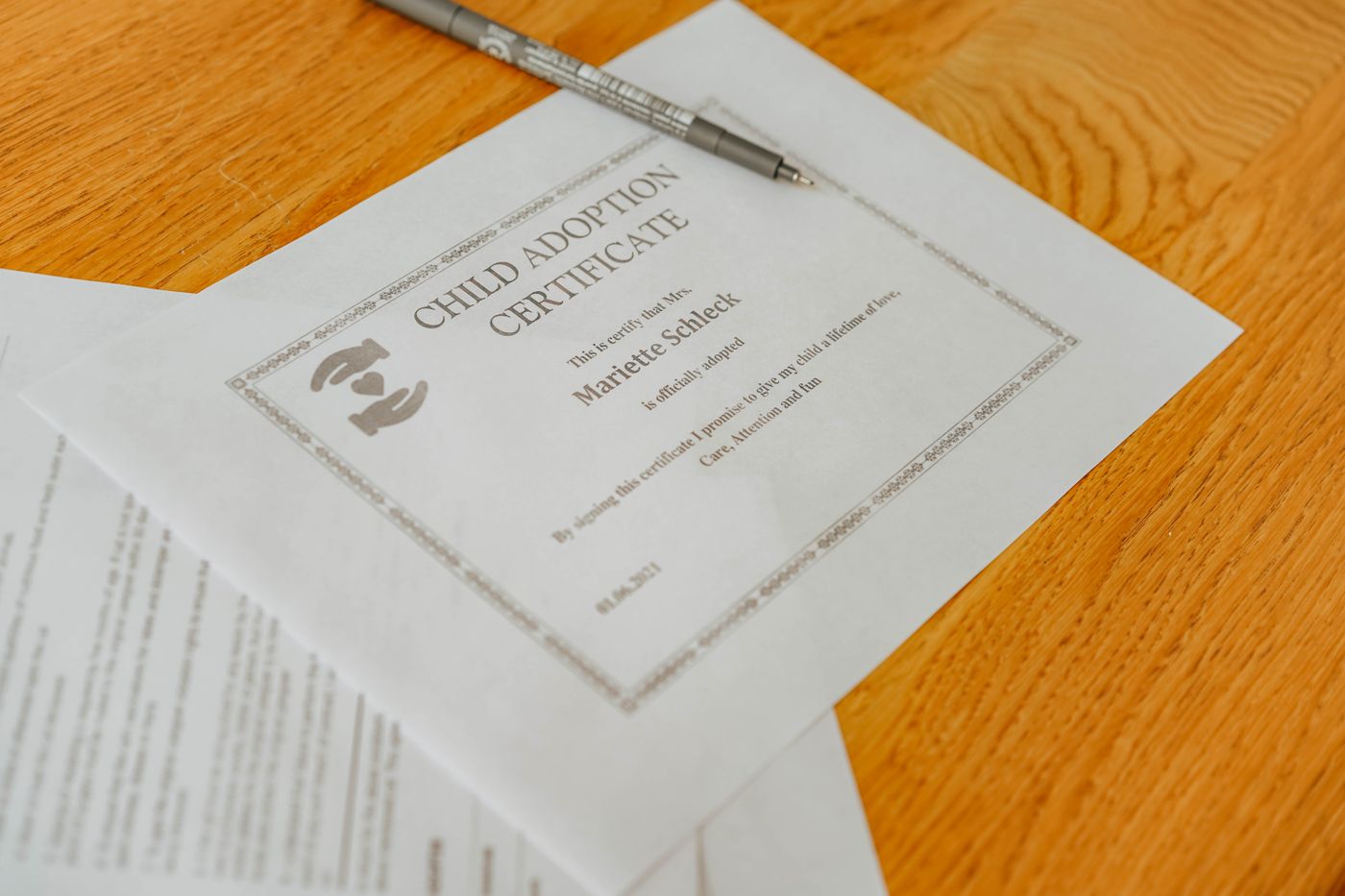 A formal certificate and pen on a desk. Image credit: Close-up of a family law certificate, Pexels.
Step 12: Use exhibits sparingly and lawfully
Why this matters: An exhibit should verify a material fact. This is where a strong case or document becomes distinguishable from a generic internet template. In family-law matters, the reader usually has limited time and must distinguish facts, legal authority, and requested action. A precise approach reduces misunderstandings and helps the next person verify the information rather than guessing what the writer intended.
How to do it: Attach a contemporaneous schedule, message, photograph, or record only if authentic, relevant, and lawfully possessed. Redact protected data. Work from official instructions and the current order before adapting sample language. Write down the source of each important fact, use calendar dates when possible, and mark any point that still needs confirmation. If a fact is uncertain, say that it is uncertain instead of making the sentence sound more definite than the evidence allows.
What to collect: Exhibit label, date, source, and explanation of how you recognize it. Keep the original records unchanged and create working copies for highlighting or redaction. Name digital files consistently—for example, 2026-03-12-school-attendance-record.pdf—and maintain a simple exhibit index showing the date, source, and fact each item supports. This small organizational step makes review easier and limits accidental disclosure of irrelevant private information.
Common mistake to avoid: Do not attach stolen messages, edited recordings, or private records you are not entitled to disclose. Courts and agencies respond better to a clear record than to volume. One reliable document tied to a specific statement is normally more useful than twenty pages of unorganized material. Do not alter screenshots, crop away context that changes meaning, or sign a statement that contains a claim you cannot truthfully defend under questioning.
Practical checkpoint: Before moving on, be able to answer three questions in one sentence each: What fact am I establishing? How do I personally know it? What document or witness can verify it?
Step 13: Review every word before swearing
Why this matters: An affidavit should contain no guess, exaggeration, or unresolved ambiguity. The practical objective here is accuracy, not legal-sounding language. In family-law matters, the reader usually has limited time and must distinguish facts, legal authority, and requested action. A precise approach reduces misunderstandings and helps the next person verify the information rather than guessing what the writer intended.
How to do it: Read it aloud, compare it with records, remove legal jargon, correct absolute words, and ensure all blanks are complete. Work from official instructions and the current order before adapting sample language. Write down the source of each important fact, use calendar dates when possible, and mark any point that still needs confirmation. If a fact is uncertain, say that it is uncertain instead of making the sentence sound more definite than the evidence allows.
What to collect: Consistency with what you would say under oath in court. Keep the original records unchanged and create working copies for highlighting or redaction. Name digital files consistently—for example, 2026-03-12-school-attendance-record.pdf—and maintain a simple exhibit index showing the date, source, and fact each item supports. This small organizational step makes review easier and limits accidental disclosure of irrelevant private information.
Common mistake to avoid: Signing because a lawyer or friend says it is standard does not excuse false content. Courts and agencies respond better to a clear record than to volume. One reliable document tied to a specific statement is normally more useful than twenty pages of unorganized material. Do not alter screenshots, crop away context that changes meaning, or sign a statement that contains a claim you cannot truthfully defend under questioning.
Practical checkpoint: Before moving on, be able to answer three questions in one sentence each: What fact am I establishing? How do I personally know it? What document or witness can verify it?
Step 14: Sign using the correct formalities
Why this matters: Notary and declaration rules vary. Treat this stage as a quality-control checkpoint rather than a formality. In family-law matters, the reader usually has limited time and must distinguish facts, legal authority, and requested action. A precise approach reduces misunderstandings and helps the next person verify the information rather than guessing what the writer intended.
How to do it: Bring identification, sign in the notary’s presence if required, use the exact venue and oath language, and do not alter the document after notarization. Work from official instructions and the current order before adapting sample language. Write down the source of each important fact, use calendar dates when possible, and mark any point that still needs confirmation. If a fact is uncertain, say that it is uncertain instead of making the sentence sound more definite than the evidence allows.
What to collect: Signature date, jurisdiction, notary commission, and attachments. Keep the original records unchanged and create working copies for highlighting or redaction. Name digital files consistently—for example, 2026-03-12-school-attendance-record.pdf—and maintain a simple exhibit index showing the date, source, and fact each item supports. This small organizational step makes review easier and limits accidental disclosure of irrelevant private information.
Common mistake to avoid: A notary verifies the oath or signature, not the truth of the facts. Courts and agencies respond better to a clear record than to volume. One reliable document tied to a specific statement is normally more useful than twenty pages of unorganized material. Do not alter screenshots, crop away context that changes meaning, or sign a statement that contains a claim you cannot truthfully defend under questioning.
Practical checkpoint: Before moving on, be able to answer three questions in one sentence each: What fact am I establishing? How do I personally know it? What document or witness can verify it?
 A family meeting with a professional to discuss paperwork. Image credit: Family legal consultation, Pexels.
Step 15: Prepare to testify
Why this matters: The other party may question the witness about bias, memory, and inconsistencies. This stage turns a broad concern into information a court, clerk, lawyer, school, or agency can actually use. In family-law matters, the reader usually has limited time and must distinguish facts, legal authority, and requested action. A precise approach reduces misunderstandings and helps the next person verify the information rather than guessing what the writer intended.
How to do it: Keep a filed copy, review source records, answer only the question asked, and acknowledge uncertainty. Work from official instructions and the current order before adapting sample language. Write down the source of each important fact, use calendar dates when possible, and mark any point that still needs confirmation. If a fact is uncertain, say that it is uncertain instead of making the sentence sound more definite than the evidence allows.
What to collect: Calm, truthful testimony consistent with the affidavit. Keep the original records unchanged and create working copies for highlighting or redaction. Name digital files consistently—for example, 2026-03-12-school-attendance-record.pdf—and maintain a simple exhibit index showing the date, source, and fact each item supports. This small organizational step makes review easier and limits accidental disclosure of irrelevant private information.
Common mistake to avoid: Trying to advocate beyond your knowledge can turn a helpful witness into a credibility problem. Courts and agencies respond better to a clear record than to volume. One reliable document tied to a specific statement is normally more useful than twenty pages of unorganized material. Do not alter screenshots, crop away context that changes meaning, or sign a statement that contains a claim you cannot truthfully defend under questioning.
Practical checkpoint: Before moving on, be able to answer three questions in one sentence each: What fact am I establishing? How do I personally know it? What document or witness can verify it?
Sample character affidavit structure
The following is an educational structure, not a filing-ready form. Replace bracketed text, delete statements that are not true, and use the exact oath, caption, notice, and signature requirements of the court with jurisdiction.
- I, [full name], being duly sworn, state as follows:
- I am over eighteen and competent to testify. I have known [parent] and [child] for [period] through [relationship].
- I see them approximately [frequency] in the following settings: [settings].
- On or about [date], I observed [specific event]. I know this from personal observation.
- During the period [dates], I repeatedly observed [specific parenting pattern], including [examples].
- I have not observed [state limitation only if relevant], and I do not offer an opinion on matters outside my personal knowledge.
- I sign this affidavit voluntarily and swear that its contents are true and correct.
After drafting, read the sample backward one paragraph at a time. This unusual review method helps you notice unsupported conclusions, repeated facts, wrong names, and missing dates. Then compare the final document with the official form and local checklist rather than assuming that a polished narrative is procedurally complete.
How to organize evidence without overwhelming the reader
Use a simple evidence matrix with four columns: the issue, the factual statement, the supporting source, and the location of that source. For example, the issue might be school continuity; the fact might be that the child attended the same school for three years; the source might be an enrollment record; and the location might be Exhibit C, page 2. This prevents attachments from becoming an unrelated document dump.
Preserve original electronic material. Export messages in a way that retains dates and participants, keep the original device where feasible, and do not add annotations to the only copy. If you create a highlighted working version, label it as a working copy. Ask a lawyer about authentication, hearsay, privilege, and admissibility rather than assuming that every true-looking item can be used in court.
Privacy matters even when a fact is relevant. Court files can be accessible to the public, and a child should not carry the consequences of unnecessary publication for years. Omit Social Security numbers, complete financial account numbers, full medical histories, exact confidential addresses, and school-security information unless required through the approved confidential process.
Writing standards that improve credibility
- Use dates and verbs: “On May 4, I drove the child to the appointment” is stronger than “I am always responsible.”
- Use measured language: Replace “never” and “always” unless the record genuinely supports them.
- Identify the source: Distinguish what you saw from what someone told you.
- State limitations: A truthful “I do not know” protects credibility.
- Connect facts to the child: Explain the effect on safety, stability, health, education, or relationships.
- Avoid amateur diagnoses: Describe observable conduct unless you are qualified and authorized to provide a professional opinion.
A useful legal document does not need theatrical language. It needs a reliable path from fact to proof to requested action. Readers should be able to understand the chronology without knowing the family and should be able to locate the record that supports every central claim.
When to stop using a self-help guide and seek immediate help
Contact emergency services when a child faces immediate physical danger. Seek prompt legal assistance when the case involves domestic violence, sexual abuse, serious neglect, threatened abduction, an out-of-state order, tribal jurisdiction, immigration consequences, a parent who cannot be located, active child-protection proceedings, disputed parentage, confidential-address programs, or substantial guardianship assets.
Legal aid, court self-help centers, lawyer-referral services, domestic-violence organizations, disability-rights organizations, and kinship-care programs may provide free or reduced-cost help. A clerk can often explain filing mechanics but generally cannot tell you what legal strategy to choose. Keep a written log of whom you contacted, the date, and the instructions given.
Final quality-control checklist
- Confirm the correct court, case number, and current order.
- Use the latest official forms and local instructions.
- Spell every legal name consistently.
- Verify dates against source records.
- Remove unsupported legal conclusions and personal attacks.
- Redact protected identifiers using the court’s approved method.
- Label exhibits and refer to them in the text.
- Complete the correct oath, declaration, signature, and notary process.
- File through the clerk and serve all required parties.
- Keep a complete file-stamped copy and calendar every deadline.
Frequently asked questions
Should a character affidavit recommend which parent gets custody?
Usually it is stronger to provide facts that help the court apply the best-interest standard. A legal recommendation may be unnecessary or outside the witness’s role.
Can family members sign affidavits?
Yes, but they should disclose the relationship and use specific firsthand examples. Courts understand that relatives may have loyalties.
Must an affidavit be notarized?
Often yes, but some jurisdictions accept a declaration under penalty of perjury. Follow the exact court rule.
Can I include what the child told me?
That may raise hearsay, privilege, safety, and coaching concerns. Consult the requesting lawyer or court self-help resource before including it.
What if I remember the event but not the date?
Use an honest approximation such as ‘in early March 2026’ and explain how you place it in time. Never invent precision.
Official and primary resources
Use these resources as starting points and always select the instructions for the state and county with jurisdiction. Pages and forms can change, so verify the effective date before filing.
- California Courts Self-Help — Probate Guardianships
- California Courts Self-Help — Ending a Guardianship
- New York Courts — Letters of Guardianship of the Person of a Minor
- TexasLawHelp — General Affidavits
- Child Welfare Information Gateway — Kinship Care
Conclusion
The most persuasive family-law material is rarely the most dramatic. It is the material that uses the correct procedure, protects the child’s privacy, states facts honestly, and proposes a practical outcome tied to the child’s welfare. Build the record carefully, respect notice and jurisdiction rules, and obtain a signed court order before assuming that legal authority has changed.