

Last reviewed: August 2026
How to Apply for Temporary Emergency Custody
Understand when emergency custody may be appropriate, how to gather specific evidence, file in the right court, and prepare for the rapid follow-up hearing.
Family-law paperwork often fails for a simple reason: the writer starts with a template before identifying the legal purpose, the correct court, and the facts that must be proved. This guide takes the opposite approach. It is designed for parents and qualified nonparents facing a genuine, immediate child-safety crisis. The objective is to request the narrow temporary protection needed for an immediate risk while preserving accurate evidence and due process.
Important legal notice: This article provides general educational information for the United States and is not legal advice. Guardianship and custody rules vary by state, county, case type, and existing court order. Emergency custody is for urgent risks, not ordinary scheduling conflict or leverage in a broader dispute. Standards, forms, and hearing timelines vary sharply. Call emergency services or child protection when a child faces immediate physical danger. Use the official website of the court with jurisdiction and obtain advice from a licensed family-law attorney or legal-aid organization when safety, interstate jurisdiction, contested parentage, abuse, relocation, immigration, or major property is involved.
 An adult signing important family legal documents. Image credit: Signing family-related papers, Pexels.
Quick answer
The safest method is to begin with the official court or agency requirements, identify the exact legal authority or decision you need, build a dated record from firsthand facts, use the mandatory form when one exists, and treat any personal letter or supporting statement as evidence—not as a substitute for a court order. Keep the child’s safety, stability, education, health, and important relationships at the center of every paragraph.
Before you begin: build a one-page case map
Create a private one-page map before drafting or filing anything. List the child’s full legal name, current residence, parents and legal custodians, all existing case numbers, the court that issued each order, the precise result requested, the next known deadline, and the people who must receive notice. This map is not necessarily filed; it is an error-prevention tool.
Next, separate your materials into four folders: authority (orders and statutes), identity (names and relationships), facts (chronology and observations), and procedure (forms, filing, service, and deadlines). Never place original identity records or irreplaceable certified orders into a packet that may be mailed away unless the receiving office specifically requires the original.
- Write the exact question you need the court or institution to answer.
- Confirm whether an existing order already addresses that question.
- Find the official form and local instructions before writing a narrative.
- List the facts you know personally and separate them from information reported by others.
- Plan how confidential details will be redacted, sealed, or submitted on protected forms.
Step 1: Decide whether the situation is truly urgent
Why this matters: Courts commonly look for immediate or imminent harm, abandonment, serious neglect, domestic violence, abduction risk, or a comparable crisis. This step establishes the foundation for everything that follows. In family-law matters, the reader usually has limited time and must distinguish facts, legal authority, and requested action. A precise approach reduces misunderstandings and helps the next person verify the information rather than guessing what the writer intended.
How to do it: Write the present danger in one sentence with who, what, when, and where. Ask what will happen before a regular hearing can be held. Work from official instructions and the current order before adapting sample language. Write down the source of each important fact, use calendar dates when possible, and mark any point that still needs confirmation. If a fact is uncertain, say that it is uncertain instead of making the sentence sound more definite than the evidence allows.
What to collect: Recent events, current access to the child, and the specific harm feared. Keep the original records unchanged and create working copies for highlighting or redaction. Name digital files consistently—for example, 2026-03-12-school-attendance-record.pdf—and maintain a simple exhibit index showing the date, source, and fact each item supports. This small organizational step makes review easier and limits accidental disclosure of irrelevant private information.
Common mistake to avoid: Old disputes without a new imminent risk may not justify emergency relief. Courts and agencies respond better to a clear record than to volume. One reliable document tied to a specific statement is normally more useful than twenty pages of unorganized material. Do not alter screenshots, crop away context that changes meaning, or sign a statement that contains a claim you cannot truthfully defend under questioning.
Practical checkpoint: Before moving on, be able to answer three questions in one sentence each: What fact am I establishing? How do I personally know it? What document or witness can verify it?
Step 2: Use emergency services when necessary
Why this matters: A court filing is not a substitute for medical care, police response, or mandatory abuse reporting. This is where a strong case or document becomes distinguishable from a generic internet template. In family-law matters, the reader usually has limited time and must distinguish facts, legal authority, and requested action. A precise approach reduces misunderstandings and helps the next person verify the information rather than guessing what the writer intended.
How to do it: Call the appropriate emergency number, seek treatment, preserve discharge instructions, and make required child-protection reports. Work from official instructions and the current order before adapting sample language. Write down the source of each important fact, use calendar dates when possible, and mark any point that still needs confirmation. If a fact is uncertain, say that it is uncertain instead of making the sentence sound more definite than the evidence allows.
What to collect: Incident number, provider information, and immediate safety plan. Keep the original records unchanged and create working copies for highlighting or redaction. Name digital files consistently—for example, 2026-03-12-school-attendance-record.pdf—and maintain a simple exhibit index showing the date, source, and fact each item supports. This small organizational step makes review easier and limits accidental disclosure of irrelevant private information.
Common mistake to avoid: Waiting for the courthouse to open while a child remains in active danger can be unsafe. Courts and agencies respond better to a clear record than to volume. One reliable document tied to a specific statement is normally more useful than twenty pages of unorganized material. Do not alter screenshots, crop away context that changes meaning, or sign a statement that contains a claim you cannot truthfully defend under questioning.
Practical checkpoint: Before moving on, be able to answer three questions in one sentence each: What fact am I establishing? How do I personally know it? What document or witness can verify it?
Step 3: Identify the court with jurisdiction
Why this matters: Existing custody, divorce, juvenile, protection-order, or dependency cases may determine where to file. The practical objective here is accuracy, not legal-sounding language. In family-law matters, the reader usually has limited time and must distinguish facts, legal authority, and requested action. A precise approach reduces misunderstandings and helps the next person verify the information rather than guessing what the writer intended.
How to do it: Find every case number and current order. Contact the clerk for the correct emergency motion and judge or magistrate procedure. Work from official instructions and the current order before adapting sample language. Write down the source of each important fact, use calendar dates when possible, and mark any point that still needs confirmation. If a fact is uncertain, say that it is uncertain instead of making the sentence sound more definite than the evidence allows.
What to collect: Child’s home state, current location, previous orders, and pending cases. Keep the original records unchanged and create working copies for highlighting or redaction. Name digital files consistently—for example, 2026-03-12-school-attendance-record.pdf—and maintain a simple exhibit index showing the date, source, and fact each item supports. This small organizational step makes review easier and limits accidental disclosure of irrelevant private information.
Common mistake to avoid: Filing in a convenient but unauthorized county can delay protection. Courts and agencies respond better to a clear record than to volume. One reliable document tied to a specific statement is normally more useful than twenty pages of unorganized material. Do not alter screenshots, crop away context that changes meaning, or sign a statement that contains a claim you cannot truthfully defend under questioning.
Practical checkpoint: Before moving on, be able to answer three questions in one sentence each: What fact am I establishing? How do I personally know it? What document or witness can verify it?
 Parents supporting a child during study time at home. Image credit: Parents helping a child study, Pexels.
Step 4: Understand temporary emergency jurisdiction
Why this matters: Interstate cases may invoke special rules under the Uniform Child Custody Jurisdiction and Enforcement Act. Treat this stage as a quality-control checkpoint rather than a formality. In family-law matters, the reader usually has limited time and must distinguish facts, legal authority, and requested action. A precise approach reduces misunderstandings and helps the next person verify the information rather than guessing what the writer intended.
How to do it: Disclose where the child lived, prior proceedings, other people claiming custody, and whether another state has an order. Work from official instructions and the current order before adapting sample language. Write down the source of each important fact, use calendar dates when possible, and mark any point that still needs confirmation. If a fact is uncertain, say that it is uncertain instead of making the sentence sound more definite than the evidence allows.
What to collect: Complete residential history and certified out-of-state orders. Keep the original records unchanged and create working copies for highlighting or redaction. Name digital files consistently—for example, 2026-03-12-school-attendance-record.pdf—and maintain a simple exhibit index showing the date, source, and fact each item supports. This small organizational step makes review easier and limits accidental disclosure of irrelevant private information.
Common mistake to avoid: Hiding another state’s case can lead to conflicting orders and sanctions. Courts and agencies respond better to a clear record than to volume. One reliable document tied to a specific statement is normally more useful than twenty pages of unorganized material. Do not alter screenshots, crop away context that changes meaning, or sign a statement that contains a claim you cannot truthfully defend under questioning.
Practical checkpoint: Before moving on, be able to answer three questions in one sentence each: What fact am I establishing? How do I personally know it? What document or witness can verify it?
Step 5: Select the correct emergency request
Why this matters: The court may use an ex parte motion, emergency temporary order, protection order, dependency complaint, or expedited hearing. This stage turns a broad concern into information a court, clerk, lawyer, school, or agency can actually use. In family-law matters, the reader usually has limited time and must distinguish facts, legal authority, and requested action. A precise approach reduces misunderstandings and helps the next person verify the information rather than guessing what the writer intended.
How to do it: Read official instructions and request only the authority needed to address the danger. Work from official instructions and the current order before adapting sample language. Write down the source of each important fact, use calendar dates when possible, and mark any point that still needs confirmation. If a fact is uncertain, say that it is uncertain instead of making the sentence sound more definite than the evidence allows.
What to collect: Temporary custody, supervised contact, no removal, safe exchange, or medical authority as applicable. Keep the original records unchanged and create working copies for highlighting or redaction. Name digital files consistently—for example, 2026-03-12-school-attendance-record.pdf—and maintain a simple exhibit index showing the date, source, and fact each item supports. This small organizational step makes review easier and limits accidental disclosure of irrelevant private information.
Common mistake to avoid: Asking for every possible restriction without factual support may reduce credibility. Courts and agencies respond better to a clear record than to volume. One reliable document tied to a specific statement is normally more useful than twenty pages of unorganized material. Do not alter screenshots, crop away context that changes meaning, or sign a statement that contains a claim you cannot truthfully defend under questioning.
Practical checkpoint: Before moving on, be able to answer three questions in one sentence each: What fact am I establishing? How do I personally know it? What document or witness can verify it?
Step 6: Prepare a precise sworn declaration
Why this matters: Judges may make an initial decision from the written evidence before hearing the other side. This step establishes the foundation for everything that follows. In family-law matters, the reader usually has limited time and must distinguish facts, legal authority, and requested action. A precise approach reduces misunderstandings and helps the next person verify the information rather than guessing what the writer intended.
How to do it: Use numbered paragraphs, recent dates, firsthand facts, exact threats or conduct, present child location, and a specific requested order. Work from official instructions and the current order before adapting sample language. Write down the source of each important fact, use calendar dates when possible, and mark any point that still needs confirmation. If a fact is uncertain, say that it is uncertain instead of making the sentence sound more definite than the evidence allows.
What to collect: A short chronology linked to attached records. Keep the original records unchanged and create working copies for highlighting or redaction. Name digital files consistently—for example, 2026-03-12-school-attendance-record.pdf—and maintain a simple exhibit index showing the date, source, and fact each item supports. This small organizational step makes review easier and limits accidental disclosure of irrelevant private information.
Common mistake to avoid: Vague phrases such as ‘the child is unsafe’ do not explain the emergency. Courts and agencies respond better to a clear record than to volume. One reliable document tied to a specific statement is normally more useful than twenty pages of unorganized material. Do not alter screenshots, crop away context that changes meaning, or sign a statement that contains a claim you cannot truthfully defend under questioning.
Practical checkpoint: Before moving on, be able to answer three questions in one sentence each: What fact am I establishing? How do I personally know it? What document or witness can verify it?
Step 7: Gather reliable corroboration
Why this matters: Objective evidence helps the court evaluate a rapid request. This is where a strong case or document becomes distinguishable from a generic internet template. In family-law matters, the reader usually has limited time and must distinguish facts, legal authority, and requested action. A precise approach reduces misunderstandings and helps the next person verify the information rather than guessing what the writer intended.
How to do it: Collect police, medical, protection-order, school, travel, and communication records lawfully. Identify witnesses who can testify. Work from official instructions and the current order before adapting sample language. Write down the source of each important fact, use calendar dates when possible, and mark any point that still needs confirmation. If a fact is uncertain, say that it is uncertain instead of making the sentence sound more definite than the evidence allows.
What to collect: Authentic, dated evidence directly tied to the urgent allegation. Keep the original records unchanged and create working copies for highlighting or redaction. Name digital files consistently—for example, 2026-03-12-school-attendance-record.pdf—and maintain a simple exhibit index showing the date, source, and fact each item supports. This small organizational step makes review easier and limits accidental disclosure of irrelevant private information.
Common mistake to avoid: Do not alter screenshots, trespass for evidence, or coach the child. Courts and agencies respond better to a clear record than to volume. One reliable document tied to a specific statement is normally more useful than twenty pages of unorganized material. Do not alter screenshots, crop away context that changes meaning, or sign a statement that contains a claim you cannot truthfully defend under questioning.
Practical checkpoint: Before moving on, be able to answer three questions in one sentence each: What fact am I establishing? How do I personally know it? What document or witness can verify it?
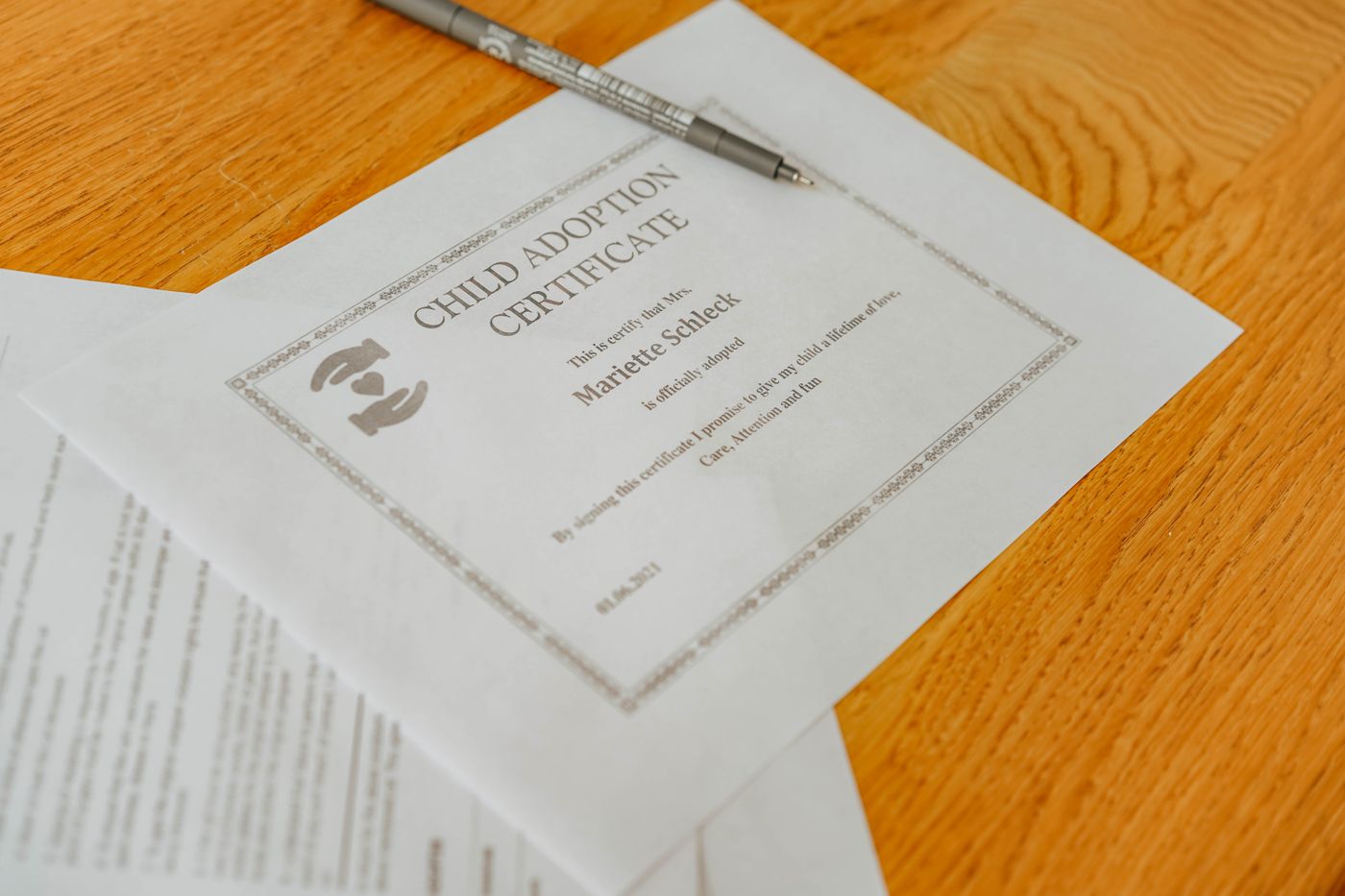 A formal certificate and pen on a desk. Image credit: Close-up of a family law certificate, Pexels.
Step 8: Protect the child while preserving evidence
Why this matters: Safety planning and evidence collection should not place the child at greater risk. The practical objective here is accuracy, not legal-sounding language. In family-law matters, the reader usually has limited time and must distinguish facts, legal authority, and requested action. A precise approach reduces misunderstandings and helps the next person verify the information rather than guessing what the writer intended.
How to do it: Use secure communication, safe adults, medication access, and confidential address procedures where available. Work from official instructions and the current order before adapting sample language. Write down the source of each important fact, use calendar dates when possible, and mark any point that still needs confirmation. If a fact is uncertain, say that it is uncertain instead of making the sentence sound more definite than the evidence allows.
What to collect: A practical plan for the hours and days after filing. Keep the original records unchanged and create working copies for highlighting or redaction. Name digital files consistently—for example, 2026-03-12-school-attendance-record.pdf—and maintain a simple exhibit index showing the date, source, and fact each item supports. This small organizational step makes review easier and limits accidental disclosure of irrelevant private information.
Common mistake to avoid: Posting allegations or the child’s location on social media can increase danger. Courts and agencies respond better to a clear record than to volume. One reliable document tied to a specific statement is normally more useful than twenty pages of unorganized material. Do not alter screenshots, crop away context that changes meaning, or sign a statement that contains a claim you cannot truthfully defend under questioning.
Practical checkpoint: Before moving on, be able to answer three questions in one sentence each: What fact am I establishing? How do I personally know it? What document or witness can verify it?
Step 9: Complete all required custody disclosures
Why this matters: Courts need other cases, addresses, parties, and orders to avoid conflicting jurisdiction. Treat this stage as a quality-control checkpoint rather than a formality. In family-law matters, the reader usually has limited time and must distinguish facts, legal authority, and requested action. A precise approach reduces misunderstandings and helps the next person verify the information rather than guessing what the writer intended.
How to do it: Fill out parenting-proceeding affidavits, child-information forms, and related-case notices completely. Work from official instructions and the current order before adapting sample language. Write down the source of each important fact, use calendar dates when possible, and mark any point that still needs confirmation. If a fact is uncertain, say that it is uncertain instead of making the sentence sound more definite than the evidence allows.
What to collect: Five-year residence history where required, current caregivers, and other claimants. Keep the original records unchanged and create working copies for highlighting or redaction. Name digital files consistently—for example, 2026-03-12-school-attendance-record.pdf—and maintain a simple exhibit index showing the date, source, and fact each item supports. This small organizational step makes review easier and limits accidental disclosure of irrelevant private information.
Common mistake to avoid: Omitting a prior case can cause denial even when the underlying concern is real. Courts and agencies respond better to a clear record than to volume. One reliable document tied to a specific statement is normally more useful than twenty pages of unorganized material. Do not alter screenshots, crop away context that changes meaning, or sign a statement that contains a claim you cannot truthfully defend under questioning.
Practical checkpoint: Before moving on, be able to answer three questions in one sentence each: What fact am I establishing? How do I personally know it? What document or witness can verify it?
Step 10: File and ask about immediate review
Why this matters: Emergency procedures differ by court and time of day. This stage turns a broad concern into information a court, clerk, lawyer, school, or agency can actually use. In family-law matters, the reader usually has limited time and must distinguish facts, legal authority, and requested action. A precise approach reduces misunderstandings and helps the next person verify the information rather than guessing what the writer intended.
How to do it: Tell the clerk you are filing emergency materials, follow after-hours instructions if available, and ask how the decision will be communicated. Work from official instructions and the current order before adapting sample language. Write down the source of each important fact, use calendar dates when possible, and mark any point that still needs confirmation. If a fact is uncertain, say that it is uncertain instead of making the sentence sound more definite than the evidence allows.
What to collect: File-stamped copies and a reliable phone and email. Keep the original records unchanged and create working copies for highlighting or redaction. Name digital files consistently—for example, 2026-03-12-school-attendance-record.pdf—and maintain a simple exhibit index showing the date, source, and fact each item supports. This small organizational step makes review easier and limits accidental disclosure of irrelevant private information.
Common mistake to avoid: Do not attempt private contact with the judge. Courts and agencies respond better to a clear record than to volume. One reliable document tied to a specific statement is normally more useful than twenty pages of unorganized material. Do not alter screenshots, crop away context that changes meaning, or sign a statement that contains a claim you cannot truthfully defend under questioning.
Practical checkpoint: Before moving on, be able to answer three questions in one sentence each: What fact am I establishing? How do I personally know it? What document or witness can verify it?
Step 11: Comply with service rules
Why this matters: Even an initial ex parte order is commonly followed by rapid notice and a hearing. This step establishes the foundation for everything that follows. In family-law matters, the reader usually has limited time and must distinguish facts, legal authority, and requested action. A precise approach reduces misunderstandings and helps the next person verify the information rather than guessing what the writer intended.
How to do it: Arrange service immediately through the permitted method and document all attempts. Work from official instructions and the current order before adapting sample language. Write down the source of each important fact, use calendar dates when possible, and mark any point that still needs confirmation. If a fact is uncertain, say that it is uncertain instead of making the sentence sound more definite than the evidence allows.
What to collect: The other party’s location and completed proof of service. Keep the original records unchanged and create working copies for highlighting or redaction. Name digital files consistently—for example, 2026-03-12-school-attendance-record.pdf—and maintain a simple exhibit index showing the date, source, and fact each item supports. This small organizational step makes review easier and limits accidental disclosure of irrelevant private information.
Common mistake to avoid: Keeping the order secret beyond what the court authorizes can jeopardize enforcement. Courts and agencies respond better to a clear record than to volume. One reliable document tied to a specific statement is normally more useful than twenty pages of unorganized material. Do not alter screenshots, crop away context that changes meaning, or sign a statement that contains a claim you cannot truthfully defend under questioning.
Practical checkpoint: Before moving on, be able to answer three questions in one sentence each: What fact am I establishing? How do I personally know it? What document or witness can verify it?
 A family meeting with a professional to discuss paperwork. Image credit: Family legal consultation, Pexels.
Step 12: Read the temporary order line by line
Why this matters: Emergency orders are narrow and often expire quickly. This is where a strong case or document becomes distinguishable from a generic internet template. In family-law matters, the reader usually has limited time and must distinguish facts, legal authority, and requested action. A precise approach reduces misunderstandings and helps the next person verify the information rather than guessing what the writer intended.
How to do it: Confirm custody, contact, exchange, law-enforcement assistance, school pickup, travel, and hearing date. Work from official instructions and the current order before adapting sample language. Write down the source of each important fact, use calendar dates when possible, and mark any point that still needs confirmation. If a fact is uncertain, say that it is uncertain instead of making the sentence sound more definite than the evidence allows.
What to collect: Certified copies and the exact expiration or review date. Keep the original records unchanged and create working copies for highlighting or redaction. Name digital files consistently—for example, 2026-03-12-school-attendance-record.pdf—and maintain a simple exhibit index showing the date, source, and fact each item supports. This small organizational step makes review easier and limits accidental disclosure of irrelevant private information.
Common mistake to avoid: Assuming the order grants powers not written in it can create violations. Courts and agencies respond better to a clear record than to volume. One reliable document tied to a specific statement is normally more useful than twenty pages of unorganized material. Do not alter screenshots, crop away context that changes meaning, or sign a statement that contains a claim you cannot truthfully defend under questioning.
Practical checkpoint: Before moving on, be able to answer three questions in one sentence each: What fact am I establishing? How do I personally know it? What document or witness can verify it?
Step 13: Implement the order safely
Why this matters: A lawful order still requires careful execution. The practical objective here is accuracy, not legal-sounding language. In family-law matters, the reader usually has limited time and must distinguish facts, legal authority, and requested action. A precise approach reduces misunderstandings and helps the next person verify the information rather than guessing what the writer intended.
How to do it: Coordinate with law enforcement if directed, schools, childcare, and medical providers. Avoid confrontational self-help recovery. Work from official instructions and the current order before adapting sample language. Write down the source of each important fact, use calendar dates when possible, and mark any point that still needs confirmation. If a fact is uncertain, say that it is uncertain instead of making the sentence sound more definite than the evidence allows.
What to collect: Copies for responsible institutions and an inventory of the child’s essential items. Keep the original records unchanged and create working copies for highlighting or redaction. Name digital files consistently—for example, 2026-03-12-school-attendance-record.pdf—and maintain a simple exhibit index showing the date, source, and fact each item supports. This small organizational step makes review easier and limits accidental disclosure of irrelevant private information.
Common mistake to avoid: Do not provoke a dangerous exchange or violate another active order. Courts and agencies respond better to a clear record than to volume. One reliable document tied to a specific statement is normally more useful than twenty pages of unorganized material. Do not alter screenshots, crop away context that changes meaning, or sign a statement that contains a claim you cannot truthfully defend under questioning.
Practical checkpoint: Before moving on, be able to answer three questions in one sentence each: What fact am I establishing? How do I personally know it? What document or witness can verify it?
Step 14: Prepare for the prompt evidentiary hearing
Why this matters: The other party will have an opportunity to respond and the judge may reconsider the order. Treat this stage as a quality-control checkpoint rather than a formality. In family-law matters, the reader usually has limited time and must distinguish facts, legal authority, and requested action. A precise approach reduces misunderstandings and helps the next person verify the information rather than guessing what the writer intended.
How to do it: Organize witnesses, originals, updated events, service proof, and a proposal for the next temporary period. Work from official instructions and the current order before adapting sample language. Write down the source of each important fact, use calendar dates when possible, and mark any point that still needs confirmation. If a fact is uncertain, say that it is uncertain instead of making the sentence sound more definite than the evidence allows.
What to collect: Evidence supporting both urgency and a workable child-care plan. Keep the original records unchanged and create working copies for highlighting or redaction. Name digital files consistently—for example, 2026-03-12-school-attendance-record.pdf—and maintain a simple exhibit index showing the date, source, and fact each item supports. This small organizational step makes review easier and limits accidental disclosure of irrelevant private information.
Common mistake to avoid: Treating the initial ex parte order as a final victory leaves the case unprepared. Courts and agencies respond better to a clear record than to volume. One reliable document tied to a specific statement is normally more useful than twenty pages of unorganized material. Do not alter screenshots, crop away context that changes meaning, or sign a statement that contains a claim you cannot truthfully defend under questioning.
Practical checkpoint: Before moving on, be able to answer three questions in one sentence each: What fact am I establishing? How do I personally know it? What document or witness can verify it?
 A judge’s gavel in a courtroom. Image credit: Courtroom One Gavel by Joe Gratz, CC0 via Wikimedia Commons.
Step 15: Plan beyond the emergency
Why this matters: Temporary protection should lead to a stable, reviewable arrangement. This stage turns a broad concern into information a court, clerk, lawyer, school, or agency can actually use. In family-law matters, the reader usually has limited time and must distinguish facts, legal authority, and requested action. A precise approach reduces misunderstandings and helps the next person verify the information rather than guessing what the writer intended.
How to do it: Request appropriate evaluation, supervised parenting, treatment conditions, investigation, or a regular custody schedule based on evidence. Work from official instructions and the current order before adapting sample language. Write down the source of each important fact, use calendar dates when possible, and mark any point that still needs confirmation. If a fact is uncertain, say that it is uncertain instead of making the sentence sound more definite than the evidence allows.
What to collect: A step-down or review plan focused on safety and family functioning. Keep the original records unchanged and create working copies for highlighting or redaction. Name digital files consistently—for example, 2026-03-12-school-attendance-record.pdf—and maintain a simple exhibit index showing the date, source, and fact each item supports. This small organizational step makes review easier and limits accidental disclosure of irrelevant private information.
Common mistake to avoid: Indefinite emergency restrictions without follow-up can become unstable. Courts and agencies respond better to a clear record than to volume. One reliable document tied to a specific statement is normally more useful than twenty pages of unorganized material. Do not alter screenshots, crop away context that changes meaning, or sign a statement that contains a claim you cannot truthfully defend under questioning.
Practical checkpoint: Before moving on, be able to answer three questions in one sentence each: What fact am I establishing? How do I personally know it? What document or witness can verify it?
Emergency custody declaration outline
The following is an educational structure, not a filing-ready form. Replace bracketed text, delete statements that are not true, and use the exact oath, caption, notice, and signature requirements of the court with jurisdiction.
- The child is currently located at [location], and the existing order is [brief description].
- On [recent date and time], [specific event] occurred. I know this because [firsthand basis].
- The immediate risk before a regular hearing is [specific harm].
- I took the following protective steps: [police, medical, report, safe location].
- Attached Exhibit A is [record] and Exhibit B is [record].
- I request the narrow temporary order of [exact relief] until a hearing can be held with notice.
- I disclosed all prior custody cases and the child’s residence history in the required form.
After drafting, read the sample backward one paragraph at a time. This unusual review method helps you notice unsupported conclusions, repeated facts, wrong names, and missing dates. Then compare the final document with the official form and local checklist rather than assuming that a polished narrative is procedurally complete.
How to organize evidence without overwhelming the reader
Use a simple evidence matrix with four columns: the issue, the factual statement, the supporting source, and the location of that source. For example, the issue might be school continuity; the fact might be that the child attended the same school for three years; the source might be an enrollment record; and the location might be Exhibit C, page 2. This prevents attachments from becoming an unrelated document dump.
Preserve original electronic material. Export messages in a way that retains dates and participants, keep the original device where feasible, and do not add annotations to the only copy. If you create a highlighted working version, label it as a working copy. Ask a lawyer about authentication, hearsay, privilege, and admissibility rather than assuming that every true-looking item can be used in court.
Privacy matters even when a fact is relevant. Court files can be accessible to the public, and a child should not carry the consequences of unnecessary publication for years. Omit Social Security numbers, complete financial account numbers, full medical histories, exact confidential addresses, and school-security information unless required through the approved confidential process.
Writing standards that improve credibility
- Use dates and verbs: “On May 4, I drove the child to the appointment” is stronger than “I am always responsible.”
- Use measured language: Replace “never” and “always” unless the record genuinely supports them.
- Identify the source: Distinguish what you saw from what someone told you.
- State limitations: A truthful “I do not know” protects credibility.
- Connect facts to the child: Explain the effect on safety, stability, health, education, or relationships.
- Avoid amateur diagnoses: Describe observable conduct unless you are qualified and authorized to provide a professional opinion.
A useful legal document does not need theatrical language. It needs a reliable path from fact to proof to requested action. Readers should be able to understand the chronology without knowing the family and should be able to locate the record that supports every central claim.
When to stop using a self-help guide and seek immediate help
Contact emergency services when a child faces immediate physical danger. Seek prompt legal assistance when the case involves domestic violence, sexual abuse, serious neglect, threatened abduction, an out-of-state order, tribal jurisdiction, immigration consequences, a parent who cannot be located, active child-protection proceedings, disputed parentage, confidential-address programs, or substantial guardianship assets.
Legal aid, court self-help centers, lawyer-referral services, domestic-violence organizations, disability-rights organizations, and kinship-care programs may provide free or reduced-cost help. A clerk can often explain filing mechanics but generally cannot tell you what legal strategy to choose. Keep a written log of whom you contacted, the date, and the instructions given.
Final quality-control checklist
- Confirm the correct court, case number, and current order.
- Use the latest official forms and local instructions.
- Spell every legal name consistently.
- Verify dates against source records.
- Remove unsupported legal conclusions and personal attacks.
- Redact protected identifiers using the court’s approved method.
- Label exhibits and refer to them in the text.
- Complete the correct oath, declaration, signature, and notary process.
- File through the clerk and serve all required parties.
- Keep a complete file-stamped copy and calendar every deadline.
Frequently asked questions
How fast can an emergency order be issued?
Timing varies from same-day review to a scheduled expedited hearing. Court hours, evidence, jurisdiction, and local procedure matter.
Can an emergency order be issued without notice?
Some courts permit limited ex parte relief when immediate harm makes prior notice impractical, followed by prompt service and a hearing.
Is refusal to follow a parenting schedule an emergency?
Not always. It may require enforcement or contempt rather than emergency custody unless connected to an immediate safety or abduction risk.
Can a nonparent seek emergency custody?
Possibly, but standing and legal standards vary. Nonparents should use official legal help or counsel quickly.
What if the danger is in another state?
Interstate emergency jurisdiction is complex. Disclose all orders and contact the court with current jurisdiction, local emergency authorities, and a family-law lawyer.
Official and primary resources
Use these resources as starting points and always select the instructions for the state and county with jurisdiction. Pages and forms can change, so verify the effective date before filing.
- California Courts Self-Help — Probate Guardianships
- California Courts Self-Help — Ending a Guardianship
- New York Courts — Letters of Guardianship of the Person of a Minor
- TexasLawHelp — General Affidavits
- Child Welfare Information Gateway — Kinship Care
Conclusion
The most persuasive family-law material is rarely the most dramatic. It is the material that uses the correct procedure, protects the child’s privacy, states facts honestly, and proposes a practical outcome tied to the child’s welfare. Build the record carefully, respect notice and jurisdiction rules, and obtain a signed court order before assuming that legal authority has changed.