

A familiar melody may be old enough to be public domain while the recording you found online remains protected. A traditional song may contain a copyrighted arrangement, translation, new lyrics, or performance. The only reliable method is to identify every layer you intend to use, establish dates and authorship, search records, and document the conclusion for the relevant country and use.
 Musician reviewing sheet music beside a laptop.
Quick answer: Use a documented process, verify the exact facts and rights involved, preserve evidence, use official channels, and obtain qualified professional advice when the outcome carries significant legal, financial, or safety consequences.
Before You Begin
This guide provides general educational information for a primarily United States audience. Copyright, patent, trademark, employment, safeguarding, privacy, reporting, and criminal-law rules can vary by jurisdiction and circumstances. It is not a substitute for advice from a qualified attorney, licensed professional, emergency responder, or public authority.
Start a project folder before taking action. Include the exact item or incident, dates, names, source records, screenshots, agreements, messages, identifiers, decisions, and outstanding questions. A well-organized file prevents duplicated work and helps a professional review the matter efficiently.
Step 1: Identify the exact title and version
Record the title, alternate titles, composer, lyricist, arranger, performer, album, label, release date, catalog number, and source URL. Common titles and folk songs can refer to many different works.
Turn this step into a written task rather than an informal assumption. Record the responsible person, date, documents reviewed, decision, and next action. Where the step depends on law, policy, platform rules, or specialist judgment, verify the current requirement for the relevant jurisdiction and project instead of copying an old checklist.
Keep the scope narrow and avoid making claims the available evidence cannot support. Preserve original records and distinguish direct observation, third-party information, and professional analysis. This discipline makes the result more defensible and more useful to a lawyer, regulator, client, investigator, insurer, or successor who later reviews the file.
Step 2: Separate the composition from the recording
The melody and lyrics are the composition; a particular captured performance is the sound recording. You may need two permissions even when using one audio file.
For practical implementation, create a short checklist and assign an owner. Record the responsible person, date, documents reviewed, decision, and next action. Where the step depends on law, policy, platform rules, or specialist judgment, verify the current requirement for the relevant jurisdiction and project instead of copying an old checklist.
When the facts are uncertain, label the uncertainty and escalate rather than inventing an answer. Preserve original records and distinguish direct observation, third-party information, and professional analysis. This discipline makes the result more defensible and more useful to a lawyer, regulator, client, investigator, insurer, or successor who later reviews the file.
Step 3: Identify translations, arrangements, and new lyrics
A public-domain tune can have a protected orchestration, translation, harmony, adaptation, or verse. Determine which creative elements your version copies.
Apply the step consistently by recording the decision and supporting evidence. Record the responsible person, date, documents reviewed, decision, and next action. Where the step depends on law, policy, platform rules, or specialist judgment, verify the current requirement for the relevant jurisdiction and project instead of copying an old checklist.
Document exceptions because an undocumented exception quickly becomes the new rule. Preserve original records and distinguish direct observation, third-party information, and professional analysis. This discipline makes the result more defensible and more useful to a lawyer, regulator, client, investigator, insurer, or successor who later reviews the file.
Step 4: Define the country and intended distribution
Public-domain status and exceptions differ among countries. A worldwide upload may reach territories where a work remains protected. Record the principal markets and platforms.
A reliable workflow requires more than awareness, so build this point into the project file. Record the responsible person, date, documents reviewed, decision, and next action. Where the step depends on law, policy, platform rules, or specialist judgment, verify the current requirement for the relevant jurisdiction and project instead of copying an old checklist.
The common mistake is to treat one clue as a complete legal or factual conclusion. Preserve original records and distinguish direct observation, third-party information, and professional analysis. This discipline makes the result more defensible and more useful to a lawyer, regulator, client, investigator, insurer, or successor who later reviews the file.
Step 5: Find reliable author and death information
Search authoritative catalogs, publisher records, archives, performing-rights databases, library authority records, biographies, and official registrations. Similar names and pseudonyms require careful verification.
Use a repeatable method that another team member could follow without guessing. Record the responsible person, date, documents reviewed, decision, and next action. Where the step depends on law, policy, platform rules, or specialist judgment, verify the current requirement for the relevant jurisdiction and project instead of copying an old checklist.
Do not let urgency replace verification. Preserve original records and distinguish direct observation, third-party information, and professional analysis. This discipline makes the result more defensible and more useful to a lawyer, regulator, client, investigator, insurer, or successor who later reviews the file.
Step 6: Establish first-publication facts
Record the earliest documented publication date, place, publisher, notice, edition, and whether the work was unpublished for a significant period. Historical rules can depend on these facts.
Turn this step into a written task rather than an informal assumption. Record the responsible person, date, documents reviewed, decision, and next action. Where the step depends on law, policy, platform rules, or specialist judgment, verify the current requirement for the relevant jurisdiction and project instead of copying an old checklist.
Keep the scope narrow and avoid making claims the available evidence cannot support. Preserve original records and distinguish direct observation, third-party information, and professional analysis. This discipline makes the result more defensible and more useful to a lawyer, regulator, client, investigator, insurer, or successor who later reviews the file.
Step 7: Apply the correct term framework
Do not rely on a universal “older than X years” shortcut. Author-life terms, corporate works, anonymous works, historical publication rules, renewals, and restored foreign copyrights may apply.
For practical implementation, create a short checklist and assign an owner. Record the responsible person, date, documents reviewed, decision, and next action. Where the step depends on law, policy, platform rules, or specialist judgment, verify the current requirement for the relevant jurisdiction and project instead of copying an old checklist.
When the facts are uncertain, label the uncertainty and escalate rather than inventing an answer. Preserve original records and distinguish direct observation, third-party information, and professional analysis. This discipline makes the result more defensible and more useful to a lawyer, regulator, client, investigator, insurer, or successor who later reviews the file.
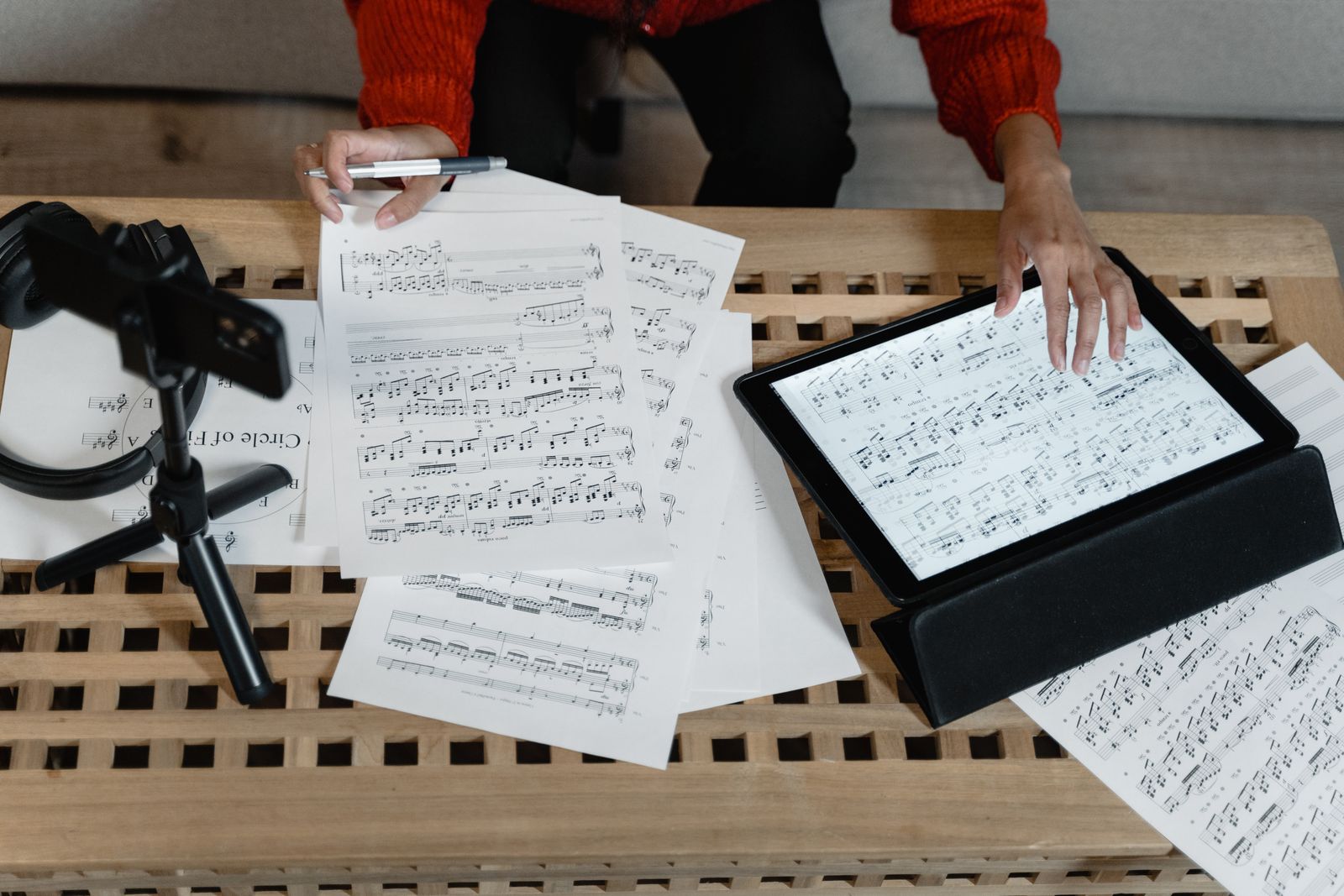 Musicians analyzing notation and musical materials in a studio workspace.
Step 8: Search copyright registration and renewal records
Search title variations, writers, publishers, claimants, albums, and catalog numbers. Registration records are evidence, but a missing record does not automatically establish public domain.
Apply the step consistently by recording the decision and supporting evidence. Record the responsible person, date, documents reviewed, decision, and next action. Where the step depends on law, policy, platform rules, or specialist judgment, verify the current requirement for the relevant jurisdiction and project instead of copying an old checklist.
Document exceptions because an undocumented exception quickly becomes the new rule. Preserve original records and distinguish direct observation, third-party information, and professional analysis. This discipline makes the result more defensible and more useful to a lawyer, regulator, client, investigator, insurer, or successor who later reviews the file.
Step 9: Check performing-rights and publisher databases
These databases can help identify current publishers and writers, although they are designed for administration and may contain conflicts or incomplete information. Compare several records.
A reliable workflow requires more than awareness, so build this point into the project file. Record the responsible person, date, documents reviewed, decision, and next action. Where the step depends on law, policy, platform rules, or specialist judgment, verify the current requirement for the relevant jurisdiction and project instead of copying an old checklist.
The common mistake is to treat one clue as a complete legal or factual conclusion. Preserve original records and distinguish direct observation, third-party information, and professional analysis. This discipline makes the result more defensible and more useful to a lawyer, regulator, client, investigator, insurer, or successor who later reviews the file.
Step 10: Inspect the score or sheet-music edition
Look for dates, notices, arranger credits, editorial content, and publisher information. A modern edition can contain new protectable material even when the underlying composition is free to use.
Use a repeatable method that another team member could follow without guessing. Record the responsible person, date, documents reviewed, decision, and next action. Where the step depends on law, policy, platform rules, or specialist judgment, verify the current requirement for the relevant jurisdiction and project instead of copying an old checklist.
Do not let urgency replace verification. Preserve original records and distinguish direct observation, third-party information, and professional analysis. This discipline makes the result more defensible and more useful to a lawyer, regulator, client, investigator, insurer, or successor who later reviews the file.
Step 11: Investigate the recording independently
Identify the label, performers, producer, recording date, release date, reissue history, and rights notices. A modern recording of a centuries-old composition is generally a separate asset.
Turn this step into a written task rather than an informal assumption. Record the responsible person, date, documents reviewed, decision, and next action. Where the step depends on law, policy, platform rules, or specialist judgment, verify the current requirement for the relevant jurisdiction and project instead of copying an old checklist.
Keep the scope narrow and avoid making claims the available evidence cannot support. Preserve original records and distinguish direct observation, third-party information, and professional analysis. This discipline makes the result more defensible and more useful to a lawyer, regulator, client, investigator, insurer, or successor who later reviews the file.
Step 12: Treat platform labels cautiously
“No copyright music,” “royalty free,” and “free download” are marketing descriptions, not legal conclusions. Read the exact license and confirm the uploader can grant it.
For practical implementation, create a short checklist and assign an owner. Record the responsible person, date, documents reviewed, decision, and next action. Where the step depends on law, policy, platform rules, or specialist judgment, verify the current requirement for the relevant jurisdiction and project instead of copying an old checklist.
When the facts are uncertain, label the uncertainty and escalate rather than inventing an answer. Preserve original records and distinguish direct observation, third-party information, and professional analysis. This discipline makes the result more defensible and more useful to a lawyer, regulator, client, investigator, insurer, or successor who later reviews the file.
Step 13: Confirm Creative Commons terms
Check the license version, commercial-use restriction, adaptation restriction, share-alike condition, and attribution requirements. Preserve proof of the license available when you downloaded the track.
Apply the step consistently by recording the decision and supporting evidence. Record the responsible person, date, documents reviewed, decision, and next action. Where the step depends on law, policy, platform rules, or specialist judgment, verify the current requirement for the relevant jurisdiction and project instead of copying an old checklist.
Document exceptions because an undocumented exception quickly becomes the new rule. Preserve original records and distinguish direct observation, third-party information, and professional analysis. This discipline makes the result more defensible and more useful to a lawyer, regulator, client, investigator, insurer, or successor who later reviews the file.
Step 14: Review library and archive rights statements
Archives often distinguish known public-domain status, no-known-restrictions statements, and unknown rights. Read the statement for the item, not only the collection description.
A reliable workflow requires more than awareness, so build this point into the project file. Record the responsible person, date, documents reviewed, decision, and next action. Where the step depends on law, policy, platform rules, or specialist judgment, verify the current requirement for the relevant jurisdiction and project instead of copying an old checklist.
The common mistake is to treat one clue as a complete legal or factual conclusion. Preserve original records and distinguish direct observation, third-party information, and professional analysis. This discipline makes the result more defensible and more useful to a lawyer, regulator, client, investigator, insurer, or successor who later reviews the file.
Step 15: Determine whether your use needs additional rights
Synchronization, master use, public performance, mechanical reproduction, print, lyric display, dramatic performance, and sampling can involve different rights. A license for listening or streaming may not cover production use.
Use a repeatable method that another team member could follow without guessing. Record the responsible person, date, documents reviewed, decision, and next action. Where the step depends on law, policy, platform rules, or specialist judgment, verify the current requirement for the relevant jurisdiction and project instead of copying an old checklist.
Do not let urgency replace verification. Preserve original records and distinguish direct observation, third-party information, and professional analysis. This discipline makes the result more defensible and more useful to a lawyer, regulator, client, investigator, insurer, or successor who later reviews the file.
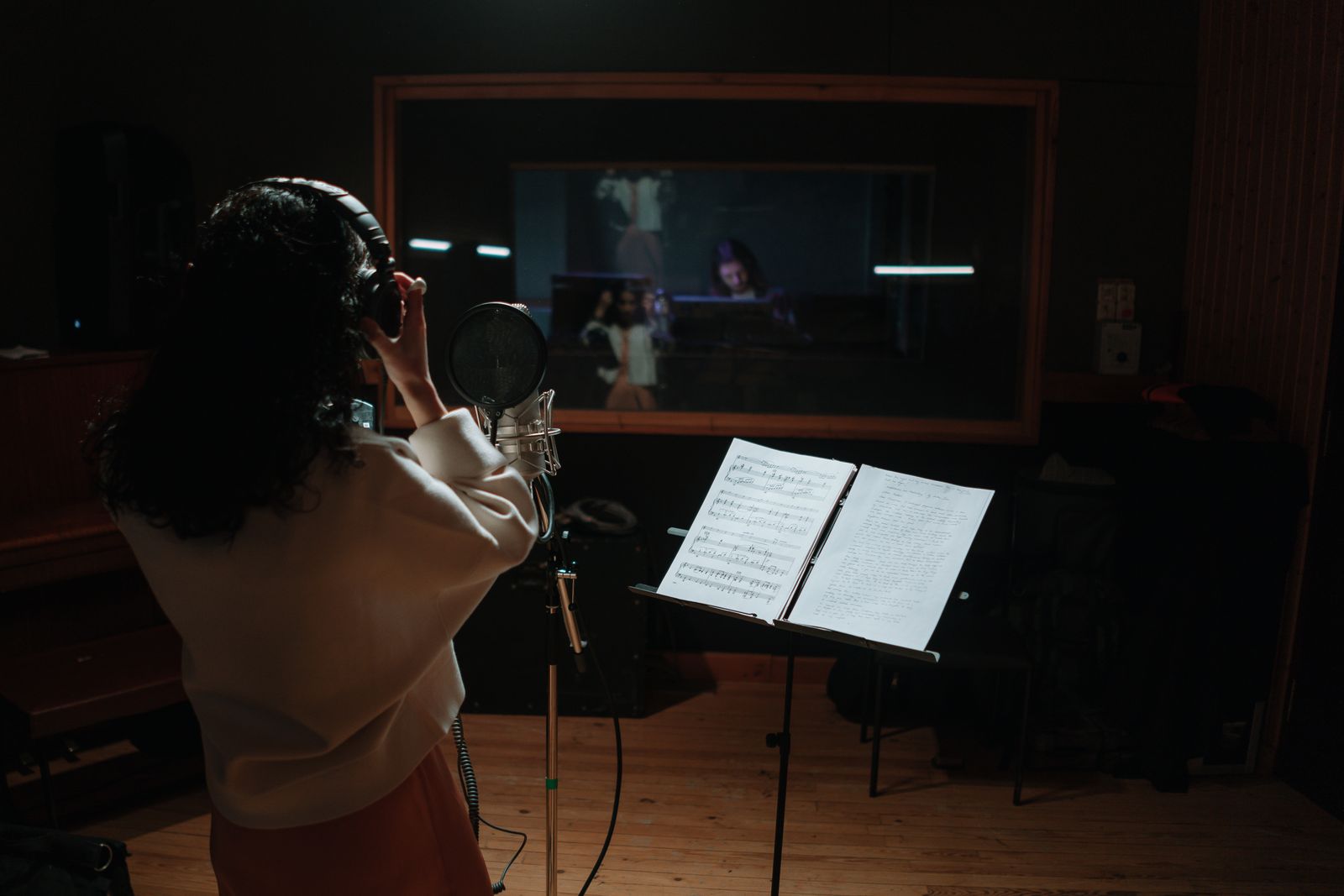 Singer recording a modern performance of a musical composition.
Step 16: Analyze any statutory exception narrowly
Educational, critical, parody, quotation, or incidental-use rules differ. Consider the exact amount, purpose, audience, market effect, and jurisdiction rather than assuming a short clip is automatically lawful.
Turn this step into a written task rather than an informal assumption. Record the responsible person, date, documents reviewed, decision, and next action. Where the step depends on law, policy, platform rules, or specialist judgment, verify the current requirement for the relevant jurisdiction and project instead of copying an old checklist.
Keep the scope narrow and avoid making claims the available evidence cannot support. Preserve original records and distinguish direct observation, third-party information, and professional analysis. This discipline makes the result more defensible and more useful to a lawyer, regulator, client, investigator, insurer, or successor who later reviews the file.
Step 17: Create a written chain of reasoning
Record sources, dates, screenshots, title variants, term calculation, composition conclusion, recording conclusion, and remaining uncertainty. This allows an editor, client, or lawyer to review the same evidence.
For practical implementation, create a short checklist and assign an owner. Record the responsible person, date, documents reviewed, decision, and next action. Where the step depends on law, policy, platform rules, or specialist judgment, verify the current requirement for the relevant jurisdiction and project instead of copying an old checklist.
When the facts are uncertain, label the uncertainty and escalate rather than inventing an answer. Preserve original records and distinguish direct observation, third-party information, and professional analysis. This discipline makes the result more defensible and more useful to a lawyer, regulator, client, investigator, insurer, or successor who later reviews the file.
Step 18: Use a new recording when only the composition is free
Commission or create your own performance of the public-domain composition. Ensure the arrangement and recording are original or properly licensed.
Apply the step consistently by recording the decision and supporting evidence. Record the responsible person, date, documents reviewed, decision, and next action. Where the step depends on law, policy, platform rules, or specialist judgment, verify the current requirement for the relevant jurisdiction and project instead of copying an old checklist.
Document exceptions because an undocumented exception quickly becomes the new rule. Preserve original records and distinguish direct observation, third-party information, and professional analysis. This discipline makes the result more defensible and more useful to a lawyer, regulator, client, investigator, insurer, or successor who later reviews the file.
Step 19: Obtain written licenses when rights remain active
Identify the rights holder and request the exact permissions for your media, territory, term, edits, monetization, and audience. Do not assume one party controls both composition and master.
A reliable workflow requires more than awareness, so build this point into the project file. Record the responsible person, date, documents reviewed, decision, and next action. Where the step depends on law, policy, platform rules, or specialist judgment, verify the current requirement for the relevant jurisdiction and project instead of copying an old checklist.
The common mistake is to treat one clue as a complete legal or factual conclusion. Preserve original records and distinguish direct observation, third-party information, and professional analysis. This discipline makes the result more defensible and more useful to a lawyer, regulator, client, investigator, insurer, or successor who later reviews the file.
Step 20: Recheck status for new territories or editions
A conclusion made for one country, date, edition, and recording may not transfer to a later project. Update the file when distribution expands or a different version is used.
Use a repeatable method that another team member could follow without guessing. Record the responsible person, date, documents reviewed, decision, and next action. Where the step depends on law, policy, platform rules, or specialist judgment, verify the current requirement for the relevant jurisdiction and project instead of copying an old checklist.
Do not let urgency replace verification. Preserve original records and distinguish direct observation, third-party information, and professional analysis. This discipline makes the result more defensible and more useful to a lawyer, regulator, client, investigator, insurer, or successor who later reviews the file.
Step 21: Use clearly documented alternatives when uncertainty is high
Original music, commissioned recordings, reputable production libraries, and well-documented public-domain collections can be more efficient than resolving a complex historical chain.
Turn this step into a written task rather than an informal assumption. Record the responsible person, date, documents reviewed, decision, and next action. Where the step depends on law, policy, platform rules, or specialist judgment, verify the current requirement for the relevant jurisdiction and project instead of copying an old checklist.
Keep the scope narrow and avoid making claims the available evidence cannot support. Preserve original records and distinguish direct observation, third-party information, and professional analysis. This discipline makes the result more defensible and more useful to a lawyer, regulator, client, investigator, insurer, or successor who later reviews the file.
Step 22: Escalate valuable or disputed uses
Obtain music-clearance counsel for films, advertisements, games, large releases, samples, international campaigns, and works with uncertain authorship or restoration history.
For practical implementation, create a short checklist and assign an owner. Record the responsible person, date, documents reviewed, decision, and next action. Where the step depends on law, policy, platform rules, or specialist judgment, verify the current requirement for the relevant jurisdiction and project instead of copying an old checklist.
When the facts are uncertain, label the uncertainty and escalate rather than inventing an answer. Preserve original records and distinguish direct observation, third-party information, and professional analysis. This discipline makes the result more defensible and more useful to a lawyer, regulator, client, investigator, insurer, or successor who later reviews the file.
Common Mistakes to Avoid
- Acting on a title, symbol, search result, stereotype, or single database entry without checking the underlying facts.
- Using screenshots as the only evidence while failing to preserve original files, metadata, correspondence, and transaction records.
- Confusing public availability with legal permission or confusing a private concern with proof of wrongdoing.
- Missing deadlines because responsibility was not assigned to a named person.
- Using an unofficial website, phone number, invoice, or paid service that imitates a government agency.
- Publishing allegations or confidential details before obtaining appropriate legal or safeguarding advice.
A 30-Day Implementation Plan
Days 1–5: define the exact objective, open the evidence file, identify urgent risks, and assign responsibility. Days 6–10: collect primary records and search official systems. Days 11–15: compare the facts with the applicable requirements and list gaps. Days 16–20: obtain permissions, agreements, professional review, or official reporting guidance. Days 21–25: complete filings, reports, licenses, safety controls, or corrective actions. Days 26–30: audit the record, calendar future deadlines, train relevant people, and store the final file securely.
Frequently Asked Questions
Is classical music public domain?
Many compositions are, but modern arrangements and recordings may still be protected.
Does “royalty free” mean public domain?
No. It usually means use is governed by a license with defined conditions.
Can I use ten seconds of any song?
There is no universal safe-duration rule.
Is a traditional song always free to use?
The underlying tradition may be free, while a particular arrangement, translation, or recording is protected.
What is the safest evidence?
A documented conclusion that separately analyzes the composition, edition, arrangement, and recording for the relevant jurisdiction.
Final Checklist
- The exact work, invention, name, incident, person, account, or report has been identified.
- Relevant dates, jurisdictions, owners, participants, and sources are documented.
- Official records or reporting channels have been checked.
- Every image, message, agreement, and piece of evidence has a clear source and storage location.
- Assumptions are labeled and unresolved questions are escalated.
- Privacy, confidentiality, and safety duties are respected.
- Deadlines, renewals, follow-up actions, and responsible owners are calendared.
Worked Example: Using an Old Song in a Documentary
A filmmaker wants to use a song commonly described as a nineteenth-century folk tune. The production team first identifies the exact melody and lyrics planned for the scene. Research shows that the traditional melody is old, but the lyrics in the chosen sheet-music edition were translated in the twentieth century and the orchestration was created by a living arranger. The commercial recording found on a streaming service was released only three years ago.
The team analyzes four layers: traditional melody, translated lyrics, modern arrangement, and modern sound recording. Even if the melody is public domain in the target country, the other layers may require permission. The filmmaker decides to use the old melody with newly written English lyrics and commissions a new arrangement and recording. Contracts assign the required rights to the production while preserving agreed credits and performer payments.
The rights memo records the title variants, historical sources, composer information, term analysis, territories, score edition, recording details, and the conclusion for each layer. It also records that the documentary will be distributed worldwide through streaming platforms, so counsel reviews countries where restoration or different copyright terms may affect the conclusion.
This example shows why searching the song title alone is not enough. The question is not merely whether “the song” is old. The question is whether every expressive element actually copied into the final soundtrack is either public domain, original, covered by an exception, or licensed for the planned distribution.
Song Status Decision Table
Create separate rows for composition, lyrics, translation, arrangement, printed edition, sound recording, and performance. For each row, list creator, owner, publication date, death date where relevant, jurisdiction, term rule, registration or catalog evidence, license, planned use, and conclusion. A green conclusion in one row does not clear the others.
Additional Verification Questions
Before approving a track, ask whether the source file is the same recording heard in the project, whether any remix or remaster introduced new material, whether lyrics were altered, whether the arrangement was copied from a recent score, and whether the license covers monetized distribution, advertising, downloadable copies, live performance, and future platform formats. Confirm whether attribution must appear on screen, in credits, in a description, or in accompanying documentation. When a library changes its terms, preserve the version accepted at the time of acquisition.
For a recurring production workflow, require editors to enter a clearance ID before an audio file can be placed in the final timeline. The ID should point to the composition analysis, recording license, invoice, and approval. This small control prevents a temporary reference track from remaining in a published film or podcast by mistake.
When uncertainty remains, do not round the conclusion up to permission. Mark the track as restricted, replace it temporarily, and require documented approval before final export. A disciplined stop rule is often more valuable than another hour of casual searching.
Final Thoughts
The strongest result comes from disciplined preparation rather than a dramatic shortcut. Identify the exact issue, separate different legal or factual layers, collect primary evidence, record the reasoning, and use the correct professional or official channel. This approach protects valuable rights, improves safety, and makes later decisions faster because the important facts are already organized.