

Photographs are generally protected as creative works when they are created and fixed, but practical protection depends on evidence, accurate registration, contracts, licensing records, and a consistent publishing workflow. Photographers also need to separate copyright ownership from model releases, property permissions, privacy duties, trademarks, and client delivery terms. The following process is designed for independent photographers, studios, agencies, photojournalists, creators, and businesses managing large image libraries.
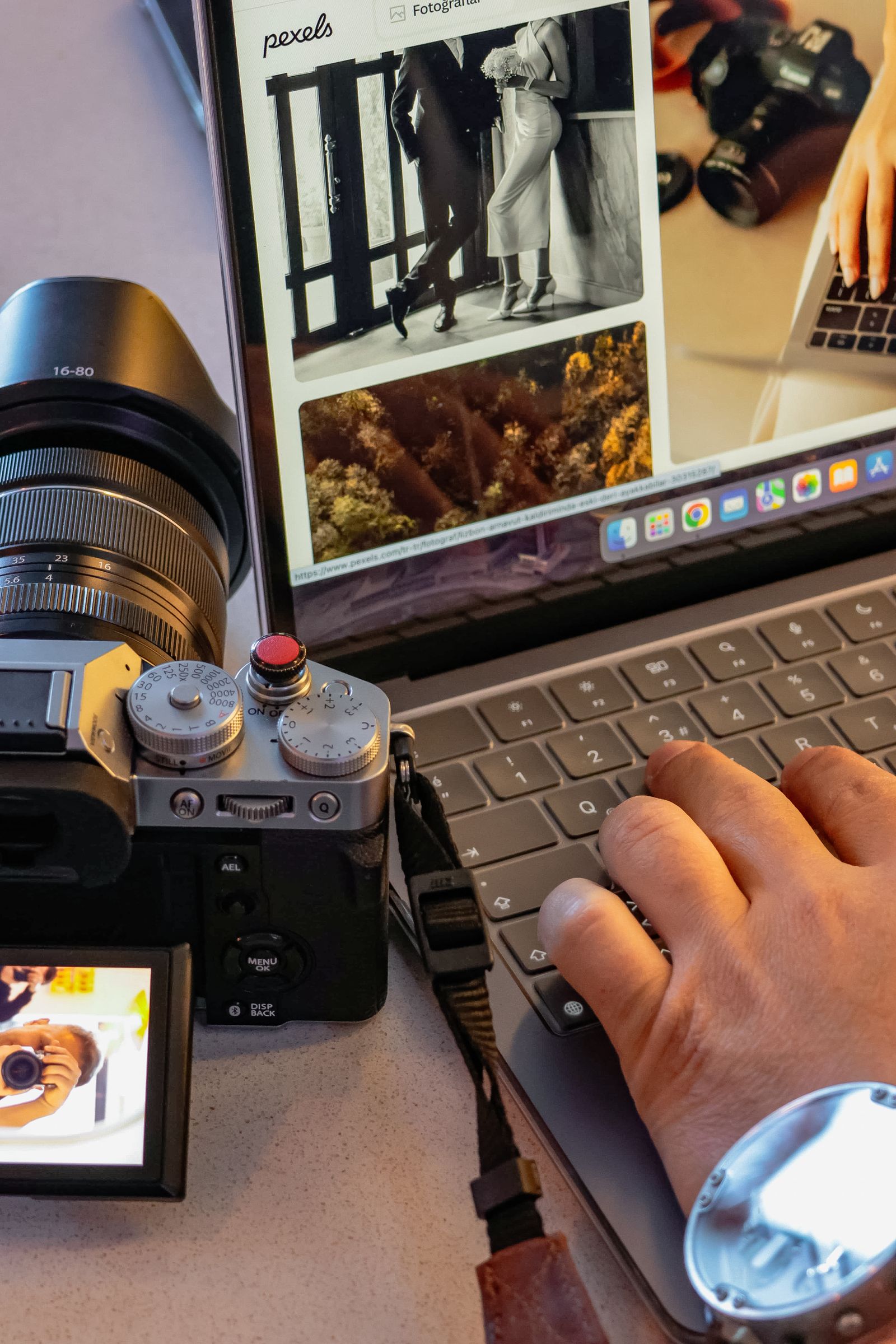 Photographer editing and organizing original images on a laptop.
Quick answer: Use a documented process, verify the exact facts and rights involved, preserve evidence, use official channels, and obtain qualified professional advice when the outcome carries significant legal, financial, or safety consequences.
Before You Begin
This guide provides general educational information for a primarily United States audience. Copyright, patent, trademark, employment, safeguarding, privacy, reporting, and criminal-law rules can vary by jurisdiction and circumstances. It is not a substitute for advice from a qualified attorney, licensed professional, emergency responder, or public authority.
Start a project folder before taking action. Include the exact item or incident, dates, names, source records, screenshots, agreements, messages, identifiers, decisions, and outstanding questions. A well-organized file prevents duplicated work and helps a professional review the matter efficiently.
Step 1: Understand when protection begins
Copyright usually attaches when an original photograph is captured and fixed in a file or film. Registration is different from creation: it builds a public record and can affect enforcement options, but an unregistered photograph may still be protected.
Turn this step into a written task rather than an informal assumption. Record the responsible person, date, documents reviewed, decision, and next action. Where the step depends on law, policy, platform rules, or specialist judgment, verify the current requirement for the relevant jurisdiction and project instead of copying an old checklist.
Keep the scope narrow and avoid making claims the available evidence cannot support. Preserve original records and distinguish direct observation, third-party information, and professional analysis. This discipline makes the result more defensible and more useful to a lawyer, regulator, client, investigator, insurer, or successor who later reviews the file.
Step 2: Confirm who is the author
The person who makes the creative photographic choices is ordinarily central to authorship. A camera owner, subject, assistant, client, or person pressing a remote button is not automatically the copyright owner. Employment and written work-made-for-hire arrangements can change the result.
For practical implementation, create a short checklist and assign an owner. Record the responsible person, date, documents reviewed, decision, and next action. Where the step depends on law, policy, platform rules, or specialist judgment, verify the current requirement for the relevant jurisdiction and project instead of copying an old checklist.
When the facts are uncertain, label the uncertainty and escalate rather than inventing an answer. Preserve original records and distinguish direct observation, third-party information, and professional analysis. This discipline makes the result more defensible and more useful to a lawyer, regulator, client, investigator, insurer, or successor who later reviews the file.
Step 3: Use written agreements for client assignments
State who owns copyright, what license the client receives, permitted media, territory, duration, exclusivity, alteration, credit, archive responsibility, and fees. Avoid ambiguous phrases such as “full rights” unless the agreement defines them.
Apply the step consistently by recording the decision and supporting evidence. Record the responsible person, date, documents reviewed, decision, and next action. Where the step depends on law, policy, platform rules, or specialist judgment, verify the current requirement for the relevant jurisdiction and project instead of copying an old checklist.
Document exceptions because an undocumented exception quickly becomes the new rule. Preserve original records and distinguish direct observation, third-party information, and professional analysis. This discipline makes the result more defensible and more useful to a lawyer, regulator, client, investigator, insurer, or successor who later reviews the file.
Step 4: Obtain releases independently from copyright
A copyright owner may still need permission to exploit a recognizable person’s likeness or private property in certain contexts. Use model, guardian, and property releases appropriate to the project and jurisdiction.
A reliable workflow requires more than awareness, so build this point into the project file. Record the responsible person, date, documents reviewed, decision, and next action. Where the step depends on law, policy, platform rules, or specialist judgment, verify the current requirement for the relevant jurisdiction and project instead of copying an old checklist.
The common mistake is to treat one clue as a complete legal or factual conclusion. Preserve original records and distinguish direct observation, third-party information, and professional analysis. This discipline makes the result more defensible and more useful to a lawyer, regulator, client, investigator, insurer, or successor who later reviews the file.
Step 5: Preserve original files and metadata
Keep raw files, original captures, camera serial information, capture time, editing history, contact sheets, and export records. Do not overwrite originals. Use a documented clock and naming system across cameras.
Use a repeatable method that another team member could follow without guessing. Record the responsible person, date, documents reviewed, decision, and next action. Where the step depends on law, policy, platform rules, or specialist judgment, verify the current requirement for the relevant jurisdiction and project instead of copying an old checklist.
Do not let urgency replace verification. Preserve original records and distinguish direct observation, third-party information, and professional analysis. This discipline makes the result more defensible and more useful to a lawyer, regulator, client, investigator, insurer, or successor who later reviews the file.
Step 6: Create an image identification system
Assign a unique filename or asset number to every photograph and connect it to shoot date, creator, client, subject, publication status, release status, license history, and registration batch. This is essential when registering or enforcing large collections.
Turn this step into a written task rather than an informal assumption. Record the responsible person, date, documents reviewed, decision, and next action. Where the step depends on law, policy, platform rules, or specialist judgment, verify the current requirement for the relevant jurisdiction and project instead of copying an old checklist.
Keep the scope narrow and avoid making claims the available evidence cannot support. Preserve original records and distinguish direct observation, third-party information, and professional analysis. This discipline makes the result more defensible and more useful to a lawyer, regulator, client, investigator, insurer, or successor who later reviews the file.
Step 7: Classify photographs as published or unpublished
Publication status can affect the correct registration option and required information. Public display online is not always identical to legal publication. Record when, where, and how copies were distributed or offered.
For practical implementation, create a short checklist and assign an owner. Record the responsible person, date, documents reviewed, decision, and next action. Where the step depends on law, policy, platform rules, or specialist judgment, verify the current requirement for the relevant jurisdiction and project instead of copying an old checklist.
When the facts are uncertain, label the uncertainty and escalate rather than inventing an answer. Preserve original records and distinguish direct observation, third-party information, and professional analysis. This discipline makes the result more defensible and more useful to a lawyer, regulator, client, investigator, insurer, or successor who later reviews the file.
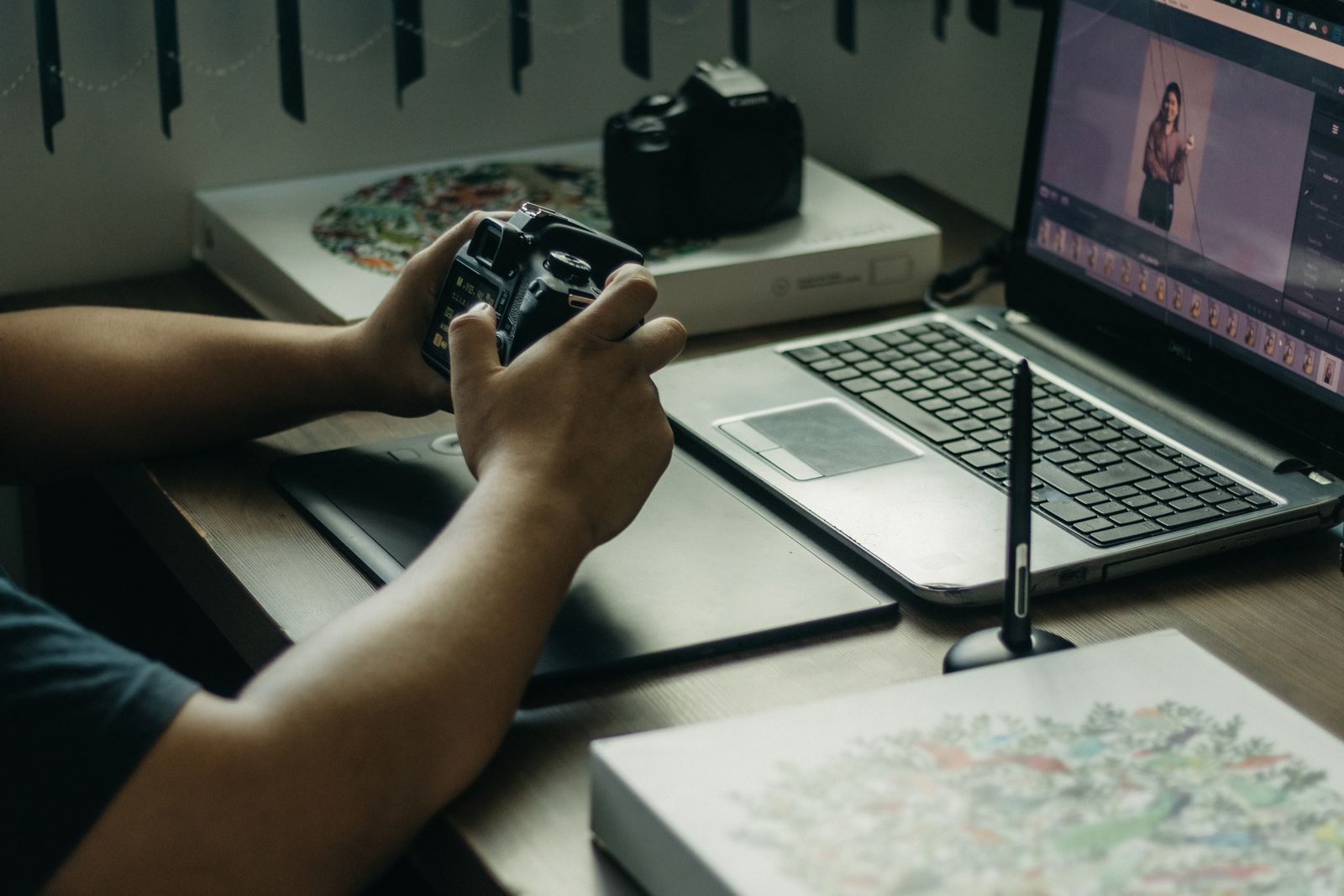 Professional photographer using a camera and digital editing tablet.
Step 8: Choose the correct registration route
Determine whether you are registering one image, a qualifying group of unpublished photographs, a qualifying group of published photographs, a contribution to a periodical, or another category. Do not force a collection into an ineligible application.
Apply the step consistently by recording the decision and supporting evidence. Record the responsible person, date, documents reviewed, decision, and next action. Where the step depends on law, policy, platform rules, or specialist judgment, verify the current requirement for the relevant jurisdiction and project instead of copying an old checklist.
Document exceptions because an undocumented exception quickly becomes the new rule. Preserve original records and distinguish direct observation, third-party information, and professional analysis. This discipline makes the result more defensible and more useful to a lawyer, regulator, client, investigator, insurer, or successor who later reviews the file.
Step 9: Prepare an accurate title list
Use consistent titles or identifying numbers and match them to the uploaded files. Check spelling, publication dates, authors, claimants, and excluded material before submission. A clean title list reduces later ownership confusion.
A reliable workflow requires more than awareness, so build this point into the project file. Record the responsible person, date, documents reviewed, decision, and next action. Where the step depends on law, policy, platform rules, or specialist judgment, verify the current requirement for the relevant jurisdiction and project instead of copying an old checklist.
The common mistake is to treat one clue as a complete legal or factual conclusion. Preserve original records and distinguish direct observation, third-party information, and professional analysis. This discipline makes the result more defensible and more useful to a lawyer, regulator, client, investigator, insurer, or successor who later reviews the file.
Step 10: Prepare deposit copies correctly
Follow current file-format, size, naming, and upload instructions. The deposit is not a portfolio presentation; it must identify the works in the claim. Keep a local copy of exactly what was submitted.
Use a repeatable method that another team member could follow without guessing. Record the responsible person, date, documents reviewed, decision, and next action. Where the step depends on law, policy, platform rules, or specialist judgment, verify the current requirement for the relevant jurisdiction and project instead of copying an old checklist.
Do not let urgency replace verification. Preserve original records and distinguish direct observation, third-party information, and professional analysis. This discipline makes the result more defensible and more useful to a lawyer, regulator, client, investigator, insurer, or successor who later reviews the file.
Step 11: Identify preexisting and excluded content
Composite photographs, retouched images, scanned artwork, licensed backgrounds, and client-provided graphics may contain material you do not own. Claim only the authorship you control and describe exclusions accurately.
Turn this step into a written task rather than an informal assumption. Record the responsible person, date, documents reviewed, decision, and next action. Where the step depends on law, policy, platform rules, or specialist judgment, verify the current requirement for the relevant jurisdiction and project instead of copying an old checklist.
Keep the scope narrow and avoid making claims the available evidence cannot support. Preserve original records and distinguish direct observation, third-party information, and professional analysis. This discipline makes the result more defensible and more useful to a lawyer, regulator, client, investigator, insurer, or successor who later reviews the file.
Step 12: Record the application and certificate
Save the submission confirmation, case number, payment, uploaded title list, deposit manifest, correspondence, and certificate. Link the registration record to every covered image in your asset system.
For practical implementation, create a short checklist and assign an owner. Record the responsible person, date, documents reviewed, decision, and next action. Where the step depends on law, policy, platform rules, or specialist judgment, verify the current requirement for the relevant jurisdiction and project instead of copying an old checklist.
When the facts are uncertain, label the uncertainty and escalate rather than inventing an answer. Preserve original records and distinguish direct observation, third-party information, and professional analysis. This discipline makes the result more defensible and more useful to a lawyer, regulator, client, investigator, insurer, or successor who later reviews the file.
Step 13: Use visible notices strategically
A notice is not required for protection in many modern situations, but it can identify the owner and reduce innocent-use claims. Use a year and owner name that match your rights records and include a permissions contact.
Apply the step consistently by recording the decision and supporting evidence. Record the responsible person, date, documents reviewed, decision, and next action. Where the step depends on law, policy, platform rules, or specialist judgment, verify the current requirement for the relevant jurisdiction and project instead of copying an old checklist.
Document exceptions because an undocumented exception quickly becomes the new rule. Preserve original records and distinguish direct observation, third-party information, and professional analysis. This discipline makes the result more defensible and more useful to a lawyer, regulator, client, investigator, insurer, or successor who later reviews the file.
Step 14: Use metadata and embedded contact information
Add creator, copyright owner, credit line, license contact, and rights statement in standard metadata fields. Platforms may strip metadata, so it should supplement rather than replace contracts and records.
A reliable workflow requires more than awareness, so build this point into the project file. Record the responsible person, date, documents reviewed, decision, and next action. Where the step depends on law, policy, platform rules, or specialist judgment, verify the current requirement for the relevant jurisdiction and project instead of copying an old checklist.
The common mistake is to treat one clue as a complete legal or factual conclusion. Preserve original records and distinguish direct observation, third-party information, and professional analysis. This discipline makes the result more defensible and more useful to a lawyer, regulator, client, investigator, insurer, or successor who later reviews the file.
Step 15: Publish previews suitable for the purpose
For proofing or portfolio use, consider dimensions, compression, watermarking, access control, and download settings. Do not assume a watermark prevents copying, and avoid damaging the viewing experience when a lower-risk method works.
Use a repeatable method that another team member could follow without guessing. Record the responsible person, date, documents reviewed, decision, and next action. Where the step depends on law, policy, platform rules, or specialist judgment, verify the current requirement for the relevant jurisdiction and project instead of copying an old checklist.
Do not let urgency replace verification. Preserve original records and distinguish direct observation, third-party information, and professional analysis. This discipline makes the result more defensible and more useful to a lawyer, regulator, client, investigator, insurer, or successor who later reviews the file.
 Photographer managing image files with laptop, camera, and external storage.
Step 16: License photographs with precise terms
Define the image, client, project, media, placement, size, territory, term, audience, exclusivity, edits, sublicensing, artificial-intelligence use, archives, and fee. A usage license is clearer than selling an undefined “photo.”
Turn this step into a written task rather than an informal assumption. Record the responsible person, date, documents reviewed, decision, and next action. Where the step depends on law, policy, platform rules, or specialist judgment, verify the current requirement for the relevant jurisdiction and project instead of copying an old checklist.
Keep the scope narrow and avoid making claims the available evidence cannot support. Preserve original records and distinguish direct observation, third-party information, and professional analysis. This discipline makes the result more defensible and more useful to a lawyer, regulator, client, investigator, insurer, or successor who later reviews the file.
Step 17: Track every license and expiration date
Maintain a rights ledger linking each image to invoices, clients, campaigns, territories, and dates. This prevents accidental conflicting exclusivity and enables renewals.
For practical implementation, create a short checklist and assign an owner. Record the responsible person, date, documents reviewed, decision, and next action. Where the step depends on law, policy, platform rules, or specialist judgment, verify the current requirement for the relevant jurisdiction and project instead of copying an old checklist.
When the facts are uncertain, label the uncertainty and escalate rather than inventing an answer. Preserve original records and distinguish direct observation, third-party information, and professional analysis. This discipline makes the result more defensible and more useful to a lawyer, regulator, client, investigator, insurer, or successor who later reviews the file.
Step 18: Control subcontractor and second-shooter rights
Assistants and second shooters may create protectable images. Agreements should address ownership, portfolio use, confidentiality, file delivery, credits, releases, and responsibility for storage.
Apply the step consistently by recording the decision and supporting evidence. Record the responsible person, date, documents reviewed, decision, and next action. Where the step depends on law, policy, platform rules, or specialist judgment, verify the current requirement for the relevant jurisdiction and project instead of copying an old checklist.
Document exceptions because an undocumented exception quickly becomes the new rule. Preserve original records and distinguish direct observation, third-party information, and professional analysis. This discipline makes the result more defensible and more useful to a lawyer, regulator, client, investigator, insurer, or successor who later reviews the file.
Step 19: Monitor important commercial images
Use reverse-image search, platform tools, client monitoring, and periodic web checks. Prioritize images with significant licensing value rather than attempting to monitor every personal photograph continuously.
A reliable workflow requires more than awareness, so build this point into the project file. Record the responsible person, date, documents reviewed, decision, and next action. Where the step depends on law, policy, platform rules, or specialist judgment, verify the current requirement for the relevant jurisdiction and project instead of copying an old checklist.
The common mistake is to treat one clue as a complete legal or factual conclusion. Preserve original records and distinguish direct observation, third-party information, and professional analysis. This discipline makes the result more defensible and more useful to a lawyer, regulator, client, investigator, insurer, or successor who later reviews the file.
Step 20: Preserve evidence of unauthorized use
Capture the complete webpage, URL, date, context, source code where useful, advertisements, product pages, and sales indicators. Preserve your original and registration evidence before requesting removal.
Use a repeatable method that another team member could follow without guessing. Record the responsible person, date, documents reviewed, decision, and next action. Where the step depends on law, policy, platform rules, or specialist judgment, verify the current requirement for the relevant jurisdiction and project instead of copying an old checklist.
Do not let urgency replace verification. Preserve original records and distinguish direct observation, third-party information, and professional analysis. This discipline makes the result more defensible and more useful to a lawyer, regulator, client, investigator, insurer, or successor who later reviews the file.
Step 21: Choose an enforcement goal
Decide whether you want attribution correction, licensing payment, removal, preservation of evidence, platform action, or litigation review. The appropriate response depends on scale, jurisdiction, defenses, and commercial value.
Turn this step into a written task rather than an informal assumption. Record the responsible person, date, documents reviewed, decision, and next action. Where the step depends on law, policy, platform rules, or specialist judgment, verify the current requirement for the relevant jurisdiction and project instead of copying an old checklist.
Keep the scope narrow and avoid making claims the available evidence cannot support. Preserve original records and distinguish direct observation, third-party information, and professional analysis. This discipline makes the result more defensible and more useful to a lawyer, regulator, client, investigator, insurer, or successor who later reviews the file.
Step 22: Maintain backups and a succession plan
Store originals, catalogs, registrations, releases, and contracts in geographically separate backups. Document how heirs, partners, or a studio manager can locate and administer the archive.
For practical implementation, create a short checklist and assign an owner. Record the responsible person, date, documents reviewed, decision, and next action. Where the step depends on law, policy, platform rules, or specialist judgment, verify the current requirement for the relevant jurisdiction and project instead of copying an old checklist.
When the facts are uncertain, label the uncertainty and escalate rather than inventing an answer. Preserve original records and distinguish direct observation, third-party information, and professional analysis. This discipline makes the result more defensible and more useful to a lawyer, regulator, client, investigator, insurer, or successor who later reviews the file.
Common Mistakes to Avoid
- Acting on a title, symbol, search result, stereotype, or single database entry without checking the underlying facts.
- Using screenshots as the only evidence while failing to preserve original files, metadata, correspondence, and transaction records.
- Confusing public availability with legal permission or confusing a private concern with proof of wrongdoing.
- Missing deadlines because responsibility was not assigned to a named person.
- Using an unofficial website, phone number, invoice, or paid service that imitates a government agency.
- Publishing allegations or confidential details before obtaining appropriate legal or safeguarding advice.
A 30-Day Implementation Plan
Days 1–5: define the exact objective, open the evidence file, identify urgent risks, and assign responsibility. Days 6–10: collect primary records and search official systems. Days 11–15: compare the facts with the applicable requirements and list gaps. Days 16–20: obtain permissions, agreements, professional review, or official reporting guidance. Days 21–25: complete filings, reports, licenses, safety controls, or corrective actions. Days 26–30: audit the record, calendar future deadlines, train relevant people, and store the final file securely.
Frequently Asked Questions
Do I need to put a watermark on every photo?
No. Watermarks are one deterrent, not the source of copyright.
Can a client own the copyright because they paid for the shoot?
Payment alone does not necessarily transfer ownership. The contract and applicable employment or work-made-for-hire law matter.
Can I register many photographs together?
Qualifying group options exist, but the correct application and eligibility rules must be followed.
Does a model release transfer copyright?
No. A release and copyright ownership address different rights.
Should I delete raw files after delivery?
Retaining originals and secure backups is usually important for authorship evidence and future licensing, subject to privacy and contract duties.
Final Checklist
- The exact work, invention, name, incident, person, account, or report has been identified.
- Relevant dates, jurisdictions, owners, participants, and sources are documented.
- Official records or reporting channels have been checked.
- Every image, message, agreement, and piece of evidence has a clear source and storage location.
- Assumptions are labeled and unresolved questions are escalated.
- Privacy, confidentiality, and safety duties are respected.
- Deadlines, renewals, follow-up actions, and responsible owners are calendared.
Worked Example: Registering a Month of Client and Personal Photographs
A photographer finishes a month containing a wedding assignment, an unpublished portrait project, and editorial photographs first distributed to a magazine. Rather than uploading everything through one generic application, the photographer separates the images by publication status, ownership, and registration eligibility. The wedding contract confirms that the photographer retained copyright and granted the couple a personal-use license. Second-shooter agreements transfer or license the necessary rights and identify which person created each file.
The photographer exports a catalog report containing unique image IDs, capture dates, authors, publication dates, clients, releases, and registration groups. Raw files and original metadata remain untouched. Deposit copies are generated to the current technical requirements and checked against the title list. Images containing licensed artwork or client-supplied graphics are flagged so the claim accurately excludes preexisting material.
After submission, the photographer saves the confirmation, title list, deposit manifest, payment record, correspondence, and certificate. Each image record receives the registration number. The portfolio website displays selected lower-resolution copies with creator metadata and a permissions address. Model-release status remains a separate field because copyright registration does not create permission to use a person’s likeness in advertising.
When an online retailer later uses one portrait on product packaging, the photographer captures the listing, packaging photographs, seller identity, price, date, and page source. The original raw file, assignment contract, registration record, and license history are ready for counsel. The strength of the claim comes from the complete chain of evidence, not from a watermark alone.
Photography Archive Checklist
For every job, keep the brief, contract, releases, call sheets, contributor agreements, raw files, metadata, selection history, edit files, delivered exports, client approvals, invoices, licenses, publication evidence, registration records, and enforcement correspondence. Use redundant backups and test recovery periodically.
Additional Quality-Control Review
Before closing a registration batch, compare the number of files, title-list rows, authors, publication dates, and claimants. Open a sample of deposit copies to confirm they are readable and correspond to the listed IDs. Verify that ownership transfers and second-shooter agreements were signed before relying on them. Finally, calendar follow-up for correspondence and store the certificate with the same catalog rather than in a general downloads folder. This final review is especially important for high-volume photography because one spreadsheet error can separate a registration record from hundreds of valuable images.
Final Thoughts
The strongest result comes from disciplined preparation rather than a dramatic shortcut. Identify the exact issue, separate different legal or factual layers, collect primary evidence, record the reasoning, and use the correct professional or official channel. This approach protects valuable rights, improves safety, and makes later decisions faster because the important facts are already organized.