

A song is not one legal asset. The composition—music and lyrics—and the sound recording are separate works that may have different authors, owners, registrations, royalty streams, and licenses. A release can also involve performers, producers, samples, artwork, distribution agreements, neighboring rights, trademarks, and name-and-likeness permissions. Protecting your music therefore requires organized evidence and contracts before the track becomes valuable, not only a copyright notice after release.
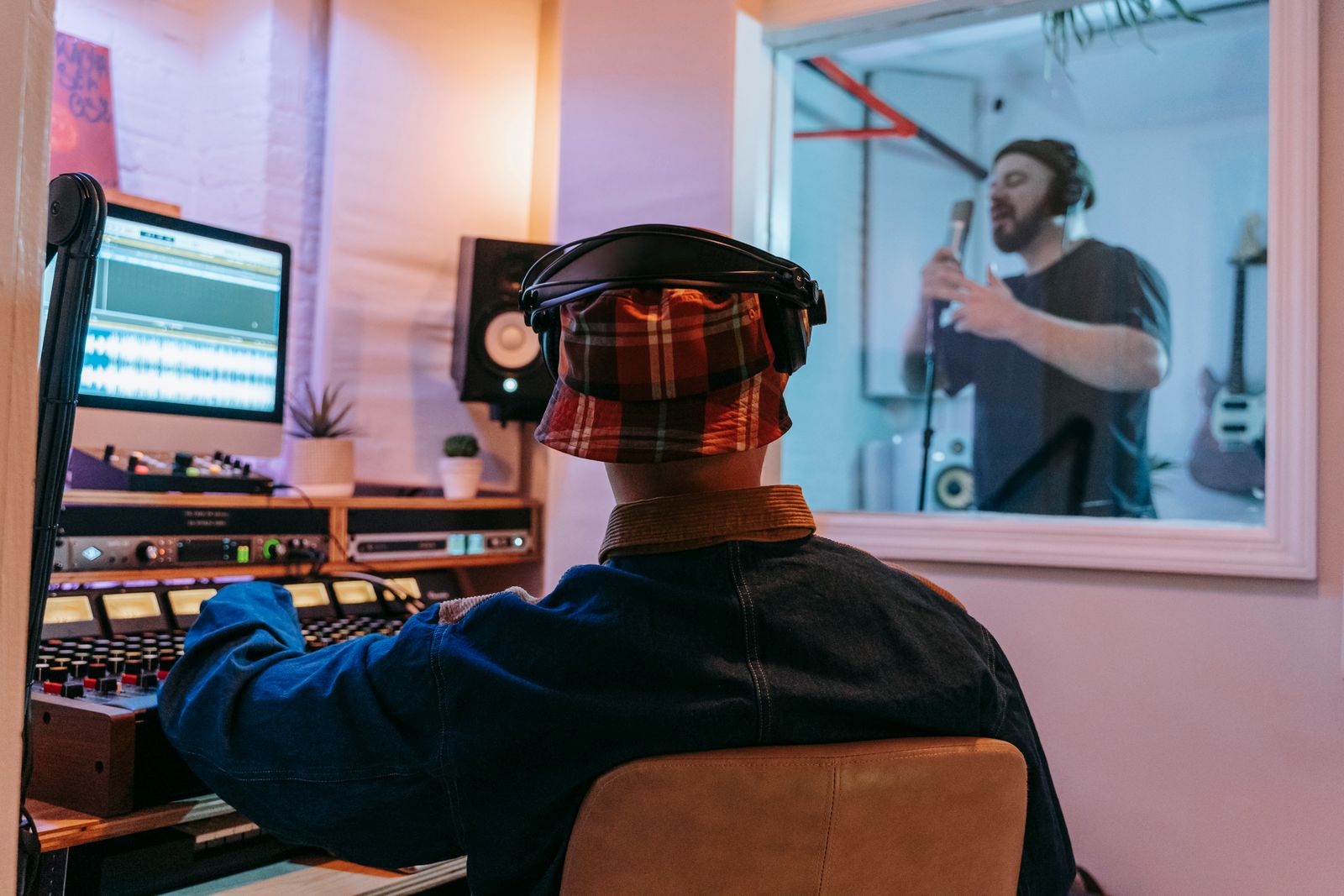 Producer and vocalist recording an original song in a professional studio.
Quick answer: Use a documented process, verify the exact facts and rights involved, preserve evidence, use official channels, and obtain qualified professional advice when the outcome carries significant legal, financial, or safety consequences.
Before You Begin
This guide provides general educational information for a primarily United States audience. Copyright, patent, trademark, employment, safeguarding, privacy, reporting, and criminal-law rules can vary by jurisdiction and circumstances. It is not a substitute for advice from a qualified attorney, licensed professional, emergency responder, or public authority.
Start a project folder before taking action. Include the exact item or incident, dates, names, source records, screenshots, agreements, messages, identifiers, decisions, and outstanding questions. A well-organized file prevents duplicated work and helps a professional review the matter efficiently.
Step 1: Separate the composition from the sound recording
Document the musical composition and the master recording as distinct assets. List songwriters and lyricists for the composition, then list performers, producers, engineers, and the person or company financing and controlling the master. This separation prevents royalty and licensing confusion later.
Turn this step into a written task rather than an informal assumption. Record the responsible person, date, documents reviewed, decision, and next action. Where the step depends on law, policy, platform rules, or specialist judgment, verify the current requirement for the relevant jurisdiction and project instead of copying an old checklist.
Keep the scope narrow and avoid making claims the available evidence cannot support. Preserve original records and distinguish direct observation, third-party information, and professional analysis. This discipline makes the result more defensible and more useful to a lawyer, regulator, client, investigator, insurer, or successor who later reviews the file.
Step 2: Capture evidence from the first writing session
Keep dated lyric drafts, voice notes, project files, notation, stems, session exports, emails, and cloud version history. Evidence should show development and contribution, not merely a final file uploaded after a dispute begins.
For practical implementation, create a short checklist and assign an owner. Record the responsible person, date, documents reviewed, decision, and next action. Where the step depends on law, policy, platform rules, or specialist judgment, verify the current requirement for the relevant jurisdiction and project instead of copying an old checklist.
When the facts are uncertain, label the uncertainty and escalate rather than inventing an answer. Preserve original records and distinguish direct observation, third-party information, and professional analysis. This discipline makes the result more defensible and more useful to a lawyer, regulator, client, investigator, insurer, or successor who later reviews the file.
Step 3: Agree on songwriting splits before release
Use a signed split sheet identifying the song, legal names, performing-rights affiliations, publisher information, ownership percentages, and contact details. Percentages should total correctly and distinguish composition shares from master points or producer royalties.
Apply the step consistently by recording the decision and supporting evidence. Record the responsible person, date, documents reviewed, decision, and next action. Where the step depends on law, policy, platform rules, or specialist judgment, verify the current requirement for the relevant jurisdiction and project instead of copying an old checklist.
Document exceptions because an undocumented exception quickly becomes the new rule. Preserve original records and distinguish direct observation, third-party information, and professional analysis. This discipline makes the result more defensible and more useful to a lawyer, regulator, client, investigator, insurer, or successor who later reviews the file.
Step 4: Use collaboration agreements for recurring projects
A broader agreement can address ownership of unfinished material, decision-making, expenses, credit, confidentiality, approval, samples, withdrawal, catalog exploitation, and what happens when a member leaves. Do not rely on friendship to answer commercial questions.
A reliable workflow requires more than awareness, so build this point into the project file. Record the responsible person, date, documents reviewed, decision, and next action. Where the step depends on law, policy, platform rules, or specialist judgment, verify the current requirement for the relevant jurisdiction and project instead of copying an old checklist.
The common mistake is to treat one clue as a complete legal or factual conclusion. Preserve original records and distinguish direct observation, third-party information, and professional analysis. This discipline makes the result more defensible and more useful to a lawyer, regulator, client, investigator, insurer, or successor who later reviews the file.
Step 5: Register the composition accurately
Choose the correct registration option, identify authorship and ownership truthfully, and exclude preexisting material when required. Registering a composition does not automatically register a separately owned sound recording.
Use a repeatable method that another team member could follow without guessing. Record the responsible person, date, documents reviewed, decision, and next action. Where the step depends on law, policy, platform rules, or specialist judgment, verify the current requirement for the relevant jurisdiction and project instead of copying an old checklist.
Do not let urgency replace verification. Preserve original records and distinguish direct observation, third-party information, and professional analysis. This discipline makes the result more defensible and more useful to a lawyer, regulator, client, investigator, insurer, or successor who later reviews the file.
Step 6: Register the sound recording when appropriate
Identify the performers and producer contributions that constitute authorship and the current claimant. Where composition and recording ownership are identical, determine whether a combined filing option is available; otherwise treat them separately.
Turn this step into a written task rather than an informal assumption. Record the responsible person, date, documents reviewed, decision, and next action. Where the step depends on law, policy, platform rules, or specialist judgment, verify the current requirement for the relevant jurisdiction and project instead of copying an old checklist.
Keep the scope narrow and avoid making claims the available evidence cannot support. Preserve original records and distinguish direct observation, third-party information, and professional analysis. This discipline makes the result more defensible and more useful to a lawyer, regulator, client, investigator, insurer, or successor who later reviews the file.
Step 7: Evaluate group and album registration options
Album-oriented registration can be efficient, but eligibility rules, publication status, ownership, and limits matter. Use the application designed for the category rather than placing unrelated works into a standard application.
For practical implementation, create a short checklist and assign an owner. Record the responsible person, date, documents reviewed, decision, and next action. Where the step depends on law, policy, platform rules, or specialist judgment, verify the current requirement for the relevant jurisdiction and project instead of copying an old checklist.
When the facts are uncertain, label the uncertainty and escalate rather than inventing an answer. Preserve original records and distinguish direct observation, third-party information, and professional analysis. This discipline makes the result more defensible and more useful to a lawyer, regulator, client, investigator, insurer, or successor who later reviews the file.
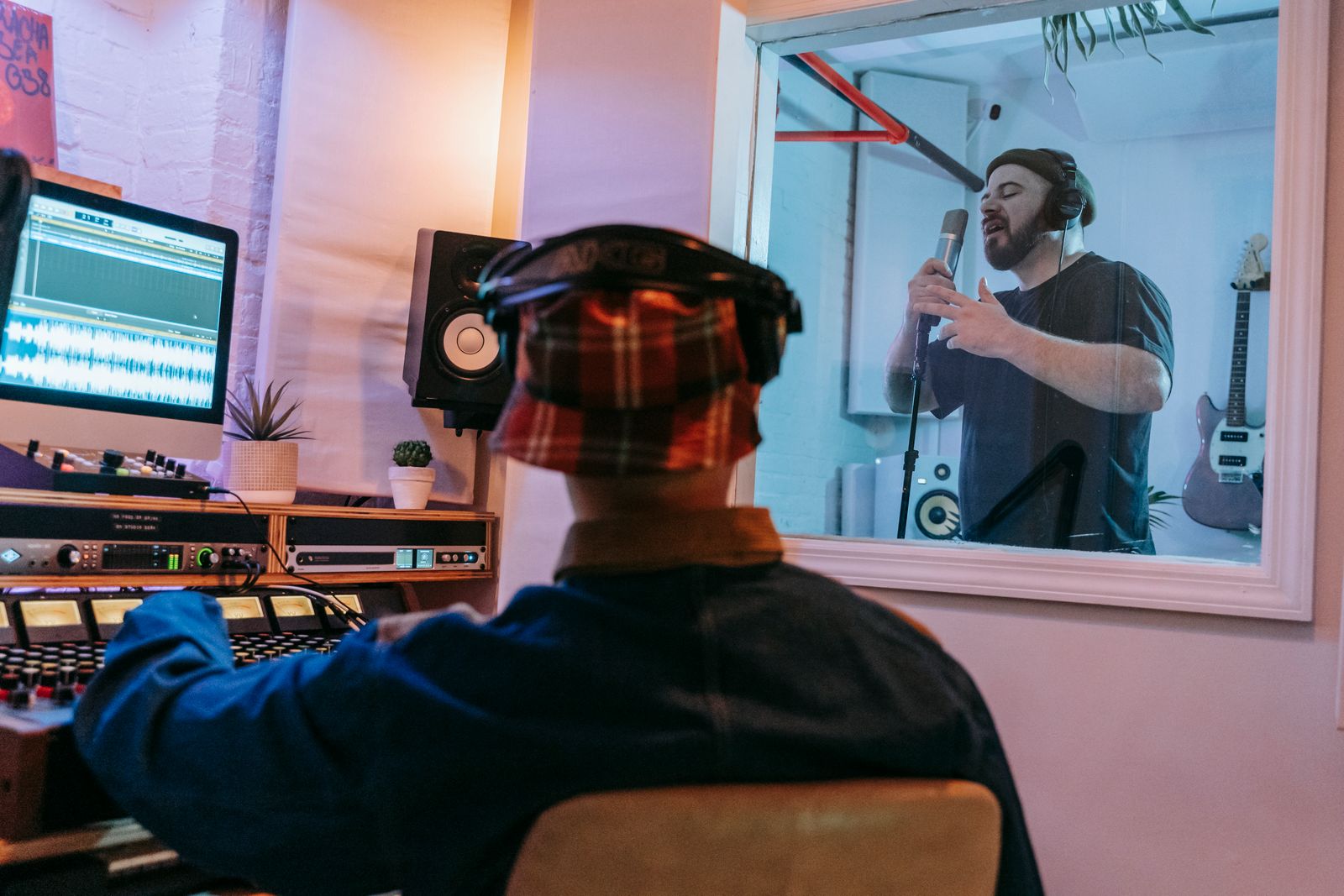 Audio engineer monitoring a singer during a studio recording session.
Step 8: Secure producer and featured-artist agreements
Define fees, royalty points, recoupment, ownership of session files, delivery requirements, credit, approvals, neighboring-rights income, promotional use, and whether the producer contributed to the composition. Obtain signatures before the commercial release.
Apply the step consistently by recording the decision and supporting evidence. Record the responsible person, date, documents reviewed, decision, and next action. Where the step depends on law, policy, platform rules, or specialist judgment, verify the current requirement for the relevant jurisdiction and project instead of copying an old checklist.
Document exceptions because an undocumented exception quickly becomes the new rule. Preserve original records and distinguish direct observation, third-party information, and professional analysis. This discipline makes the result more defensible and more useful to a lawyer, regulator, client, investigator, insurer, or successor who later reviews the file.
Step 9: Obtain musician and vocalist releases
Session performers should authorize recording, editing, distribution, promotion, and exploitation on agreed terms. Union rules, local performer rights, and statutory remuneration can still apply, so use agreements suited to the territory and project.
A reliable workflow requires more than awareness, so build this point into the project file. Record the responsible person, date, documents reviewed, decision, and next action. Where the step depends on law, policy, platform rules, or specialist judgment, verify the current requirement for the relevant jurisdiction and project instead of copying an old checklist.
The common mistake is to treat one clue as a complete legal or factual conclusion. Preserve original records and distinguish direct observation, third-party information, and professional analysis. This discipline makes the result more defensible and more useful to a lawyer, regulator, client, investigator, insurer, or successor who later reviews the file.
Step 10: Clear every sample and interpolation
A sample may require permission for both the recording and composition. An interpolation may avoid copying the master but still use the composition. Do not rely on a sample being short, altered, obscure, or available in production software without checking its license.
Use a repeatable method that another team member could follow without guessing. Record the responsible person, date, documents reviewed, decision, and next action. Where the step depends on law, policy, platform rules, or specialist judgment, verify the current requirement for the relevant jurisdiction and project instead of copying an old checklist.
Do not let urgency replace verification. Preserve original records and distinguish direct observation, third-party information, and professional analysis. This discipline makes the result more defensible and more useful to a lawyer, regulator, client, investigator, insurer, or successor who later reviews the file.
Step 11: Review beat and loop licenses
Read whether a beat is exclusive or nonexclusive, how many streams or units are allowed, whether content identification is permitted, whether stems are provided, and whether the producer retains publishing. Save the exact license version and proof of purchase.
Turn this step into a written task rather than an informal assumption. Record the responsible person, date, documents reviewed, decision, and next action. Where the step depends on law, policy, platform rules, or specialist judgment, verify the current requirement for the relevant jurisdiction and project instead of copying an old checklist.
Keep the scope narrow and avoid making claims the available evidence cannot support. Preserve original records and distinguish direct observation, third-party information, and professional analysis. This discipline makes the result more defensible and more useful to a lawyer, regulator, client, investigator, insurer, or successor who later reviews the file.
Step 12: Protect your artist and project names
Search names before investing in branding. Copyright does not normally protect a name. Trademark rights may become relevant when a name identifies music, entertainment, merchandise, or related services.
For practical implementation, create a short checklist and assign an owner. Record the responsible person, date, documents reviewed, decision, and next action. Where the step depends on law, policy, platform rules, or specialist judgment, verify the current requirement for the relevant jurisdiction and project instead of copying an old checklist.
When the facts are uncertain, label the uncertainty and escalate rather than inventing an answer. Preserve original records and distinguish direct observation, third-party information, and professional analysis. This discipline makes the result more defensible and more useful to a lawyer, regulator, client, investigator, insurer, or successor who later reviews the file.
Step 13: Add complete metadata to every delivery
Include legal names, stage names, songwriter splits, ISRC, ISWC when available, publisher, performing-rights organization, label, release date, explicit status, credits, and contact information. Metadata errors can separate money from the people entitled to receive it.
Apply the step consistently by recording the decision and supporting evidence. Record the responsible person, date, documents reviewed, decision, and next action. Where the step depends on law, policy, platform rules, or specialist judgment, verify the current requirement for the relevant jurisdiction and project instead of copying an old checklist.
Document exceptions because an undocumented exception quickly becomes the new rule. Preserve original records and distinguish direct observation, third-party information, and professional analysis. This discipline makes the result more defensible and more useful to a lawyer, regulator, client, investigator, insurer, or successor who later reviews the file.
Step 14: Join the organizations relevant to your rights
Depending on country and role, performing-rights organizations, mechanical-licensing systems, neighboring-rights organizations, unions, and collective management bodies may administer different income. Registration with one organization rarely captures every royalty.
A reliable workflow requires more than awareness, so build this point into the project file. Record the responsible person, date, documents reviewed, decision, and next action. Where the step depends on law, policy, platform rules, or specialist judgment, verify the current requirement for the relevant jurisdiction and project instead of copying an old checklist.
The common mistake is to treat one clue as a complete legal or factual conclusion. Preserve original records and distinguish direct observation, third-party information, and professional analysis. This discipline makes the result more defensible and more useful to a lawyer, regulator, client, investigator, insurer, or successor who later reviews the file.
Step 15: Control access to masters and sessions
Use permissions, backups, project naming rules, and delivery logs. Share watermarked previews or limited-access links when appropriate. Keep original multitracks, stems, contracts, and final masters in separate secure backups.
Use a repeatable method that another team member could follow without guessing. Record the responsible person, date, documents reviewed, decision, and next action. Where the step depends on law, policy, platform rules, or specialist judgment, verify the current requirement for the relevant jurisdiction and project instead of copying an old checklist.
Do not let urgency replace verification. Preserve original records and distinguish direct observation, third-party information, and professional analysis. This discipline makes the result more defensible and more useful to a lawyer, regulator, client, investigator, insurer, or successor who later reviews the file.
 Recording session showing vocalist, mixing console, and studio equipment.
Step 16: Use written licenses for every commercial placement
A synchronization, master-use, podcast, game, advertisement, film, user-generated-content, or brand license should identify the rights granted, media, territory, term, exclusivity, fee, edit rights, credits, reporting, and renewal.
Turn this step into a written task rather than an informal assumption. Record the responsible person, date, documents reviewed, decision, and next action. Where the step depends on law, policy, platform rules, or specialist judgment, verify the current requirement for the relevant jurisdiction and project instead of copying an old checklist.
Keep the scope narrow and avoid making claims the available evidence cannot support. Preserve original records and distinguish direct observation, third-party information, and professional analysis. This discipline makes the result more defensible and more useful to a lawyer, regulator, client, investigator, insurer, or successor who later reviews the file.
Step 17: Review distribution and label contracts carefully
Understand ownership, license term, territories, deductions, recoupable costs, reserves, royalty calculations, audit rights, delivery commitments, takedown powers, options, and reversion. A high headline percentage can be less valuable than a transparent accounting clause.
For practical implementation, create a short checklist and assign an owner. Record the responsible person, date, documents reviewed, decision, and next action. Where the step depends on law, policy, platform rules, or specialist judgment, verify the current requirement for the relevant jurisdiction and project instead of copying an old checklist.
When the facts are uncertain, label the uncertainty and escalate rather than inventing an answer. Preserve original records and distinguish direct observation, third-party information, and professional analysis. This discipline makes the result more defensible and more useful to a lawyer, regulator, client, investigator, insurer, or successor who later reviews the file.
Step 18: Monitor platforms without making reckless claims
Use fingerprinting and monitoring services responsibly. Confirm ownership before issuing takedowns or content-identification claims, especially when collaborators, licensees, public-domain material, or nonexclusive beats are involved.
Apply the step consistently by recording the decision and supporting evidence. Record the responsible person, date, documents reviewed, decision, and next action. Where the step depends on law, policy, platform rules, or specialist judgment, verify the current requirement for the relevant jurisdiction and project instead of copying an old checklist.
Document exceptions because an undocumented exception quickly becomes the new rule. Preserve original records and distinguish direct observation, third-party information, and professional analysis. This discipline makes the result more defensible and more useful to a lawyer, regulator, client, investigator, insurer, or successor who later reviews the file.
Step 19: Document infringements before contacting anyone
Capture URLs, dates, screenshots, files, account names, view counts, advertisements, and sales evidence. Preserve your ownership file. Begin with the platform or party best positioned to resolve the issue and avoid public accusations before verification.
A reliable workflow requires more than awareness, so build this point into the project file. Record the responsible person, date, documents reviewed, decision, and next action. Where the step depends on law, policy, platform rules, or specialist judgment, verify the current requirement for the relevant jurisdiction and project instead of copying an old checklist.
The common mistake is to treat one clue as a complete legal or factual conclusion. Preserve original records and distinguish direct observation, third-party information, and professional analysis. This discipline makes the result more defensible and more useful to a lawyer, regulator, client, investigator, insurer, or successor who later reviews the file.
Step 20: Send proportionate enforcement communications
A professional notice should identify the protected work, alleged use, ownership basis, requested action, and response deadline. Consider whether licensing, attribution correction, revenue sharing, or removal is the appropriate goal.
Use a repeatable method that another team member could follow without guessing. Record the responsible person, date, documents reviewed, decision, and next action. Where the step depends on law, policy, platform rules, or specialist judgment, verify the current requirement for the relevant jurisdiction and project instead of copying an old checklist.
Do not let urgency replace verification. Preserve original records and distinguish direct observation, third-party information, and professional analysis. This discipline makes the result more defensible and more useful to a lawyer, regulator, client, investigator, insurer, or successor who later reviews the file.
Step 21: Audit royalties and statements
Reconcile distributor statements, publishing data, performance reports, licenses, split sheets, and bank receipts. Investigate unmatched or unidentified uses. Contractual audit deadlines can be short, so schedule reviews.
Turn this step into a written task rather than an informal assumption. Record the responsible person, date, documents reviewed, decision, and next action. Where the step depends on law, policy, platform rules, or specialist judgment, verify the current requirement for the relevant jurisdiction and project instead of copying an old checklist.
Keep the scope narrow and avoid making claims the available evidence cannot support. Preserve original records and distinguish direct observation, third-party information, and professional analysis. This discipline makes the result more defensible and more useful to a lawyer, regulator, client, investigator, insurer, or successor who later reviews the file.
Step 22: Plan for catalog succession and emergencies
Maintain a catalog schedule showing ownership, registrations, agreements, passwords, organizations, and royalty accounts. Use estate planning and business-continuity measures so rights and income do not become inaccessible after incapacity, death, or a partnership breakup.
For practical implementation, create a short checklist and assign an owner. Record the responsible person, date, documents reviewed, decision, and next action. Where the step depends on law, policy, platform rules, or specialist judgment, verify the current requirement for the relevant jurisdiction and project instead of copying an old checklist.
When the facts are uncertain, label the uncertainty and escalate rather than inventing an answer. Preserve original records and distinguish direct observation, third-party information, and professional analysis. This discipline makes the result more defensible and more useful to a lawyer, regulator, client, investigator, insurer, or successor who later reviews the file.
Common Mistakes to Avoid
- Acting on a title, symbol, search result, stereotype, or single database entry without checking the underlying facts.
- Using screenshots as the only evidence while failing to preserve original files, metadata, correspondence, and transaction records.
- Confusing public availability with legal permission or confusing a private concern with proof of wrongdoing.
- Missing deadlines because responsibility was not assigned to a named person.
- Using an unofficial website, phone number, invoice, or paid service that imitates a government agency.
- Publishing allegations or confidential details before obtaining appropriate legal or safeguarding advice.
A 30-Day Implementation Plan
Days 1–5: define the exact objective, open the evidence file, identify urgent risks, and assign responsibility. Days 6–10: collect primary records and search official systems. Days 11–15: compare the facts with the applicable requirements and list gaps. Days 16–20: obtain permissions, agreements, professional review, or official reporting guidance. Days 21–25: complete filings, reports, licenses, safety controls, or corrective actions. Days 26–30: audit the record, calendar future deadlines, train relevant people, and store the final file securely.
Frequently Asked Questions
Does mailing a song to myself protect it?
A sealed envelope is not a substitute for reliable creation records, contracts, and formal registration where available.
Do I own a beat after buying a license?
Usually you receive defined usage rights, not necessarily ownership. Read the exact agreement.
Are the composition and master automatically owned by the same person?
No. They can have different creators and owners.
Can I sample a few seconds without permission?
There is no universal safe-duration rule. Clear the relevant rights or obtain legal advice.
What is the most important first document?
For co-written music, a complete signed split sheet created while everyone remembers the session is exceptionally valuable.
Final Checklist
- The exact work, invention, name, incident, person, account, or report has been identified.
- Relevant dates, jurisdictions, owners, participants, and sources are documented.
- Official records or reporting channels have been checked.
- Every image, message, agreement, and piece of evidence has a clear source and storage location.
- Assumptions are labeled and unresolved questions are escalated.
- Privacy, confidentiality, and safety duties are respected.
- Deadlines, renewals, follow-up actions, and responsible owners are calendared.
Worked Example: Protecting an Independent Single
An artist, producer, and guest vocalist create a single during two studio sessions. Before release, they identify four separate assets: the composition, the master recording, cover artwork, and promotional photographs. The artist and producer co-wrote the music, while the artist wrote the lyrics. A split sheet records composition percentages. A producer agreement addresses the master, fee, royalty points, delivery of stems, credit, and whether producer royalties are calculated before or after specified deductions.
The guest vocalist signs a release permitting recording, editing, distribution, and promotion, while reserving any mandatory performer remuneration available under local law. The team confirms that a drum loop came from a subscription library and saves the receipt, account details, and license version. Because the platform’s license prohibits registering the raw loop in a content-identification system, the distributor is instructed accordingly.
The composition and master are registered through the appropriate applications. Complete metadata is delivered to the distributor, and the writers register with their relevant rights organizations. The team stores the final master, instrumental, clean version, stems, lyrics, contracts, split sheet, artwork license, registration receipts, and release calendar in a catalog folder with two backups.
Six months later, a small brand asks to use the song in an online advertisement. The license identifies both composition and master rights, campaign media, countries, term, edit length, paid social use, exclusivity, fee, reporting, and credit. Because the ownership file was completed before release, the artist can approve the opportunity quickly without reopening old arguments about splits.
Music Rights File Checklist
Maintain one page per song listing legal and stage names, writer shares, publishers, performing-rights affiliations, master owner, performers, producers, ISRC, ISWC when assigned, registrations, sample and beat licenses, distributors, neighboring-rights registrations, sync contacts, release dates, contracts, and royalty statements. Update it whenever ownership, administration, or contact information changes.
Final Thoughts
The strongest result comes from disciplined preparation rather than a dramatic shortcut. Identify the exact issue, separate different legal or factual layers, collect primary evidence, record the reasoning, and use the correct professional or official channel. This approach protects valuable rights, improves safety, and makes later decisions faster because the important facts are already organized.