

Quick answer: A useful study schedule is not a calendar filled with the word “study.” It is a sequence of specific learning tasks spread over time. Start by listing every exam, assignment, topic, and fixed commitment. Estimate how much material each course contains and identify which topics are difficult or high priority. Then place short, repeatable study sessions across multiple days or weeks instead of concentrating everything into one long block. During those sessions, use active methods such as retrieval practice, practice questions, blank-page recall, explaining concepts from memory, and mixed problem sets. Protect sleep, meals, exercise, and breaks; schedule buffer time for tasks that take longer than expected; and use practice exams to identify what still needs attention. Review the schedule at least once each week and adjust based on evidence rather than guilt.
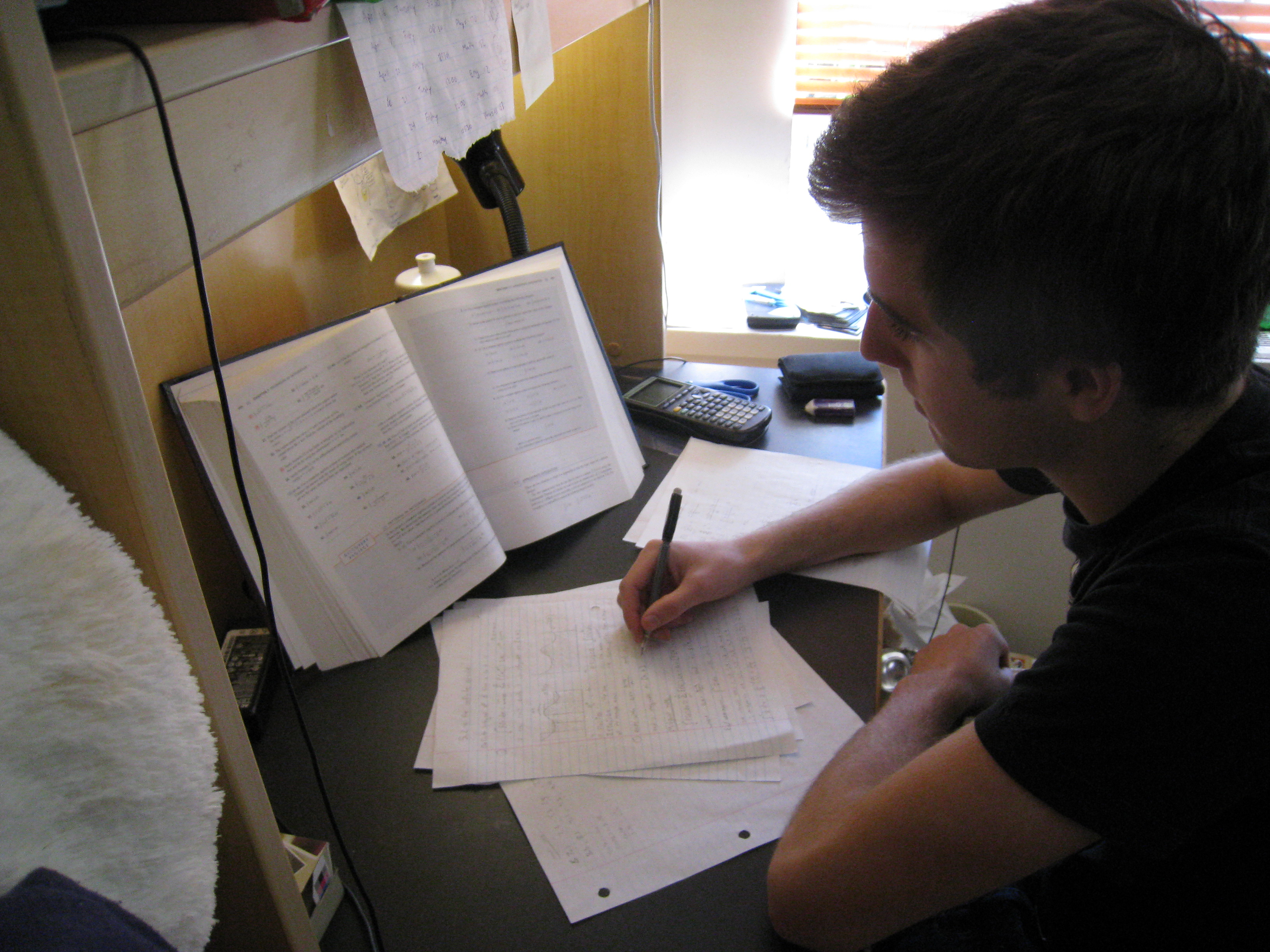 A study schedule works best when it converts a large exam into smaller sessions that have clear objectives. Image: Gnarlycraig, Wikimedia Commons, public domain.
Most students do not fail to plan because they are lazy. They fail because the plan is too vague. A calendar that says “study chemistry” from 7:00 to 10:00 p.m. may look organized, but it does not answer the questions that matter: Which chapter? What type of learning? How will you know you finished? What if the chapter takes longer than expected? When will you revisit the material so that it is still available in memory on exam day?
Research-based study guidance from Cornell University’s Learning Strategies Center and the University of California, San Diego consistently emphasizes two ideas that solve much of this problem. First, exam preparation works better when practice is distributed over time rather than compressed into last-minute cramming. Second, learning improves when students actively retrieve information from memory rather than repeatedly rereading material. A schedule is therefore most useful when it does more than reserve time; it repeatedly creates opportunities to retrieve, check, correct, and revisit knowledge.
This guide turns those principles into a practical planning system. It is designed for university students, high-school students, adult learners, certification candidates, and anyone preparing for multiple exams while still managing classes, work, family, commuting, and ordinary life.
1. Start With the Exam Calendar, Not the Study Calendar
Before deciding when to study, make one complete list of the obligations that determine your available time.
Include:
- exam dates and start times;
- assignment deadlines;
- project presentations;
- classes and laboratories;
- work shifts;
- commute time;
- appointments;
- family responsibilities;
- religious or community commitments;
- sleep and meal windows;
- travel days;
- other fixed events.
Use one calendar, not three disconnected systems. If your classes live in an academic portal, your shifts are in a work app, and your personal plans are in your phone, transfer the important dates into one planning view. The purpose is to see the real competition for your time.
Verification: When you finish, look at the next four to six weeks and ask whether any exam or major deadline still exists only in your memory. If yes, the calendar is incomplete.
2. Record Exam Format Before You Estimate Study Time
Two exams covering the same amount of material may require very different preparation.
Record whether each exam is:
- multiple choice;
- short answer;
- essay;
- problem solving;
- oral;
- practical or laboratory based;
- open book;
- closed book;
- online;
- timed;
- cumulative.
The format changes what “prepared” means. A closed-book biology exam may require rapid recall of processes and terminology. A calculus exam requires repeated problem solving. An essay exam requires retrieval plus organization and argument construction. An open-book exam still requires preparation because time may be too limited to search through notes while answering every question.
3. Turn the Syllabus Into a Topic Inventory
For each course, list the content that may appear on the exam.
Do not write “Chapters 1–8” and stop. Break broad material into study-sized units:
- Chapter 1: cell structure;
- Chapter 2: membrane transport;
- Chapter 3: cellular respiration;
- Chapter 4: photosynthesis;
- lab identification skills;
- practice diagrams;
- key vocabulary;
- past exam questions.
A useful topic unit is small enough to fit into one focused session or part of a session. This makes the schedule concrete and helps you estimate the workload more accurately.
4. Rate Topics by Difficulty and Importance
Not every topic deserves equal time.
Create a simple rating:
- High: difficult, heavily weighted, or weakly understood;
- Medium: partly understood but needs practice;
- Low: familiar and currently reliable.
You can add another marker for high-frequency exam topics if your instructor has given a clear blueprint.
Do not use difficulty ratings as a judgment of intelligence. They are scheduling information. A student who needs three sessions for statistics and one session for history should plan that reality rather than create equal blocks to make the calendar look balanced.
5. Estimate Work in Tasks, Not Just Hours
“I need 10 hours for physics” is less useful than:
- complete 25 kinematics problems;
- review errors from problem set 3;
- rebuild formula sheet from memory;
- complete practice exam under timed conditions;
- review weak questions;
- repeat mixed problems two days later.
Time estimates matter, but task definitions let you see whether a session actually produced progress.
Cornell’s study-schedule guidance notes that people often underestimate how long activities take and suggests doubling initial time estimates as a practical planning rule. You do not have to double every task literally, but you should include extra time rather than scheduling every hour at full capacity.
6. Use Spaced Practice as the Backbone of the Schedule
Spaced practice means revisiting material in multiple sessions separated by time instead of concentrating all repetitions in one sitting.
UC San Diego’s guidance on effective studying recommends distributing exam preparation over multiple sessions and starting weeks ahead when possible. Cornell similarly recommends cumulative, spaced review.
A practical sequence for one topic might look like this:
- Day 1: learn and organize;
- Day 2 or 3: retrieve from memory;
- Day 5: solve or explain without notes;
- Day 8: mixed review;
- Day 12: practice exam question;
- Day 15: final targeted review.
The exact intervals do not have to be mathematically perfect. The important principle is that the topic returns after some forgetting has occurred.
7. Use Retrieval Practice Inside the Schedule
Spacing tells you when to study. Retrieval practice tells you what to do during the session.
UC San Diego defines retrieval practice as actively recalling information from memory instead of simply restudying it. Cornell describes similar methods, including “blank page testing,” in which you start with a blank sheet and write or draw what you remember before checking the source material.
Useful retrieval tasks include:
- answering practice questions;
- writing everything you remember about a topic;
- drawing a process from memory;
- explaining a concept aloud without notes;
- solving problems without looking at worked examples;
- using flashcards that require an answer before revealing it;
- creating your own quiz;
- teaching a study partner.
Then check your answer. Retrieval without correction can reinforce errors.
 A good study block has a concrete task, such as answering practice questions or reconstructing a concept from memory. Image: Shixart1985, Wikimedia Commons, CC BY 2.0.
8. Separate “Prepare” Work From “Review” Work
Cornell’s Five-Day Study Plan distinguishes between preparing study material and reviewing it actively.
Prepare work includes:
- organizing notes;
- identifying learning objectives;
- making a concept map;
- creating practice questions;
- building a formula list;
- locating old exams;
- clarifying missing notes.
Review work includes:
- retrieval practice;
- blank-page testing;
- practice problems;
- timed questions;
- flashcards;
- explaining the topic from memory.
Do not spend the entire preparation period making beautiful notes and reach exam day without testing whether you can recall or use the material.
9. Put the Hardest Work in Your Best Attention Window
Some students concentrate best early in the morning. Others work better in the afternoon or evening.
Use your strongest attention window for:
- difficult problem solving;
- practice exams;
- new material;
- essay planning;
- high-priority weak topics.
Use lower-energy periods for:
- organizing files;
- flashcard review;
- printing materials;
- light reading;
- planning the next session.
This is more realistic than treating every hour as equally productive.
10. Protect Sleep as a Fixed Commitment
A study schedule that regularly removes sleep is unstable.
Cornell’s effective study guidance specifically reminds students to plan balanced activities including sleep, food, hydration, exercise, and breaks. These are not wasted hours that compete with study; they support the ability to concentrate and learn.
Set a latest stopping time. If the schedule only works when you study until 3:00 a.m. for several nights, reduce low-value tasks, start earlier, or change the scope.
11. Add Meal, Exercise, and Recovery Time Before Filling Study Blocks
A schedule that ignores ordinary human needs will break under pressure.
Place:
- meals;
- shower and hygiene;
- short walks or exercise;
- commute;
- family responsibilities;
- medication routines;
- relaxation;
- sleep.
Then fit study around them. This reduces the false impression that an open-looking day contains 14 usable study hours.
12. Use Focus Blocks That Match the Task
There is no universal perfect block length.
For a difficult problem set, you may work effectively for 45–90 minutes. For flashcards, 20 minutes may be enough. For a timed practice exam, the block should match the real exam.
Cornell recommends switching courses after roughly one to two hours because concentration tends to decrease over extended periods, and it also suggests the Pomodoro technique for students who struggle to get started.
A practical default is:
- 50 minutes focused work;
- 10 minutes break;
- repeat once;
- then switch subjects or take a longer break.
Adjust based on the task and your attention.
13. Write a Specific Objective for Every Block
Bad calendar entry:
7:00–8:00 — Study anatomy
Better:
7:00–8:00 — Label heart anatomy from memory, answer 20 cardiovascular questions, review incorrect answers
The second entry has a finish condition. You can tell whether you completed it.
14. Build a Daily “Must, Should, Could” List
Some days will not go according to plan.
Mark tasks:
- Must: critical for a close exam or deadline;
- Should: important but can move one day;
- Could: useful if time remains.
This creates a graceful failure mode. If you lose two hours because a class runs late, you know what to protect and what to postpone.
15. Add Buffer Time Every Week
Schedule at least one catch-up block.
Use it for:
- unfinished tasks;
- unexpectedly difficult chapters;
- missed sessions;
- extra practice after a poor quiz;
- clarification with an instructor;
- technical problems.
If nothing is behind, use the block for cumulative review or take part of it as rest.
16. Schedule Cumulative Review, Not Only Current Topics
A common problem is studying whatever was taught most recently while earlier material disappears from memory.
Reserve recurring cumulative sessions. For example:
- Monday: new material;
- Wednesday: new material plus 15 minutes of older recall;
- Friday: mixed questions across all weeks;
- Sunday: short cumulative review.
This supports spacing and reduces the amount of re-learning required before final exams.
17. Interleave Related Skills Instead of Blocking Everything
Interleaving means mixing related types of problems or concepts within study.
UC San Diego and Cornell both include interleaving among useful study techniques.
For mathematics, instead of doing 30 nearly identical derivative problems, mix:
- derivatives;
- optimization;
- related rates;
- graph interpretation.
This forces you to decide which method applies instead of repeating one procedure mechanically.
18. Do Not Interleave Too Early
Interleaving is most useful once you understand the basic procedures well enough to compare them.
If a concept is completely new, begin with a focused explanation and a few guided examples. Then mix it with related material.
Otherwise the session becomes random confusion rather than productive discrimination.
19. Use Practice Exams Early Enough to Change the Plan
Do not save the only practice exam for the night before the real exam.
Cornell recommends using a practice test at the beginning of studying when possible to establish a baseline, then using another later to measure progress.
Take practice tests under realistic conditions:
- same time limit;
- same permitted resources;
- similar environment;
- no checking the answer key during the attempt.
Afterward, classify errors.
20. Build an Error Log
For every missed practice question, record why it was missed.
Categories may include:
- did not know the fact;
- understood concept but forgot formula;
- misread question;
- calculation error;
- ran out of time;
- chose wrong method;
- could not organize essay;
- careless sign or unit error.
Your next study schedule should target the cause rather than simply repeating the whole chapter.
21. Allocate More Time to Weaknesses Revealed by Testing
A plan should change when evidence changes.
If you expected organic chemistry to need four hours but a practice set reveals major gaps, move time toward organic chemistry. If history recall is strong, reduce maintenance time there.
Schedules are forecasts, not contracts.
22. Use the “Red, Yellow, Green” Topic Method
Mark topics:
- Red: cannot recall or apply reliably;
- Yellow: partly reliable;
- Green: consistently correct across more than one session.
Spend most effort on red, then yellow. Keep green topics alive with brief spaced retrieval.
Do not turn green after one correct answer. Reliability across time matters.
23. Plan for Multiple Courses Without Abandoning the Ones Without Immediate Exams
Cornell specifically warns against focusing so heavily on one upcoming exam that you fall behind in every other course.
When one exam is near, increase its share without reducing all other classes to zero.
Example:
| Course | Exam timing | Share of study time this week |
|---|---|---|
| Biology | 5 days | 40% |
| Statistics | 9 days | 30% |
| History | 14 days | 20% |
| Writing | no exam, active assignment | 10% |
The exact percentages are not universal; the table demonstrates priority without abandonment.
24. Schedule Short Review Immediately After Class
When practical, spend 10–20 minutes after a lecture:
- cleaning up notes;
- writing three key ideas;
- creating two practice questions;
- marking unclear material;
- starting the assignment.
Cornell’s guidance recommends reviewing soon after class while the material is fresh. This small habit reduces the amount of reconstruction needed later.
25. Use Gaps Between Classes Intentionally
One-hour gaps are easy to waste because they feel too short for “serious” studying.
They are excellent for:
- flashcards;
- reading one article;
- retrieval of one lecture;
- practice problems;
- reviewing an error log;
- planning the next long block.
Using scattered time can preserve evenings for deeper work or rest.
26. Build the Schedule Backward From the Exam
Start with exam day and work backward.
For a seven-day preparation window:
- Day 7: exam;
- Day 6: light review, weak points, logistics;
- Day 5: timed practice;
- Day 4: correct practice errors;
- Day 3: mixed retrieval;
- Day 2: second pass through difficult topics;
- Day 1: organize content and start active recall.
If you have three weeks, space those sessions farther apart and add more cycles.
27. Avoid “Perfect Plan” Procrastination
A schedule can become a sophisticated form of avoidance.
If you have spent 90 minutes color-coding but have not attempted one practice question, stop planning and begin the highest-priority task.
Use planning to reduce decisions, not to postpone learning.
28. Keep Tools Simple
You can build an excellent study schedule with:
- paper calendar;
- spreadsheet;
- Google Calendar;
- Apple Calendar;
- Notion;
- task manager;
- whiteboard.
The tool matters less than whether you update it and follow it.
Do not move to a new app every time the schedule becomes uncomfortable.
29. Use Calendar Events for Time and Tasks for Outcomes
A helpful hybrid system is:
Calendar: 6:00–7:00 — statistics practice
Task list: complete problems 1–20, mark errors, redo missed questions
This keeps the calendar readable while preserving detail.
30. Color-Code by Course Only if It Helps
Color can make a crowded schedule easier to scan, but it does not make the plan more effective.
If color coding turns into unnecessary design work, remove it.
Use labels such as:
- Biology;
- Statistics;
- History;
- Work;
- Personal.
Then keep the system consistent.
31. Protect a Daily Shutdown Time
Set a time when you stop academic work unless a genuine emergency exists.
The shutdown time prevents endless low-quality study and makes it easier to sleep.
Before stopping:
- check tomorrow’s schedule;
- move unfinished tasks;
- prepare books or files;
- write the first task for tomorrow.
32. Prepare the Next Session Before You End the Current One
Reduce friction by deciding what comes next.
Instead of ending with “continue chemistry tomorrow,” write:
“Tomorrow: redo equilibrium questions 4, 7, 9, and 12; then complete five new mixed questions.”
This helps you start quickly.
33. Build a Distraction Plan
Do not rely on willpower alone.
Decide:
- where the phone will be;
- whether notifications are off;
- which websites are blocked;
- whether headphones help;
- where you will study;
- what materials must be open before the timer starts.
The best schedule fails if each 50-minute block contains 25 minutes of messaging.
34. Use Environment Cues
Study in a place associated with work when possible.
Keep the desk ready with:
- water;
- charger;
- calculator;
- paper;
- approved reference materials;
- headphones if needed.
Fewer setup decisions make it easier to begin.
 Starting becomes easier when the schedule names one concrete task and the required materials are already available. Image: Hajjare, Wikimedia Commons, CC BY-SA 4.0.
35. Schedule Group Study Only for Tasks That Benefit From It
Group sessions are useful for:
- quizzing each other;
- explaining difficult concepts;
- comparing problem-solving methods;
- practicing oral exams;
- reviewing essay plans.
They are less useful when everyone silently rereads different chapters or spends half the session socializing.
Give the group an agenda.
36. Use Teaching as Retrieval Practice
Explain a topic to another student without notes.
Ask them to interrupt when:
- your explanation becomes vague;
- you skip a step;
- you use a term you cannot define;
- you cannot answer “why?”
The gaps reveal what needs another study block.
37. Use Self-Explanation for Difficult Concepts
UC San Diego lists self-explanation as a useful strategy for some types of learning.
Ask:
- Why does this formula work?
- What caused this historical event?
- How is this concept different from the previous one?
- Why is this answer wrong?
- What would change if one variable changed?
Schedule self-explanation after initial learning, not as a substitute for reading the material for the first time.
38. Match Study Method to Subject Type
Different subjects need different active tasks.
Mathematics and physics: mixed problems, timed sets, error correction.
Biology and medicine: diagrams, retrieval questions, case application, terminology.
History: timelines from memory, cause-and-effect questions, essay outlines.
Languages: speaking, listening, spaced vocabulary retrieval, writing.
Law: issue spotting, rule recall, practice hypotheticals.
Programming: coding without copying, debugging, explaining algorithms.
Literature: argument outlines, passage analysis, evidence recall.
39. Prepare Differently for Open-Book Exams
Open-book does not mean no preparation.
You still need:
- fast understanding of concepts;
- organized reference materials;
- practice locating key information;
- timed answers;
- knowledge of what can be looked up versus what must be mentally available.
Do a practice exam using only the resources allowed on the real test.
40. Prepare Differently for Essay Exams
Schedule:
- question prediction;
- thesis practice;
- outline writing;
- evidence recall;
- timed introductions;
- full timed essays.
Do not spend all preparation memorizing facts without practicing organization under time pressure.
41. Prepare Differently for Practical Exams
Practical exams require performance, not only verbal knowledge.
Schedule real practice with:
- equipment;
- procedures;
- identification;
- timing;
- safety steps;
- spoken explanations.
If equipment access is limited, reserve lab time early.
42. Use a “First Pass, Second Pass, Final Pass” System
First pass: understand and organize.
Second pass: retrieve and apply.
Final pass: test under realistic conditions and repair weaknesses.
This is more effective than repeating the same activity three times.
43. Define What “Done” Means for Each Topic
A topic is not done because you read it.
Possible completion criteria:
- 80%+ on mixed practice;
- can explain without notes;
- can solve representative problems;
- can produce a correct diagram from memory;
- can write a five-minute outline;
- can identify and correct previous errors.
Use criteria appropriate to the course.
44. Revisit Topics You Think You Know
Familiarity is not recall.
Reading a paragraph and thinking “yes, I remember this” can create false confidence.
Close the material and retrieve. If you cannot produce the idea without looking, it is not yet reliable.
45. Use Flashcards Correctly
Flashcards work best when each card requires meaningful recall.
Avoid:
- huge paragraphs on the back;
- reading the answer before trying;
- marking a card “known” after one success;
- using flashcards for every type of learning.
Use them for facts, concepts, vocabulary, formulas, or short relationships. Use problems and essays for higher-order application.
46. Do Not Spend Too Long Making Flashcards
If creating 500 beautiful digital cards consumes your entire weekend, the tool has taken over the goal.
Create cards for material that benefits from repeated retrieval. Use existing instructor questions when available.
47. Schedule Questions for the Instructor Early
When retrieval reveals confusion, record the question immediately.
Do not wait until the night before the exam, when office hours may be over.
Schedule:
- office hours;
- tutorial;
- study center;
- discussion board;
- peer tutor.
48. Use the Weekly Review to Recalculate Priorities
Once a week, review:
- what was completed;
- what moved;
- which topics remain red;
- practice scores;
- upcoming deadlines;
- sleep and workload;
- buffer capacity.
Then rewrite the next seven days.
49. Do Not Carry Every Missed Task Forward
If you miss a session, ask whether the task still deserves time.
Possible responses:
- reschedule;
- reduce scope;
- combine with another session;
- drop low-priority work;
- replace with a more diagnostic practice task.
Copying 12 overdue tasks into tomorrow creates an impossible day.
50. Recognize When the Plan Is Too Dense
Warning signs:
- every day is scheduled minute by minute;
- no buffer exists;
- sleep is shrinking;
- missed tasks accumulate;
- you constantly switch tasks without depth;
- you feel behind before the day begins.
Remove low-value work and protect high-priority active practice.
51. Use a Five-Day Emergency Plan When Time Is Short
If the exam is five days away, do not pretend you have three weeks.
A practical compressed plan:
Day 1: inventory topics, baseline quiz, organize materials.
Day 2: difficult half of the course; active retrieval.
Day 3: remaining material; mixed review.
Day 4: timed practice exam; error correction.
Day 5: weak points, light cumulative review, logistics, sleep.
This follows the logic of Cornell’s Five-Day Study Plan without copying a rigid template.
52. Use a 24-Hour Plan Without Trying to Learn Everything
If only one day remains:
- identify the highest-value topics;
- take a short diagnostic quiz;
- focus on common and weak areas;
- use retrieval rather than rewriting notes;
- complete one timed practice set;
- review errors;
- sleep.
You cannot compress weeks of learning into one night, but you can allocate the remaining hours rationally.
53. Do Not Use All-Nighters as a Default Strategy
An all-nighter adds hours but removes sleep and often reduces the quality of attention available on exam day.
Build the schedule so that the last evening is for targeted review rather than first exposure to major chapters.
54. Plan Exam-Day Logistics in Advance
Record:
- exam time;
- location or login link;
- travel time;
- student ID;
- calculator rules;
- allowed notes;
- software requirements;
- charger;
- internet backup;
- required materials.
Cornell’s exam-preparation resources explicitly recommend knowing the exam logistics before test day.
55. Stop Heavy Studying Before the Exam Begins
Leave time to:
- eat;
- travel;
- use the restroom;
- set up technology;
- review one short summary;
- settle attention.
Do not arrive mentally exhausted from a final two-hour panic session.
56. Worked Example: Two Exams in One Week
A student has biology on Thursday and statistics on Saturday.
Biology is currently yellow; statistics is red.
Monday: statistics weak topics 90 minutes; biology cumulative recall 45 minutes.
Tuesday: biology practice questions 60 minutes; statistics mixed problems 90 minutes.
Wednesday: biology timed quiz 60 minutes; correct errors 30 minutes; statistics maintenance 45 minutes.
Thursday: biology exam; light statistics review in evening.
Friday: statistics practice exam and error correction.
Saturday: statistics exam.
The schedule gives more total time to the weaker course without abandoning biology.
57. Worked Example: Student With a Part-Time Job
A student works Tuesday, Thursday, and Saturday evenings.
Instead of planning long sessions after work, the student uses:
- Monday afternoon: two deep blocks;
- Tuesday morning: 45-minute retrieval;
- Wednesday: long practice session;
- Thursday morning: short spaced review;
- Friday: practice exam;
- Saturday morning: error correction;
- Sunday: cumulative review and next-week planning.
The schedule accepts the fixed work commitment rather than repeatedly failing to study after a tiring shift.
58. Worked Example: Three Weeks Until a Final
A student has 12 major topic groups.
Week 1: first pass through all topics; identify red areas.
Week 2: retrieval and mixed practice; one baseline practice exam.
Week 3: targeted error correction, second practice exam, final cumulative review.
Each topic appears more than once, which creates spacing.
59. Worked Example: Essay-Based History Exam
The student has eight themes.
The schedule includes:
- Monday: recall evidence for themes 1–2;
- Tuesday: outline two possible essays;
- Wednesday: themes 3–5 and mixed evidence;
- Thursday: timed essay introduction and paragraph;
- Friday: themes 6–8;
- Saturday: full timed essay;
- Sunday: analyze weak evidence and argument structure.
This trains the actual exam task rather than only rereading the textbook.
60. Worked Example: Problem-Solving Certification Exam
A professional certification candidate studies after work.
The candidate uses 60-minute weekday sessions and a longer weekend block.
Each weekday session contains:
- 10 minutes formula recall;
- 35 minutes mixed problems;
- 10 minutes error log;
- 5 minutes planning next session.
Saturday contains a timed section. Sunday reviews mistakes and schedules the next week.
61. Troubleshooting: “I Make Schedules but Never Follow Them”
Check whether your schedule is:
- too detailed;
- too optimistic;
- missing breaks;
- filled with vague tasks;
- scheduled at times when you are usually tired;
- dependent on perfect motivation.
Reduce the number of blocks and make each one specific.
62. Troubleshooting: “I Study for Hours but Remember Little”
Replace part of rereading time with retrieval.
Try:
- blank page recall;
- practice questions;
- teaching aloud;
- closed-book diagrams;
- mixed problems.
Then check answers carefully.
63. Troubleshooting: “I Keep Falling Behind”
Compare planned time with actual time.
If a two-hour task repeatedly takes four hours, change future estimates.
Remove low-priority work instead of stretching every day later into the night.
64. Troubleshooting: “I Get Distracted Every Five Minutes”
Shorten the block to 25 minutes and remove the main distraction physically.
Use the Pomodoro-style approach Cornell recommends for students who struggle to begin: short focused work followed by a short real break.
65. Troubleshooting: “I Do Fine on Notes but Poorly on Exams”
Your study method may not resemble the exam.
Add:
- timed retrieval;
- practice exams;
- closed-book questions;
- mixed problems;
- essay outlines under time pressure.
Make study more similar to the performance required.
66. Troubleshooting: “I Have Too Many Flashcards”
Archive low-value cards and focus on:
- frequently tested facts;
- weak concepts;
- relationships that matter;
- errors from practice.
Use a problem set when application matters more than fact recall.
67. Troubleshooting: “My Plan Collapsed After One Bad Day”
Use the weekly buffer.
Move only must-do work. Do not attempt to complete yesterday and today simultaneously.
A robust schedule expects disruption.
68. A 45-Minute Study-Schedule Setup
Minutes 0–10: enter exams, deadlines, classes, work, sleep, and fixed commitments.
Minutes 10–20: list exam topics and rate them red, yellow, or green.
Minutes 20–30: choose active study tasks and estimate time.
Minutes 30–40: distribute sessions across the calendar with spacing and buffer.
Minutes 40–45: identify the first task for tomorrow and gather the materials.
69. Weekly Study Schedule Review
- Check all upcoming exams and deadlines.
- Review practice scores.
- Update red/yellow/green topics.
- Move unfinished must-do work.
- Delete low-priority tasks that no longer matter.
- Protect sleep and fixed commitments.
- Add one buffer block.
- Schedule at least one cumulative review.
- Schedule practice exams early enough to act on the results.
70. Final Study Schedule Checklist
- Exam dates are confirmed.
- Exam formats are known.
- Topics are broken into manageable units.
- Weak topics receive more time.
- Sessions are distributed over multiple days.
- Retrieval practice appears in the plan.
- Practice exams are scheduled.
- Error correction is scheduled.
- Older topics return through cumulative review.
- Other courses are not completely abandoned.
- Sleep, meals, and breaks are protected.
- Buffer time exists.
- Each block has a concrete objective.
- Distraction controls are planned.
- Study tools are simple enough to maintain.
- Questions for instructors are identified early.
- Exam logistics are planned.
- The final evening is not overloaded.
Frequently Asked Questions
How many hours should I study each day?
There is no universal number. The useful amount depends on course difficulty, exam timing, prior knowledge, work and family responsibilities, and the quality of the study method. Start with the tasks required, estimate realistically, and use practice performance to decide whether more time is needed.
Is studying every day better than one long session?
For long-term learning, distributing practice over multiple sessions is generally more effective than concentrating the same work into one cram session. Spacing also gives you repeated opportunities to discover and correct weaknesses.
What is the best study method for exams?
Retrieval practice and spaced practice have strong support across learning research and university learning-center guidance. The best practical combination is to distribute study over time and actively retrieve information during each session.
How early should I start studying?
Start as early as the course and calendar allow. For major exams, weeks are better than days because spacing requires time between sessions. If only a few days remain, use a compressed active plan rather than spending the remaining time reorganizing notes.
Is rereading notes useless?
No. Rereading can help you understand material or check an answer, but it should not be the only method. Pair it with recall, practice questions, problem solving, and self-explanation.
How long should one study block be?
Match the block to the task. Many students work well with 45–90 minutes for deep work and shorter blocks for recall or flashcards. If starting is difficult, a 25-minute focus block with a short break can be useful.
Should I study one subject for an entire day?
Usually not. Mixing courses across the week can prevent neglect of other classes and may support interleaving when topics are related. A very close exam may receive most of one day, but complete abandonment of other courses can create a new problem.
How do I know when a topic is learned?
Use performance criteria rather than familiarity. Can you explain it without notes? Solve representative problems? Answer mixed questions? Reproduce the diagram? Perform the skill after a delay? If yes across more than one session, the topic is becoming reliable.
What should I do the night before an exam?
Use the evening for light targeted review, logistics, and sleep. Avoid trying to learn entire new units if the schedule can be adjusted earlier. Pack required materials and confirm the exam time and location.
What if I am already behind?
Prioritize. Identify high-value topics, use a diagnostic test, remove low-value tasks, focus on active practice, and build a realistic plan for the remaining days. Trying to preserve an outdated full schedule usually makes the problem worse.
Conclusion: Build a Schedule That Produces Evidence of Learning
A good study schedule is not impressive because it is colorful or detailed. It is useful because it repeatedly asks you to perform the kind of thinking the exam will require.
Start with the real calendar, break the course into study-sized topics, and distribute those topics across multiple sessions. Use retrieval practice, practice questions, problem solving, self-explanation, and realistic exam simulations. Schedule error correction. Protect sleep and recovery. Include buffer time. Review the plan every week and change it when practice results show that your original assumptions were wrong.
The biggest mistake is filling the calendar with hours instead of learning tasks. “Study biology for three hours” can hide three hours of passive rereading. “Draw the cardiac cycle from memory, answer 25 mixed questions, and correct every missed answer” creates evidence.
Your first step is simple: open your calendar, enter every exam and fixed commitment, then choose one exam and list every topic it can test. That inventory turns a vague feeling of being overwhelmed into work you can actually schedule.
Sources and Further Reading
- Cornell Learning Strategies Center — Guidelines for Creating a Study Schedule
- Cornell Learning Strategies Center — Effective Study Strategies
- Cornell Learning Strategies Center — Five-Day Study Plan
- Cornell Learning Strategies Center — What to Do With Practice Exams
- UC San Diego Department of Psychology — How to Effectively Study
- UC San Diego — Spaced Practice
- UC San Diego — Retrieval Practice
Image Credits
- “Studying.jpg” — Gnarlycraig, Wikimedia Commons, public domain.
- “Desk with notebook pens and glasses.jpg” — Shixart1985, Wikimedia Commons, CC BY 2.0.
- “Student on the desk.jpg” — Hajjare, Wikimedia Commons, CC BY-SA 4.0.