

Last reviewed: August 2026
A Guide to Changing Guardians for a Minor Child
Follow a careful process for replacing, removing, or adding a guardian while protecting the child’s stability and complying with notice, investigation, and hearing rules.
Family-law paperwork often fails for a simple reason: the writer starts with a template before identifying the legal purpose, the correct court, and the facts that must be proved. This guide takes the opposite approach. It is designed for parents, current guardians, proposed successor guardians, relatives, and interested persons seeking a lawful change. The objective is to secure a court-approved transition from the current guardian to a suitable successor without leaving a gap in authority or care.
Important legal notice: This article provides general educational information for the United States and is not legal advice. Guardianship and custody rules vary by state, county, case type, and existing court order. A guardian generally cannot transfer court-appointed authority by private agreement. The appointing court usually must approve resignation, removal, substitution, or appointment of a successor guardian. Use the official website of the court with jurisdiction and obtain advice from a licensed family-law attorney or legal-aid organization when safety, interstate jurisdiction, contested parentage, abuse, relocation, immigration, or major property is involved.
 An empty courtroom prepared for a hearing. Image credit: Van Buren County Courthouse courtroom, CC0 via Wikimedia Commons.
Quick answer
The safest method is to begin with the official court or agency requirements, identify the exact legal authority or decision you need, build a dated record from firsthand facts, use the mandatory form when one exists, and treat any personal letter or supporting statement as evidence—not as a substitute for a court order. Keep the child’s safety, stability, education, health, and important relationships at the center of every paragraph.
Before you begin: build a one-page case map
Create a private one-page map before drafting or filing anything. List the child’s full legal name, current residence, parents and legal custodians, all existing case numbers, the court that issued each order, the precise result requested, the next known deadline, and the people who must receive notice. This map is not necessarily filed; it is an error-prevention tool.
Next, separate your materials into four folders: authority (orders and statutes), identity (names and relationships), facts (chronology and observations), and procedure (forms, filing, service, and deadlines). Never place original identity records or irreplaceable certified orders into a packet that may be mailed away unless the receiving office specifically requires the original.
- Write the exact question you need the court or institution to answer.
- Confirm whether an existing order already addresses that question.
- Find the official form and local instructions before writing a narrative.
- List the facts you know personally and separate them from information reported by others.
- Plan how confidential details will be redacted, sealed, or submitted on protected forms.
Step 1: Read the existing guardianship order
Why this matters: The current order controls who has authority and which court supervises the case. This step establishes the foundation for everything that follows. In family-law matters, the reader usually has limited time and must distinguish facts, legal authority, and requested action. A precise approach reduces misunderstandings and helps the next person verify the information rather than guessing what the writer intended.
How to do it: Obtain the complete file and identify appointment type, powers, reporting duties, bond, visitation provisions, and any named standby or successor guardian. Work from official instructions and the current order before adapting sample language. Write down the source of each important fact, use calendar dates when possible, and mark any point that still needs confirmation. If a fact is uncertain, say that it is uncertain instead of making the sentence sound more definite than the evidence allows.
What to collect: Current certified order, letters, and later modifications. Keep the original records unchanged and create working copies for highlighting or redaction. Name digital files consistently—for example, 2026-03-12-school-attendance-record.pdf—and maintain a simple exhibit index showing the date, source, and fact each item supports. This small organizational step makes review easier and limits accidental disclosure of irrelevant private information.
Common mistake to avoid: Starting in a new court without checking continuing jurisdiction can waste time. Courts and agencies respond better to a clear record than to volume. One reliable document tied to a specific statement is normally more useful than twenty pages of unorganized material. Do not alter screenshots, crop away context that changes meaning, or sign a statement that contains a claim you cannot truthfully defend under questioning.
Practical checkpoint: Before moving on, be able to answer three questions in one sentence each: What fact am I establishing? How do I personally know it? What document or witness can verify it?
Step 2: Define the requested change
Why this matters: Replacement, co-guardianship, temporary suspension, removal for misconduct, and termination followed by parental custody are legally different. This is where a strong case or document becomes distinguishable from a generic internet template. In family-law matters, the reader usually has limited time and must distinguish facts, legal authority, and requested action. A precise approach reduces misunderstandings and helps the next person verify the information rather than guessing what the writer intended.
How to do it: Write a one-sentence description of the requested outcome and the proposed effective date. Work from official instructions and the current order before adapting sample language. Write down the source of each important fact, use calendar dates when possible, and mark any point that still needs confirmation. If a fact is uncertain, say that it is uncertain instead of making the sentence sound more definite than the evidence allows.
What to collect: Whether the current guardian consents, whether authority must continue without interruption, and whether the child will move. Keep the original records unchanged and create working copies for highlighting or redaction. Name digital files consistently—for example, 2026-03-12-school-attendance-record.pdf—and maintain a simple exhibit index showing the date, source, and fact each item supports. This small organizational step makes review easier and limits accidental disclosure of irrelevant private information.
Common mistake to avoid: A vague request to ‘change guardians’ makes it difficult to select the correct petition and legal standard. Courts and agencies respond better to a clear record than to volume. One reliable document tied to a specific statement is normally more useful than twenty pages of unorganized material. Do not alter screenshots, crop away context that changes meaning, or sign a statement that contains a claim you cannot truthfully defend under questioning.
Practical checkpoint: Before moving on, be able to answer three questions in one sentence each: What fact am I establishing? How do I personally know it? What document or witness can verify it?
Step 3: Assess whether an emergency exists
Why this matters: Immediate danger, abandonment by the guardian, hospitalization, or inability to make urgent decisions may require temporary relief. The practical objective here is accuracy, not legal-sounding language. In family-law matters, the reader usually has limited time and must distinguish facts, legal authority, and requested action. A precise approach reduces misunderstandings and helps the next person verify the information rather than guessing what the writer intended.
How to do it: Contact the clerk, self-help center, lawyer, emergency services, or child-protection agency as appropriate. Use the jurisdiction’s emergency petition rather than an ordinary letter. Work from official instructions and the current order before adapting sample language. Write down the source of each important fact, use calendar dates when possible, and mark any point that still needs confirmation. If a fact is uncertain, say that it is uncertain instead of making the sentence sound more definite than the evidence allows.
What to collect: Specific current danger, when it arose, who has the child, and what temporary order is necessary. Keep the original records unchanged and create working copies for highlighting or redaction. Name digital files consistently—for example, 2026-03-12-school-attendance-record.pdf—and maintain a simple exhibit index showing the date, source, and fact each item supports. This small organizational step makes review easier and limits accidental disclosure of irrelevant private information.
Common mistake to avoid: Emergency procedures are not shortcuts for ordinary disagreements. Courts and agencies respond better to a clear record than to volume. One reliable document tied to a specific statement is normally more useful than twenty pages of unorganized material. Do not alter screenshots, crop away context that changes meaning, or sign a statement that contains a claim you cannot truthfully defend under questioning.
Practical checkpoint: Before moving on, be able to answer three questions in one sentence each: What fact am I establishing? How do I personally know it? What document or witness can verify it?
 A county courthouse exterior. Image credit: Montross courthouse, public domain via Wikimedia Commons.
Step 4: Identify who may file
Why this matters: State law determines whether a parent, guardian, child, relative, or other interested person may petition. Treat this stage as a quality-control checkpoint rather than a formality. In family-law matters, the reader usually has limited time and must distinguish facts, legal authority, and requested action. A precise approach reduces misunderstandings and helps the next person verify the information rather than guessing what the writer intended.
How to do it: Review the statute and local instructions. If standing is uncertain, seek legal advice before paying fees or serving papers. Work from official instructions and the current order before adapting sample language. Write down the source of each important fact, use calendar dates when possible, and mark any point that still needs confirmation. If a fact is uncertain, say that it is uncertain instead of making the sentence sound more definite than the evidence allows.
What to collect: Relationship to the child and legal interest recognized by the jurisdiction. Keep the original records unchanged and create working copies for highlighting or redaction. Name digital files consistently—for example, 2026-03-12-school-attendance-record.pdf—and maintain a simple exhibit index showing the date, source, and fact each item supports. This small organizational step makes review easier and limits accidental disclosure of irrelevant private information.
Common mistake to avoid: Assuming that any concerned adult automatically has standing may lead to dismissal. Courts and agencies respond better to a clear record than to volume. One reliable document tied to a specific statement is normally more useful than twenty pages of unorganized material. Do not alter screenshots, crop away context that changes meaning, or sign a statement that contains a claim you cannot truthfully defend under questioning.
Practical checkpoint: Before moving on, be able to answer three questions in one sentence each: What fact am I establishing? How do I personally know it? What document or witness can verify it?
Step 5: Choose a suitable successor
Why this matters: The court will examine ability, history, relationship, conflicts, and the child’s needs. This stage turns a broad concern into information a court, clerk, lawyer, school, or agency can actually use. In family-law matters, the reader usually has limited time and must distinguish facts, legal authority, and requested action. A precise approach reduces misunderstandings and helps the next person verify the information rather than guessing what the writer intended.
How to do it: Discuss the full duties, finances, residence, background checks, training, reports, school, health care, and contact with parents. Work from official instructions and the current order before adapting sample language. Write down the source of each important fact, use calendar dates when possible, and mark any point that still needs confirmation. If a fact is uncertain, say that it is uncertain instead of making the sentence sound more definite than the evidence allows.
What to collect: A written care plan and honest disclosure of obstacles. Keep the original records unchanged and create working copies for highlighting or redaction. Name digital files consistently—for example, 2026-03-12-school-attendance-record.pdf—and maintain a simple exhibit index showing the date, source, and fact each item supports. This small organizational step makes review easier and limits accidental disclosure of irrelevant private information.
Common mistake to avoid: Choosing the nearest available adult without evaluating capacity can destabilize the child again. Courts and agencies respond better to a clear record than to volume. One reliable document tied to a specific statement is normally more useful than twenty pages of unorganized material. Do not alter screenshots, crop away context that changes meaning, or sign a statement that contains a claim you cannot truthfully defend under questioning.
Practical checkpoint: Before moving on, be able to answer three questions in one sentence each: What fact am I establishing? How do I personally know it? What document or witness can verify it?
Step 6: Gather evidence for the reason for change
Why this matters: The petition should explain why the current arrangement no longer works and why the proposed change is better. This step establishes the foundation for everything that follows. In family-law matters, the reader usually has limited time and must distinguish facts, legal authority, and requested action. A precise approach reduces misunderstandings and helps the next person verify the information rather than guessing what the writer intended.
How to do it: Build a neutral chronology. For resignation, document incapacity or circumstances. For removal, document breaches, neglect, conflicts, or failure to report without exaggeration. Work from official instructions and the current order before adapting sample language. Write down the source of each important fact, use calendar dates when possible, and mark any point that still needs confirmation. If a fact is uncertain, say that it is uncertain instead of making the sentence sound more definite than the evidence allows.
What to collect: Court notices, missed reports, medical records, communications, financial accountings, and witness information as lawfully obtained. Keep the original records unchanged and create working copies for highlighting or redaction. Name digital files consistently—for example, 2026-03-12-school-attendance-record.pdf—and maintain a simple exhibit index showing the date, source, and fact each item supports. This small organizational step makes review easier and limits accidental disclosure of irrelevant private information.
Common mistake to avoid: Serious accusations without admissible support can intensify conflict and harm credibility. Courts and agencies respond better to a clear record than to volume. One reliable document tied to a specific statement is normally more useful than twenty pages of unorganized material. Do not alter screenshots, crop away context that changes meaning, or sign a statement that contains a claim you cannot truthfully defend under questioning.
Practical checkpoint: Before moving on, be able to answer three questions in one sentence each: What fact am I establishing? How do I personally know it? What document or witness can verify it?
Step 7: Prepare the required petition and proposed order
Why this matters: Courts often have specific forms for resignation, removal, successor appointment, or modification. This is where a strong case or document becomes distinguishable from a generic internet template. In family-law matters, the reader usually has limited time and must distinguish facts, legal authority, and requested action. A precise approach reduces misunderstandings and helps the next person verify the information rather than guessing what the writer intended.
How to do it: Use official forms, attach a declaration, identify all interested parties, and provide a proposed order if required. Work from official instructions and the current order before adapting sample language. Write down the source of each important fact, use calendar dates when possible, and mark any point that still needs confirmation. If a fact is uncertain, say that it is uncertain instead of making the sentence sound more definite than the evidence allows.
What to collect: Case caption, current order, requested findings, successor details, and effective transition date. Keep the original records unchanged and create working copies for highlighting or redaction. Name digital files consistently—for example, 2026-03-12-school-attendance-record.pdf—and maintain a simple exhibit index showing the date, source, and fact each item supports. This small organizational step makes review easier and limits accidental disclosure of irrelevant private information.
Common mistake to avoid: A private guardianship letter cannot amend the court’s order. Courts and agencies respond better to a clear record than to volume. One reliable document tied to a specific statement is normally more useful than twenty pages of unorganized material. Do not alter screenshots, crop away context that changes meaning, or sign a statement that contains a claim you cannot truthfully defend under questioning.
Practical checkpoint: Before moving on, be able to answer three questions in one sentence each: What fact am I establishing? How do I personally know it? What document or witness can verify it?
 An adult signing important family legal documents. Image credit: Signing family-related papers, Pexels.
Step 8: Complete successor screening requirements
Why this matters: The proposed guardian may need fingerprints, background checks, training, disclosures, bond, medical information, or an oath. The practical objective here is accuracy, not legal-sounding language. In family-law matters, the reader usually has limited time and must distinguish facts, legal authority, and requested action. A precise approach reduces misunderstandings and helps the next person verify the information rather than guessing what the writer intended.
How to do it: Start early and answer every question honestly, including past cases or financial problems that must be disclosed. Work from official instructions and the current order before adapting sample language. Write down the source of each important fact, use calendar dates when possible, and mark any point that still needs confirmation. If a fact is uncertain, say that it is uncertain instead of making the sentence sound more definite than the evidence allows.
What to collect: Completed applicant forms, certificates, references, and bond information. Keep the original records unchanged and create working copies for highlighting or redaction. Name digital files consistently—for example, 2026-03-12-school-attendance-record.pdf—and maintain a simple exhibit index showing the date, source, and fact each item supports. This small organizational step makes review easier and limits accidental disclosure of irrelevant private information.
Common mistake to avoid: Hiding a disqualifying or concerning fact is often worse than explaining it. Courts and agencies respond better to a clear record than to volume. One reliable document tied to a specific statement is normally more useful than twenty pages of unorganized material. Do not alter screenshots, crop away context that changes meaning, or sign a statement that contains a claim you cannot truthfully defend under questioning.
Practical checkpoint: Before moving on, be able to answer three questions in one sentence each: What fact am I establishing? How do I personally know it? What document or witness can verify it?
Step 9: Serve every required person
Why this matters: Due process usually requires notice to parents, current guardian, child of a certain age, relatives, agencies, and other parties. Treat this stage as a quality-control checkpoint rather than a formality. In family-law matters, the reader usually has limited time and must distinguish facts, legal authority, and requested action. A precise approach reduces misunderstandings and helps the next person verify the information rather than guessing what the writer intended.
How to do it: Use the approved method and deadline, and file proof of service. Request alternative service only after documented diligent efforts. Work from official instructions and the current order before adapting sample language. Write down the source of each important fact, use calendar dates when possible, and mark any point that still needs confirmation. If a fact is uncertain, say that it is uncertain instead of making the sentence sound more definite than the evidence allows.
What to collect: Accurate addresses and completed service forms. Keep the original records unchanged and create working copies for highlighting or redaction. Name digital files consistently—for example, 2026-03-12-school-attendance-record.pdf—and maintain a simple exhibit index showing the date, source, and fact each item supports. This small organizational step makes review easier and limits accidental disclosure of irrelevant private information.
Common mistake to avoid: Informal texts or family-group messages may not constitute legal service. Courts and agencies respond better to a clear record than to volume. One reliable document tied to a specific statement is normally more useful than twenty pages of unorganized material. Do not alter screenshots, crop away context that changes meaning, or sign a statement that contains a claim you cannot truthfully defend under questioning.
Practical checkpoint: Before moving on, be able to answer three questions in one sentence each: What fact am I establishing? How do I personally know it? What document or witness can verify it?
Step 10: Prepare for investigation or guardian ad litem review
Why this matters: The court may investigate both the reason for change and the proposed home. This stage turns a broad concern into information a court, clerk, lawyer, school, or agency can actually use. In family-law matters, the reader usually has limited time and must distinguish facts, legal authority, and requested action. A precise approach reduces misunderstandings and helps the next person verify the information rather than guessing what the writer intended.
How to do it: Organize records, make the home safe, explain routines, and allow the child to speak without coaching. Work from official instructions and the current order before adapting sample language. Write down the source of each important fact, use calendar dates when possible, and mark any point that still needs confirmation. If a fact is uncertain, say that it is uncertain instead of making the sentence sound more definite than the evidence allows.
What to collect: School, medical, residence, background, and caregiving information. Keep the original records unchanged and create working copies for highlighting or redaction. Name digital files consistently—for example, 2026-03-12-school-attendance-record.pdf—and maintain a simple exhibit index showing the date, source, and fact each item supports. This small organizational step makes review easier and limits accidental disclosure of irrelevant private information.
Common mistake to avoid: Trying to script the child’s answers can damage the case and the child’s trust. Courts and agencies respond better to a clear record than to volume. One reliable document tied to a specific statement is normally more useful than twenty pages of unorganized material. Do not alter screenshots, crop away context that changes meaning, or sign a statement that contains a claim you cannot truthfully defend under questioning.
Practical checkpoint: Before moving on, be able to answer three questions in one sentence each: What fact am I establishing? How do I personally know it? What document or witness can verify it?
Step 11: Create a child-focused transition plan
Why this matters: Even a legally justified change can be emotionally disruptive. This step establishes the foundation for everything that follows. In family-law matters, the reader usually has limited time and must distinguish facts, legal authority, and requested action. A precise approach reduces misunderstandings and helps the next person verify the information rather than guessing what the writer intended.
How to do it: Plan timing, school continuity, belongings, medication, therapy, sibling contact, visitation, transportation, and how adults will explain the change. Work from official instructions and the current order before adapting sample language. Write down the source of each important fact, use calendar dates when possible, and mark any point that still needs confirmation. If a fact is uncertain, say that it is uncertain instead of making the sentence sound more definite than the evidence allows.
What to collect: A written first-week, first-month, and long-term plan. Keep the original records unchanged and create working copies for highlighting or redaction. Name digital files consistently—for example, 2026-03-12-school-attendance-record.pdf—and maintain a simple exhibit index showing the date, source, and fact each item supports. This small organizational step makes review easier and limits accidental disclosure of irrelevant private information.
Common mistake to avoid: Moving the child abruptly without necessity may create avoidable harm. Courts and agencies respond better to a clear record than to volume. One reliable document tied to a specific statement is normally more useful than twenty pages of unorganized material. Do not alter screenshots, crop away context that changes meaning, or sign a statement that contains a claim you cannot truthfully defend under questioning.
Practical checkpoint: Before moving on, be able to answer three questions in one sentence each: What fact am I establishing? How do I personally know it? What document or witness can verify it?
 Parents supporting a child during study time at home. Image credit: Parents helping a child study, Pexels.
Step 12: Attend the hearing with a precise request
Why this matters: The judge may ask why the change is necessary, whether the successor is qualified, and how the child will be protected. This is where a strong case or document becomes distinguishable from a generic internet template. In family-law matters, the reader usually has limited time and must distinguish facts, legal authority, and requested action. A precise approach reduces misunderstandings and helps the next person verify the information rather than guessing what the writer intended.
How to do it: Bring originals and copies, a witness list, service proof, proposed order, and concise notes. Work from official instructions and the current order before adapting sample language. Write down the source of each important fact, use calendar dates when possible, and mark any point that still needs confirmation. If a fact is uncertain, say that it is uncertain instead of making the sentence sound more definite than the evidence allows.
What to collect: Clear answers tied to the child’s welfare and the statutory standard. Keep the original records unchanged and create working copies for highlighting or redaction. Name digital files consistently—for example, 2026-03-12-school-attendance-record.pdf—and maintain a simple exhibit index showing the date, source, and fact each item supports. This small organizational step makes review easier and limits accidental disclosure of irrelevant private information.
Common mistake to avoid: Do not turn the hearing into a history of every family dispute. Courts and agencies respond better to a clear record than to volume. One reliable document tied to a specific statement is normally more useful than twenty pages of unorganized material. Do not alter screenshots, crop away context that changes meaning, or sign a statement that contains a claim you cannot truthfully defend under questioning.
Practical checkpoint: Before moving on, be able to answer three questions in one sentence each: What fact am I establishing? How do I personally know it? What document or witness can verify it?
Step 13: Obtain and activate the new order
Why this matters: Authority changes only as stated in the signed, filed order. The practical objective here is accuracy, not legal-sounding language. In family-law matters, the reader usually has limited time and must distinguish facts, legal authority, and requested action. A precise approach reduces misunderstandings and helps the next person verify the information rather than guessing what the writer intended.
How to do it: Secure certified copies and new letters, confirm the old letters are revoked or surrendered, and complete any oath or bond requirement. Work from official instructions and the current order before adapting sample language. Write down the source of each important fact, use calendar dates when possible, and mark any point that still needs confirmation. If a fact is uncertain, say that it is uncertain instead of making the sentence sound more definite than the evidence allows.
What to collect: Effective date, scope, restrictions, and successor’s legal name. Keep the original records unchanged and create working copies for highlighting or redaction. Name digital files consistently—for example, 2026-03-12-school-attendance-record.pdf—and maintain a simple exhibit index showing the date, source, and fact each item supports. This small organizational step makes review easier and limits accidental disclosure of irrelevant private information.
Common mistake to avoid: Acting before the order is effective can create unauthorized decisions. Courts and agencies respond better to a clear record than to volume. One reliable document tied to a specific statement is normally more useful than twenty pages of unorganized material. Do not alter screenshots, crop away context that changes meaning, or sign a statement that contains a claim you cannot truthfully defend under questioning.
Practical checkpoint: Before moving on, be able to answer three questions in one sentence each: What fact am I establishing? How do I personally know it? What document or witness can verify it?
Step 14: Transfer records and property responsibly
Why this matters: The former guardian may hold medical, education, identity, benefits, and financial records. Treat this stage as a quality-control checkpoint rather than a formality. In family-law matters, the reader usually has limited time and must distinguish facts, legal authority, and requested action. A precise approach reduces misunderstandings and helps the next person verify the information rather than guessing what the writer intended.
How to do it: Use a written inventory and receipt. Transfer medications, keys, devices, funds, account statements, and contact lists securely. Work from official instructions and the current order before adapting sample language. Write down the source of each important fact, use calendar dates when possible, and mark any point that still needs confirmation. If a fact is uncertain, say that it is uncertain instead of making the sentence sound more definite than the evidence allows.
What to collect: Final accounting, property receipt, and agency notifications. Keep the original records unchanged and create working copies for highlighting or redaction. Name digital files consistently—for example, 2026-03-12-school-attendance-record.pdf—and maintain a simple exhibit index showing the date, source, and fact each item supports. This small organizational step makes review easier and limits accidental disclosure of irrelevant private information.
Common mistake to avoid: Withholding records because of personal conflict can harm the child and violate duties. Courts and agencies respond better to a clear record than to volume. One reliable document tied to a specific statement is normally more useful than twenty pages of unorganized material. Do not alter screenshots, crop away context that changes meaning, or sign a statement that contains a claim you cannot truthfully defend under questioning.
Practical checkpoint: Before moving on, be able to answer three questions in one sentence each: What fact am I establishing? How do I personally know it? What document or witness can verify it?
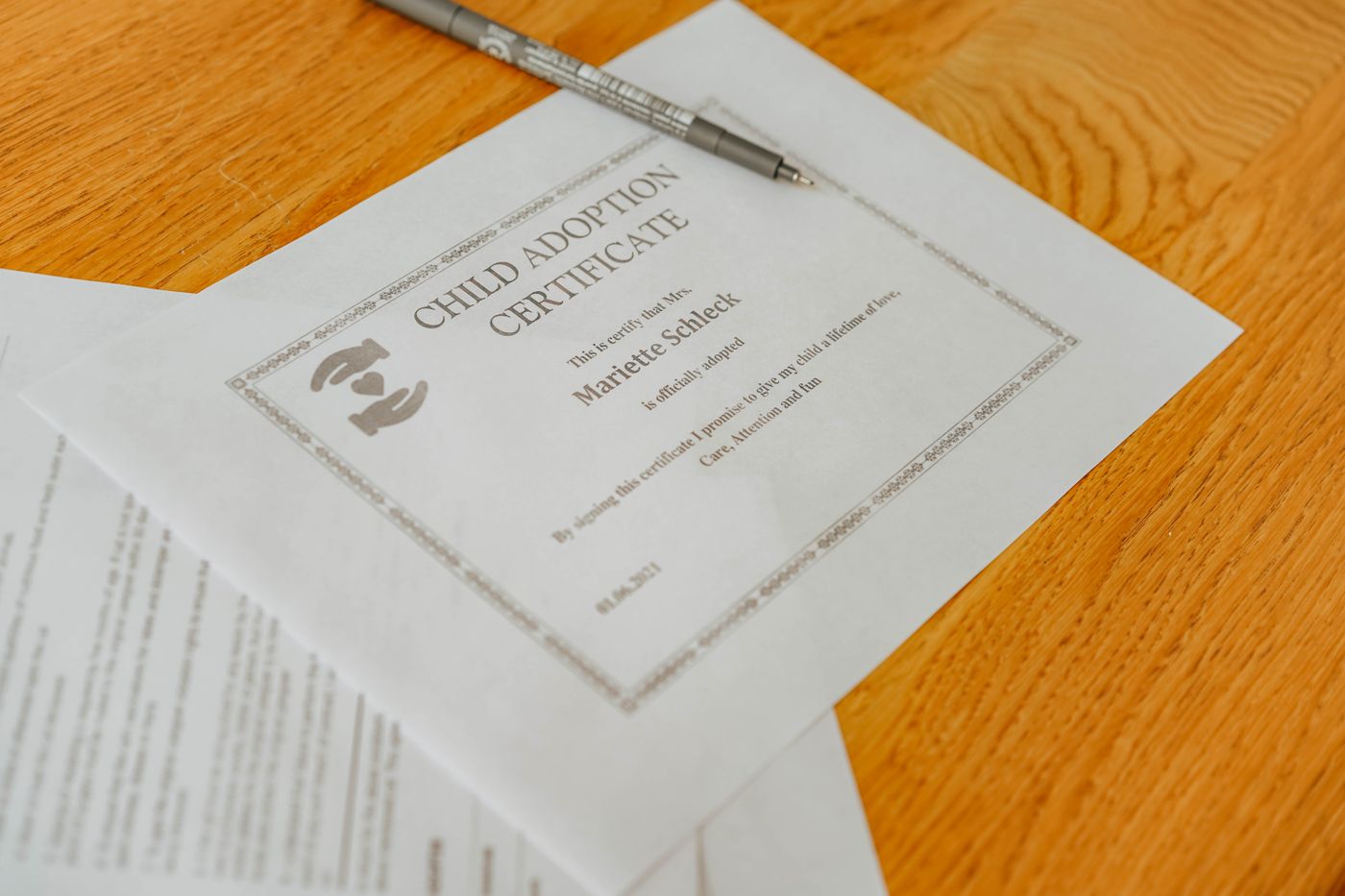 A formal certificate and pen on a desk. Image credit: Close-up of a family law certificate, Pexels.
Step 15: Monitor and report after transition
Why this matters: The successor inherits ongoing court duties and the child may need extra support. This stage turns a broad concern into information a court, clerk, lawyer, school, or agency can actually use. In family-law matters, the reader usually has limited time and must distinguish facts, legal authority, and requested action. A precise approach reduces misunderstandings and helps the next person verify the information rather than guessing what the writer intended.
How to do it: Calendar reports, hearings, renewals, school updates, health appointments, and a transition review. Work from official instructions and the current order before adapting sample language. Write down the source of each important fact, use calendar dates when possible, and mark any point that still needs confirmation. If a fact is uncertain, say that it is uncertain instead of making the sentence sound more definite than the evidence allows.
What to collect: Compliance with the new order and documentation of the child’s adjustment. Keep the original records unchanged and create working copies for highlighting or redaction. Name digital files consistently—for example, 2026-03-12-school-attendance-record.pdf—and maintain a simple exhibit index showing the date, source, and fact each item supports. This small organizational step makes review easier and limits accidental disclosure of irrelevant private information.
Common mistake to avoid: Assuming the case is finished immediately after appointment can lead to missed reporting obligations. Courts and agencies respond better to a clear record than to volume. One reliable document tied to a specific statement is normally more useful than twenty pages of unorganized material. Do not alter screenshots, crop away context that changes meaning, or sign a statement that contains a claim you cannot truthfully defend under questioning.
Practical checkpoint: Before moving on, be able to answer three questions in one sentence each: What fact am I establishing? How do I personally know it? What document or witness can verify it?
Successor guardian transition plan
The following is an educational structure, not a filing-ready form. Replace bracketed text, delete statements that are not true, and use the exact oath, caption, notice, and signature requirements of the court with jurisdiction.
- Proposed effective date and temporary authority, if needed
- Where the child will live and whether school will change
- Medication, medical providers, insurance, and upcoming appointments
- Contact schedule with parents, siblings, former guardian, and other safe adults
- Transfer of identity records, devices, clothing, schoolwork, and personal property
- Financial accounting and delivery of guardianship assets
- First court report and all compliance deadlines
After drafting, read the sample backward one paragraph at a time. This unusual review method helps you notice unsupported conclusions, repeated facts, wrong names, and missing dates. Then compare the final document with the official form and local checklist rather than assuming that a polished narrative is procedurally complete.
How to organize evidence without overwhelming the reader
Use a simple evidence matrix with four columns: the issue, the factual statement, the supporting source, and the location of that source. For example, the issue might be school continuity; the fact might be that the child attended the same school for three years; the source might be an enrollment record; and the location might be Exhibit C, page 2. This prevents attachments from becoming an unrelated document dump.
Preserve original electronic material. Export messages in a way that retains dates and participants, keep the original device where feasible, and do not add annotations to the only copy. If you create a highlighted working version, label it as a working copy. Ask a lawyer about authentication, hearsay, privilege, and admissibility rather than assuming that every true-looking item can be used in court.
Privacy matters even when a fact is relevant. Court files can be accessible to the public, and a child should not carry the consequences of unnecessary publication for years. Omit Social Security numbers, complete financial account numbers, full medical histories, exact confidential addresses, and school-security information unless required through the approved confidential process.
Writing standards that improve credibility
- Use dates and verbs: “On May 4, I drove the child to the appointment” is stronger than “I am always responsible.”
- Use measured language: Replace “never” and “always” unless the record genuinely supports them.
- Identify the source: Distinguish what you saw from what someone told you.
- State limitations: A truthful “I do not know” protects credibility.
- Connect facts to the child: Explain the effect on safety, stability, health, education, or relationships.
- Avoid amateur diagnoses: Describe observable conduct unless you are qualified and authorized to provide a professional opinion.
A useful legal document does not need theatrical language. It needs a reliable path from fact to proof to requested action. Readers should be able to understand the chronology without knowing the family and should be able to locate the record that supports every central claim.
When to stop using a self-help guide and seek immediate help
Contact emergency services when a child faces immediate physical danger. Seek prompt legal assistance when the case involves domestic violence, sexual abuse, serious neglect, threatened abduction, an out-of-state order, tribal jurisdiction, immigration consequences, a parent who cannot be located, active child-protection proceedings, disputed parentage, confidential-address programs, or substantial guardianship assets.
Legal aid, court self-help centers, lawyer-referral services, domestic-violence organizations, disability-rights organizations, and kinship-care programs may provide free or reduced-cost help. A clerk can often explain filing mechanics but generally cannot tell you what legal strategy to choose. Keep a written log of whom you contacted, the date, and the instructions given.
Final quality-control checklist
- Confirm the correct court, case number, and current order.
- Use the latest official forms and local instructions.
- Spell every legal name consistently.
- Verify dates against source records.
- Remove unsupported legal conclusions and personal attacks.
- Redact protected identifiers using the court’s approved method.
- Label exhibits and refer to them in the text.
- Complete the correct oath, declaration, signature, and notary process.
- File through the clerk and serve all required parties.
- Keep a complete file-stamped copy and calendar every deadline.
Frequently asked questions
Can a guardian simply sign custody over to another relative?
Usually not when authority came from a court. The court generally must approve a successor and issue a new order.
What if the current guardian agrees?
Consent can simplify the dispute but does not normally eliminate filing, notice, screening, and judicial approval.
Can a child request a different guardian?
Some jurisdictions allow a child of a specified age to petition or state a preference. The weight given depends on law, maturity, and best interests.
Does changing a guardian end the parents’ rights?
Not automatically. The existing order and state law determine residual parental rights and how a successor appointment affects them.
What happens to the old letters of guardianship?
The order may revoke them, and the court may require surrender. Institutions should receive the new certified documents.
Official and primary resources
Use these resources as starting points and always select the instructions for the state and county with jurisdiction. Pages and forms can change, so verify the effective date before filing.
- California Courts Self-Help — Probate Guardianships
- California Courts Self-Help — Ending a Guardianship
- New York Courts — Letters of Guardianship of the Person of a Minor
- TexasLawHelp — General Affidavits
- Child Welfare Information Gateway — Kinship Care
Conclusion
The most persuasive family-law material is rarely the most dramatic. It is the material that uses the correct procedure, protects the child’s privacy, states facts honestly, and proposes a practical outcome tied to the child’s welfare. Build the record carefully, respect notice and jurisdiction rules, and obtain a signed court order before assuming that legal authority has changed.