

Quick answer: To grow herbs indoors successfully, start with species that tolerate containers, give them much more light than ordinary houseplants, use pots with drainage holes and a well-drained potting mix, water according to the plant and the moisture in the mix rather than a fixed calendar, and harvest in a way that encourages new growth. Most culinary herbs perform best with a bright south- or southwest-facing window or supplemental grow lights. Basil, thyme, rosemary, oregano, parsley, chives, cilantro, and mint can all be grown indoors, but they do not want identical conditions. Basil prefers warmth and more consistent moisture, while rosemary, thyme, oregano, and sage generally tolerate the potting mix drying somewhat between waterings. Check plants regularly for aphids, spider mites, thrips, whiteflies, fungus gnats, and root problems, and rotate or reposition pots when growth becomes one-sided.
 Basil is one of the most popular herbs to grow indoors, but it needs bright light, warmth, drainage, and regular pinching to stay compact. Image: Zorro2212, Wikimedia Commons, CC BY-SA 4.0.
Indoor herb gardening is appealing because the result is useful immediately: fresh leaves for cooking, fragrance, color, and a reason to keep a sunny windowsill productive. It also looks deceptively easy. A supermarket basil plant seems to promise that all you need is a pot near the kitchen sink. A few weeks later, the stems stretch toward the glass, lower leaves turn yellow, tiny insects appear, and the plant collapses after one enthusiastic watering.
The problem is usually not a lack of gardening talent. Indoor conditions are simply different from outdoor conditions. Light intensity is lower, air movement is weaker, roots are restricted to a small volume of potting mix, indoor heating changes humidity, and a decorative container can trap more water than roots can tolerate. Different herbs also come from different environments. Mint and basil do not behave like rosemary and thyme.
University extension guidance is remarkably consistent on the fundamentals. The University of Minnesota notes that many herbs need strong light and that indoor herbs generally benefit from around 12 hours of artificial light when natural light is insufficient. Penn State recommends roughly six hours of direct sunlight for many herbs and notes that supplemental lighting can provide 14 to 16 hours of light for indoor production. Illinois Extension emphasizes drainage, avoiding overfertilization, pinching plants to keep them compact, and monitoring for common indoor pests. This guide translates those principles into a practical system that works for a kitchen windowsill, a shelf with an LED grow light, or a small indoor herb station.
1. Decide What “Successful” Means for Your Indoor Herb Garden
There are several different goals hiding behind the phrase “grow herbs indoors.” You may want a year-round culinary supply, a few plants through winter, seedlings that will move outside later, or a decorative kitchen collection that can provide occasional harvests.
Your goal changes the setup.
If you want frequent harvests for cooking, you need strong light, enough root volume, multiple plants, and a replacement plan for short-lived herbs such as cilantro. If you only want a rosemary pot to survive winter until it can return outside, slower growth is acceptable. If you are starting herbs from seed for an outdoor garden, supplemental light is more important because weak seedlings become leggy very quickly.
What to do: Write down the herbs you use most often and how often you expect to harvest them. This prevents you from buying plants that look attractive but do not match your kitchen habits or indoor conditions.
2. Choose Herbs That Actually Adapt to Indoor Containers
Some culinary herbs are much easier indoors than others.
Good beginner choices:
- basil;
- chives;
- parsley;
- cilantro;
- mint;
- thyme;
- oregano;
- sage;
- rosemary.
Penn State specifically identifies chives, basil, and cilantro as strong indoor choices and advises avoiding very large-rooted herbs such as horseradish, fennel, and lovage when container space is limited.
That does not mean every “easy” herb behaves the same way. Basil wants warmth and dislikes prolonged dryness. Rosemary can resent wet roots. Cilantro tends to be short-lived and may bolt rather than behave like a permanent houseplant. Mint is forgiving but spreads aggressively when given room.
3. Match the Herb to the Light You Actually Have
Before buying a plant, observe the growing location for several days.
Ask:
- Which direction does the window face?
- How many hours of direct sun reach the leaves?
- Is the sun blocked by another building, tree, balcony, or awning?
- Does winter reduce the usable light dramatically?
- Does the windowsill become very hot or very cold?
South- and southwest-facing windows generally provide the strongest natural light in the Northern Hemisphere. East-facing windows can be useful for herbs that tolerate somewhat lower intensity. North-facing windows are often insufficient for sun-loving culinary herbs without supplemental lighting.
The University of Minnesota classifies herbs such as basil, thyme, and lavender as high-light indoor plants. Penn State similarly notes that rosemary, bay, and thyme perform best with strong direct light.
4. Learn the Difference Between “Bright Room” and “Bright Plant Light”
A room can look bright to human eyes while providing weak plant light.
Human vision adapts to low-light rooms. Plants do not. A basil plant placed two meters from a large window may look well lit to you, yet receive only a fraction of the energy available on the windowsill.
Low-light symptoms include:
- long spaces between leaves;
- thin stems;
- small leaves;
- pale color;
- plants leaning strongly toward the window;
- weaker aroma;
- slow regrowth after harvest.
If you see these symptoms despite otherwise reasonable care, solve the light problem before adding fertilizer.
5. Use Supplemental Light When Natural Light Is Not Enough
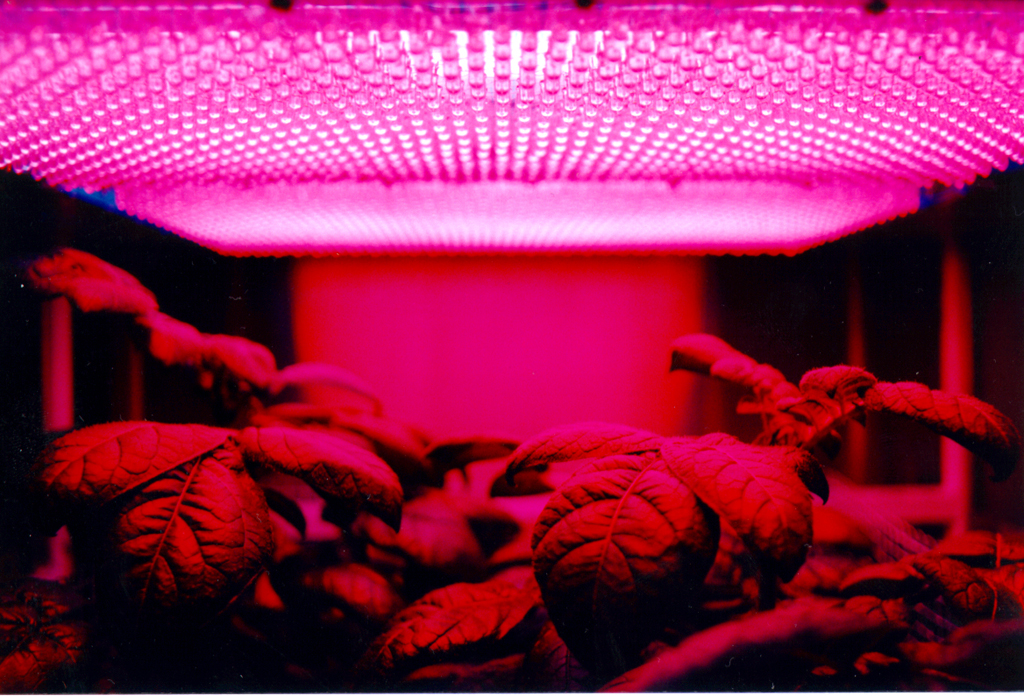 Artificial plant lighting can provide the light intensity and daily duration that sunny culinary herbs often fail to receive indoors. Image: NASA Marshall Space Flight Center, public domain in the United States.
Grow lights are not only for greenhouses. A small LED fixture can turn an otherwise dim shelf into a reliable herb-growing space.
Useful characteristics include:
- enough output for the growing area;
- adjustable height;
- a timer;
- good coverage across the plant canopy;
- a spectrum intended for plant growth or a broad white spectrum;
- safe indoor mounting and electrical installation.
Do not choose a fixture based only on unusual purple color or marketing terms such as “full spectrum.” Coverage and intensity at the leaf level matter more.
University of Minnesota guidance notes that indoor herbs may need about 12 hours of artificial light daily. Penn State describes a longer 14- to 16-hour artificial-light period in some setups. Treat those as starting ranges rather than a universal recipe because fixture intensity and natural daylight vary.
6. Put the Grow Light Close Enough to Be Useful
A weak light placed far above the plants may produce little useful growth.
Follow the fixture manufacturer’s recommended hanging distance. Many small indoor herb systems work with the light relatively close to the canopy, but heat output, lens design, and intensity vary widely.
Success check: After one to two weeks, new growth should be compact and upright rather than stretched. If leaves bleach, curl upward, or develop dry light-burn patches, the fixture may be too intense or too close. If stems continue to elongate, increase intensity, move the light closer within safe limits, or extend the daily lighting period.
7. Put Artificial Lights on a Timer
Manual switching leads to inconsistent days.
A basic outlet timer creates a repeatable light-dark cycle. Plants need darkness too, so leaving the grow light on 24 hours is not a good default.
Choose a daily schedule that fits your household. For example, a light could operate from 6 a.m. to 8 p.m. if that matches the plant’s needs and avoids disturbing sleep. The exact hours matter less than consistency and adequate daily light.
8. Start With Clean Containers That Have Drainage Holes
The most attractive container in the store may be the worst growing container if it has no drainage.
Roots need both water and oxygen. When the bottom of the pot stays saturated, air spaces fill with water and roots can decline. A drainage hole lets excess water leave after watering.
Use a saucer to protect furniture. Empty standing water rather than letting the pot sit submerged for hours.
If you love a decorative pot without drainage, use it as a cachepot: keep the herb in a smaller nursery pot with holes, remove that inner pot for watering, let it drain, then return it to the decorative container.
9. Choose Pot Size by Root System and Harvest Goal
Tiny pots dry very quickly and restrict roots. Oversized pots can stay wet too long around a small plant.
A practical starting point for many single herb plants is a pot around 6 inches in diameter, which is also consistent with Illinois Extension guidance for indoor herbs. Larger herbs such as mature rosemary, mint, or multi-stem basil may need larger containers as they grow.
Repot when:
- roots circle tightly around the root ball;
- water runs through immediately because roots fill the pot;
- the plant wilts very quickly after watering;
- growth stalls despite adequate light and nutrition;
- roots emerge heavily from drainage holes.
10. Do Not Add Gravel to “Improve Drainage”
Good drainage comes from holes, suitable potting mix, and correct watering. A layer of stones at the bottom does not create a magical drainage zone.
Use the full container volume for root-supporting mix unless you have a specific structural reason to do otherwise.
11. Use Potting Mix, Not Dense Garden Soil
Garden soil can compact badly in a container. Indoor herbs need a mix that holds some moisture while maintaining air space.
A commercial indoor or container potting mix is a practical starting point. It may contain peat or coir, bark, perlite, vermiculite, and other ingredients depending on the product.
Avoid digging heavy clay soil from outdoors and placing it in a windowsill pot. In addition to compaction, outdoor soil can introduce insects, weed seeds, and disease organisms indoors.
12. Adjust the Mix for Herbs That Prefer Drier Roots
Rosemary, thyme, oregano, sage, and similar Mediterranean herbs often perform better in an airy, fast-draining medium than in a mix that stays wet for a long time.
You can improve aeration with an appropriate container mix containing perlite or other drainage-supporting components. Do not make the mix so coarse that it becomes impossible to keep roots hydrated.
Basil and parsley generally tolerate a somewhat more moisture-retentive mix, provided it still drains well.
13. Water by Moisture, Not by the Day of the Week
“Water every Tuesday” sounds organized but ignores the plant.
Water use changes with:
- light intensity;
- temperature;
- pot size;
- plant size;
- humidity;
- season;
- growth rate;
- pot material.
University of Minnesota recommends checking indoor herbs when the soil is dry about half an inch below the surface. Penn State similarly advises watering when the potting mix begins to dry, while noting that some Mediterranean herbs benefit from drying slightly between waterings.
14. Learn the Finger-Test Method
Insert a clean fingertip into the top layer of mix.
If it is still clearly moist, wait. If the upper layer has dried and the herb is one that prefers consistent moisture, water. For rosemary, thyme, oregano, and sage, allow somewhat more drying before watering.
This simple method is more reliable than judging the surface color alone.
15. Water Thoroughly, Then Let Excess Drain
When watering, apply enough water to moisten the full root ball. Continue until some water exits the drainage holes.
Then allow the pot to drain and empty the saucer if necessary.
Repeatedly adding tiny sips can leave part of the root ball dry and encourage salt concentration near the surface.
16. Recognize Overwatering Before Roots Collapse
Overwatering usually means watering too frequently for the plant’s actual rate of water use, not simply applying a large amount at one time.
Warning signs include:
- yellow lower leaves;
- soft stems;
- persistent wet smell;
- fungus gnats;
- mold on the surface;
- drooping even though the soil is wet;
- dark or mushy roots.
If the plant is chronically wet, improve drainage, increase light and air movement, and reduce watering frequency.
17. Recognize Underwatering
Underwatered herbs may show:
- limp leaves;
- dry leaf edges;
- very light pots;
- potting mix pulling away from the container edge;
- rapid wilt during bright periods.
If a peat-based mix becomes extremely dry, water can run around the sides instead of soaking in. Apply water slowly in several passes or soak from below briefly, then allow the pot to drain completely.
18. Separate Herbs With Opposite Water Needs
A mixed planter looks efficient, but it forces several herbs to share one moisture level.
Mint and basil may want more consistent moisture than rosemary and thyme. Keeping them in separate pots makes management easier.
You can still group the pots in one tray for a cohesive appearance.
19. Control Humidity Without Keeping Leaves Constantly Wet
Indoor heating can produce very dry air. Penn State notes that central heating can reduce humidity enough to dry foliage, while excessively humid, stagnant conditions increase fungal risk.
Useful options include:
- grouping pots loosely;
- keeping plants away from hot heating vents;
- using a room humidifier when the household air is extremely dry;
- maintaining gentle air movement.
Misting is not a substitute for root watering and is rarely the most effective way to manage whole-room humidity.
20. Give Plants Air Movement
Outdoor herbs experience wind. Indoors, crowded leaves can remain stagnant.
Gentle air movement can help reduce fungal problems and strengthen stems. You do not need a strong fan blowing directly at the plants. A small fan on low speed across the room or natural room circulation can be enough.
Avoid crowding pots so tightly that leaves stay pressed together.
21. Keep Herbs Away From Temperature Extremes
Indoor herbs generally prefer ordinary room temperatures, but windowsills can be much hotter or colder than the room.
Penn State suggests daytime temperatures around 65–70°F for many herbs and cooler nights, while noting that basil is particularly sensitive to cold and can suffer below about 50°F.
In winter, leaves touching cold glass may be damaged. In summer, a closed south-facing window can become intensely hot.
22. Rotate Window Plants
Plants naturally grow toward the strongest light source.
Rotate pots a quarter turn every few days if they develop one-sided growth. This is especially useful on windowsills where light enters from one direction.
Rotation cannot compensate for genuinely weak light, but it improves shape when intensity is adequate.
23. Fertilize Lightly
Indoor herbs in containers have limited nutrient reserves, but heavy fertilization can create weak growth, salt buildup, or reduced flavor quality.
Penn State suggests a low dose of water-soluble fertilizer about every two weeks for actively growing indoor herbs. Illinois Extension warns against overfertilizing.
Follow the product label and reduce feeding when growth slows significantly during winter.
24. Watch for Salt Buildup
Fertilizer salts can accumulate in container mix, particularly when water evaporates rather than draining freely.
Possible signs include:
- white crust on the soil or pot edge;
- brown leaf tips;
- poor growth despite feeding.
Occasionally watering thoroughly enough to allow excess water to drain can help flush soluble salts. Do not compensate for salt stress by adding more fertilizer.
25. Start Basil From Seed, Seedling, or Cutting
Basil is fast-growing and easy to replace, which makes it ideal for succession growing indoors.
You can:
- sow seed directly;
- buy a healthy transplant;
- root a cutting in water and pot it after roots form.
Store-bought grocery basil is often crowded with many seedlings in a small pot. That creates immediate lushness but can become congested. Divide carefully into several pots if the root system allows it, or treat the plant as a short-term harvest crop and start a replacement.
26. Pinch Basil Above a Leaf Pair
Harvesting technique changes plant shape.
Instead of repeatedly removing single large leaves from the bottom, cut or pinch a stem just above a healthy pair of leaves. Buds at those nodes can develop into side branches, producing a bushier plant.
Do not remove so much foliage that the plant lacks enough leaves to photosynthesize.
27. Remove Basil Flower Buds When Leaf Production Is the Goal
Basil eventually tries to flower, especially under stress or as it matures.
If your goal is continuous leaf harvest, pinch flower stems early. This redirects the plant toward vegetative growth for longer.
Flowering basil is not automatically unusable, but leaf texture and flavor can change as the plant shifts reproductive energy.
28. Grow Parsley With Patience
 Parsley can grow indoors in a bright location with good drainage, but seedlings may become thin if light is insufficient. Image: Punker1999, Wikimedia Commons, CC0 1.0.
Parsley seed germination can be slow. Once established, it is productive if it receives bright light and consistent moisture.
University of Minnesota recommends harvesting parsley by cutting outer stalks near the base rather than repeatedly snipping only the leaf tops. This encourages the central plant to continue producing.
Indoor parsley may become somewhat spindly in weaker light, so a grow light can improve compact growth.
29. Treat Cilantro as a Succession Crop
Cilantro often disappoints people who expect a permanent indoor plant.
It naturally grows, produces leaves, then shifts toward flowering and seed production. Warm conditions can accelerate bolting.
A better strategy is to sow smaller batches every few weeks rather than trying to keep one plant indefinitely.
Harvest outer leaves or cut stems while allowing the center to continue growing.
30. Give Mint Its Own Pot
Mint spreads through vigorous roots and can dominate mixed containers.
Indoors, a separate pot keeps it manageable. Mint also tolerates somewhat lower light than many Mediterranean herbs, although stronger light still supports better growth.
Pinch stems regularly to encourage branching and prevent a few long stems from taking over the plant.
31. Let Rosemary Dry More Than Basil
Rosemary often fails indoors because roots remain wet while the top appears dry.
Use an airy mix, a drainage hole, bright light, and less frequent watering than basil. Allow the mix to dry somewhat between waterings, but do not let the root ball stay bone-dry for long periods.
Rosemary also benefits from good air movement and strong light.
32. Grow Thyme and Oregano Lean
Thyme and oregano are adapted to bright, relatively lean conditions.
Give them strong light, excellent drainage, and modest fertilizer. Excess nitrogen and weak light can produce soft, leggy growth.
Harvest the stem tips regularly rather than stripping one branch bare.
33. Chives Are Useful for Small Spaces
Chives form clumps rather than large woody plants, which makes them practical indoors.
Harvest by cutting leaves a short distance above the base. Do not remove the entire clump at once.
As the clump becomes crowded, it can be divided into smaller sections and replanted.
34. Sage Needs Light More Than Frequent Water
Sage prefers bright conditions and can decline in damp, poorly ventilated indoor setups.
Use a fast-draining mix, water after the upper layer dries, and keep foliage from remaining crowded or wet.
Harvest lightly from young indoor plants until they establish a strong root system.
35. Start Seeds Shallowly and Keep Them Evenly Moist
Seed-starting depth varies by species, so follow the seed packet.
Use a fine seed-starting or potting medium, moisten it before sowing, and keep the surface from drying completely during germination. A humidity cover can help temporarily, but remove or vent it once seedlings emerge to reduce disease risk.
Seedlings need stronger light than mature shade-tolerant houseplants. Place the grow light close enough to prevent stretching.
36. Thin Seedlings Instead of Keeping Every Sprout
Overcrowded seedlings compete for light, nutrients, and airflow.
Once true leaves develop, keep the strongest plants at spacing appropriate for the pot. Snipping weaker seedlings at soil level is often less disruptive than pulling them out and disturbing nearby roots.
37. Acclimate Outdoor Herbs Before Bringing Them Indoors
A mature herb moved directly from full outdoor sun into a dim room experiences a large environmental shock.
Illinois Extension recommends gradual acclimatization when bringing container herbs indoors for winter. Move plants toward lower-light conditions in stages when practical.
Also inspect the plant carefully for pests before it comes inside.
38. Quarantine New or Outdoor Plants
One infested mint plant can spread pests to every houseplant in the room.
Keep newly purchased or outdoor plants separate for a short observation period when possible. Inspect:
- leaf undersides;
- stem joints;
- new growth;
- soil surface;
- pot rim.
Look for insects, webbing, sticky residue, stippled leaves, or moving specks.
39. Identify Aphids Early
Aphids cluster on soft new growth and can distort leaves. They may leave sticky honeydew.
For a small edible herb plant, early control can be simple:
- isolate the plant;
- rinse aphids off with water;
- remove heavily infested shoots;
- repeat inspection every few days.
If you use an insecticidal product, confirm that it is labeled for the edible herb and intended indoor use.
40. Recognize Spider Mites
Spider mites thrive in warm, dry indoor conditions and can be difficult to notice at first.
Signs include:
- fine pale stippling on leaves;
- yellowing;
- tiny moving dots;
- fine webbing in heavier infestations.
Isolate the plant and act early. Severe infestations on inexpensive annual herbs may be easier to discard than to manage beside valuable houseplants.
41. Watch for Whiteflies and Thrips
Whiteflies may flutter from the plant when disturbed. Thrips can cause silvery scarring and distorted new growth.
Sticky cards can help detect flying adults, but monitoring is not the same as complete control.
Keep foliage clean, avoid overcrowding, and inspect new plants before placing them with the collection.
42. Fungus Gnats Usually Signal Moist Potting Mix
Adult fungus gnats are small flies that hover near the soil surface. Their larvae develop in moist organic potting media.
A few adults are mostly annoying, but chronic infestations indicate that the surface stays damp for long periods.
Allow the upper mix to dry appropriately for the herb, improve drainage, and remove decaying organic debris. Yellow sticky cards can help monitor adults.
43. Do Not Reach for Pesticide Before Identifying the Pest
The same symptom can come from insects, nutrient stress, watering mistakes, or light problems.
Before treatment, inspect closely. Use a phone camera with magnification if necessary.
For edible herbs, label restrictions matter. Never spray a general household insect killer onto a plant you plan to eat unless the product specifically allows that use.
44. Harvest in the Morning When Practical
Herbs can be harvested whenever you need them, but morning harvests often provide crisp foliage before the plant experiences the day’s heat.
Use clean scissors or pinch with clean hands. Remove damaged or diseased leaves separately.
45. Harvest Regularly Enough to Encourage Branching
Many leafy herbs respond well to regular cutting.
Illinois Extension advises pinching herbs during the growing season to keep them bushy and compact. For annual leafy herbs, leaving enough shoot growth supports regrowth after harvest. Perennial herbs should generally be harvested more conservatively because future growth depends on the remaining plant.
46. Never Strip a Small Plant Bare
A plant’s leaves are its energy-producing surface.
If a new basil plant has eight leaves, harvesting six of them for dinner can dramatically slow recovery. Harvest mature plants progressively and leave enough healthy foliage to support regrowth.
If your household uses a large quantity of one herb, grow multiple pots rather than overharvesting one.
47. Keep a Replacement Cycle
Indoor culinary gardening becomes easier when you stop treating every plant as permanent.
Basil, cilantro, dill, and parsley may eventually decline, flower, or become less productive. Start replacements before old plants are exhausted.
Keep slow-growing woody herbs such as rosemary and thyme longer, while treating fast annuals as renewable crops.
48. Preserve Surplus Before Quality Declines
If a plant produces faster than you can cook with it, harvest before stems become overgrown.
Depending on the herb, options include:
- freezing chopped leaves;
- drying;
- freezing in oil or water where food-safe and appropriate;
- making herb sauces or compound butter;
- sharing cuttings or harvested stems.
University of Minnesota notes that different herbs respond differently to drying and freezing, so choose a method that preserves the flavor you value.
49. Avoid Keeping Fresh Herbs Beside Ripening Fruit
Ripening fruit can release ethylene, a plant hormone that accelerates aging in many plant tissues.
Do not crowd your live herb pots immediately beside a bowl of heavily ripening fruit if you notice premature leaf decline.
50. Clean the Growing Area Regularly
Remove:
- dead leaves;
- spilled potting mix;
- standing water;
- fallen food scraps;
- old fertilizer residue.
A clean shelf is easier to inspect and less attractive to pests.
51. Label Pots When Seedlings Look Similar
Young parsley, cilantro, and some other herbs can be easy to confuse.
Use a simple label with:
- herb name;
- sowing or purchase date;
- variety when important.
This also helps you learn how long each plant remains productive indoors.
52. Keep a Simple Watering Log for the First Month
Do not use the log as a rigid schedule. Use it to understand the room.
Record:
- date watered;
- soil condition before watering;
- plant response;
- major weather or heating changes.
You may discover that basil needs water every three days in summer but every six days in winter, while rosemary needs much less frequent watering.
53. Do Not Combine Herbs Only Because Recipes Combine Them
An “Italian herb planter” containing basil, rosemary, parsley, and oregano sounds convenient but mixes plants with different moisture and growth habits.
Use separate pots arranged together. You get the same visual theme with better root-zone control.
54. Use Self-Watering Pots Selectively
A self-watering container can be useful for basil, parsley, or mint when correctly sized and managed, but it can keep rosemary or thyme wetter than they prefer.
Understand how the reservoir and wick work before using the same system for every herb.
55. Use Bottom Watering as a Technique, Not a Permanent Condition
Bottom watering can rehydrate dry potting mix effectively.
Place the pot in shallow water for a limited time until moisture rises through the root zone, then remove it and let it drain. Do not leave the pot standing in water indefinitely.
56. Repot Store-Bought Herbs When the Root Ball Is Overcrowded
Grocery-store herb pots are often produced for quick harvest rather than long-term indoor growth.
Signs of crowding include dozens of stems, a solid root mat, extremely rapid drying, and yellow lower leaves.
Move the plant to a somewhat larger pot or divide compatible clumps carefully. Do not jump from a tiny pot to a huge container that stays wet for weeks.
57. Troubleshoot Leggy Basil
Symptom: Long stems, large gaps between leaves, leaning toward the window.
Most likely causes: inadequate light, overfertilization, or both.
Fix: Increase light intensity, move the plant closer to a suitable light source, use a timer, and pinch stems above leaf nodes. Do not fertilize again until compact new growth appears.
58. Troubleshoot Yellow Lower Leaves
Possible causes:
- overwatering;
- poor drainage;
- old shaded leaves;
- nutrient deficiency;
- root crowding.
Check soil moisture and roots before adding fertilizer. If the pot remains wet for many days, solve drainage and watering frequency first.
59. Troubleshoot Brown, Crispy Leaf Edges
Possible causes include:
- underwatering;
- very dry air;
- fertilizer salt buildup;
- heat near a window or radiator;
- root damage.
Use the plant’s recent history to distinguish them. A bone-dry, feather-light pot suggests something different from a constantly wet pot with white mineral crust.
60. Troubleshoot Mold on the Soil Surface
Surface mold often appears when organic media stay damp with poor airflow.
Remove decaying material, let the surface dry appropriately, increase light and circulation, and reduce unnecessary watering. Mold is a symptom of the environment even when it is not directly killing the herb.
61. Troubleshoot Basil That Wilts in Wet Soil
This is a classic overwatering warning.
Roots that cannot access enough oxygen may stop functioning, so leaves wilt even though the pot is wet.
Stop watering, verify drainage, inspect for root rot if decline continues, and repot into fresh, airy mix if necessary. Severely rotted plants may be easier to replace from healthy cuttings.
62. Troubleshoot Rosemary Turning Brown Indoors
Check three conditions:
- Is the plant receiving very strong light?
- Is the pot staying wet too long?
- Is air extremely dry and stagnant around foliage?
Rosemary often suffers from the combination of weak winter light and wet roots. Moving it into stronger light while reducing watering frequency can help if roots remain healthy.
63. Troubleshoot Cilantro That Flowers Too Fast
Cilantro naturally has a short vegetative phase.
Warm temperatures, root stress, and maturity encourage bolting. Keep it in bright but not excessively hot conditions and sow new batches regularly.
Once flowering begins strongly, consider allowing the plant to produce coriander seed while using a younger sowing for leaves.
64. Troubleshoot Herbs That Taste Weak
Weak flavor can result from:
- insufficient light;
- very rapid soft growth from excess nitrogen;
- overwatering;
- harvesting very young growth;
- species or variety differences.
Strong light is especially important because it supports compact growth and essential oil production in many culinary herbs.
65. Worked Example: A Sunny Kitchen Windowsill
A cook has a south-facing kitchen window with six hours of direct sun in spring and summer.
Plants: basil, parsley, chives, thyme.
Setup: Each herb is in its own 6- to 8-inch pot with drainage. Pots sit on a washable tray. Basil and parsley receive water when the upper mix begins to dry; thyme dries more between waterings.
Harvest: Basil is pinched above leaf nodes, parsley outer stalks are cut near the base, and chives are cut in small sections.
Winter adjustment: A small LED bar is added because the daylight period becomes shorter and plants become leggy.
66. Worked Example: A Windowless Apartment Kitchen
The grower has no useful natural light but has a shelf near an electrical outlet.
Setup: LED grow light on a timer, adjustable shelf height, four separate pots, waterproof tray, and a small circulation fan nearby.
Plants: basil, mint, parsley, chives.
Lighting: The fixture is positioned according to manufacturer guidance and operated for a long daily photoperiod, starting around 14 hours and adjusted according to plant response.
Success sign: New leaves remain compact rather than stretching.
67. Worked Example: Keeping Rosemary Through Winter
A rosemary plant spends summer outdoors and must come inside before freezing weather.
Preparation: Inspect for pests and acclimate gradually to lower light.
Indoor location: Brightest cool room window with supplemental light if needed.
Water: Thorough watering only after the mix has dried somewhat; never standing water in the saucer.
Harvest: Light trimming only because winter growth is slower.
Goal: Healthy survival until outdoor conditions return, not maximum winter production.
68. Worked Example: Continuous Cilantro for Cooking
A household uses cilantro twice per week.
Instead of one permanent pot, the grower uses three small containers.
Week 1: Sow pot A.
Week 3: Sow pot B.
Week 5: Sow pot C and begin harvesting A.
As A bolts and declines, it is replaced with another sowing. This produces a more dependable supply than trying to keep one mature plant forever.
69. Worked Example: Grocery Basil Rescue
A dense supermarket basil has 20 stems in a tiny plastic pot.
Step 1: Harvest only lightly on the first day.
Step 2: Slide the root ball out and assess whether it can be divided without severe damage.
Step 3: Replant several groups into separate pots with drainage and fresh mix.
Step 4: Provide bright light and warmth.
Step 5: Pinch the strongest stems after they recover.
If the root mat is too damaged to divide, keep the pot as a short-term harvest plant and root healthy cuttings for replacement.
70. A 60-Minute Indoor Herb Garden Setup
Minutes 0–10: Choose a location and measure how much light it gets.
Minutes 10–20: Select three or four herbs with compatible temperature needs but separate water management.
Minutes 20–30: Prepare pots with drainage, saucers, and quality potting mix.
Minutes 30–40: Pot or transplant herbs at the same depth they were growing previously.
Minutes 40–50: Water thoroughly and allow complete drainage.
Minutes 50–60: Install or schedule supplemental light, label pots, and record the setup date.
71. A Weekly Maintenance Routine
- Check soil moisture individually.
- Inspect leaf undersides for pests.
- Rotate window pots.
- Pinch or harvest overlong stems.
- Remove dead leaves.
- Empty standing water from saucers.
- Check the timer and grow-light height.
- Wipe spills and debris from the shelf.
- Notice which herb is using water faster or slower.
72. A Monthly Review
Once per month, ask:
- Which herbs are actually being used?
- Which plants are becoming rootbound?
- Which need stronger light?
- Has the season changed watering frequency?
- Are fertilizer salts building up?
- Is any annual herb approaching the end of its useful life?
- Should a replacement batch be started?
This turns your herb garden into a renewable kitchen system instead of a collection of plants you feel guilty about losing.
73. Indoor Herb Garden Checklist
- I selected herbs that suit containers.
- I know how much direct light the location receives.
- I use supplemental light when natural light is insufficient.
- The grow light is on a timer.
- Every growing pot has drainage.
- I use a well-drained container potting mix.
- I water by soil moisture rather than a fixed weekday.
- Basil stays warmer and more consistently moist than rosemary or thyme.
- No pot sits in standing water for long periods.
- I rotate window plants.
- I fertilize lightly rather than aggressively.
- I inspect for aphids, mites, thrips, whiteflies, and fungus gnats.
- I isolate new or outdoor plants before mixing them with the collection.
- I harvest in ways that leave enough foliage for regrowth.
- I pinch basil and other branching herbs.
- I treat cilantro and some annual herbs as succession crops.
- I keep mint in its own pot.
- I start replacement plants before old annuals collapse.
- I clean the shelf and remove dead material regularly.
Frequently Asked Questions
What herbs are easiest to grow indoors?
Basil, chives, parsley, cilantro, mint, thyme, oregano, sage, and rosemary are common indoor choices. Chives, basil, and cilantro are specifically recommended by Penn State for indoor culture, while Illinois Extension also lists several of these as practical indoor herbs.
Can herbs grow indoors without direct sunlight?
Some herbs tolerate lower light better than others, but most culinary herbs perform best with strong light. If your window does not provide enough direct sun, use a suitable grow light rather than accepting leggy, weak growth.
How many hours should a grow light be on?
University extension recommendations vary with the setup. Around 12 hours can work with sufficient intensity and additional daylight, while 14–16 hours is commonly recommended under artificial lighting. Use the fixture instructions and plant response to adjust.
How often should I water indoor herbs?
There is no universal schedule. Check the potting mix. Many indoor herbs can be watered when the upper half-inch begins to dry, while rosemary, thyme, oregano, and sage generally tolerate more drying than basil.
Why is my basil tall and thin?
Insufficient light is the most common cause. Increase usable light, keep the lamp at an effective distance, and pinch stems above leaf nodes to encourage branching. Avoid heavy fertilizer when light is weak.
Can I grow several herbs in one long planter?
You can, but separate pots are easier because herbs differ in moisture needs and growth habits. A tray holding several individual containers provides the same visual effect with better control.
Can I use garden soil in indoor pots?
It is usually better to use a commercial container potting mix. Garden soil can compact in containers, drain poorly, and bring outdoor pests or weed seeds inside.
Should I mist my herbs every day?
Daily misting is not necessary for most herbs and does not replace root watering. If the room is extremely dry, improving room humidity or grouping plants may be more effective.
How do I keep cilantro from dying?
Cilantro naturally has a relatively short leafy phase and eventually bolts. Strong light, moderate temperatures, and succession sowing every few weeks usually produce a more reliable supply than trying to maintain one old plant.
Why are tiny flies coming from the pot?
They are often fungus gnats. Their larvae thrive in moist organic media. Let the upper mix dry as appropriate for the herb, improve drainage and air movement, remove decaying debris, and use sticky cards to monitor adults.
Can I harvest herbs all winter?
Yes, if they receive enough light and remain actively growing. Growth can slow during winter because of lower light and cooler conditions, so harvest more conservatively unless you provide strong supplemental lighting.
Conclusion: Build the Environment Before Expecting the Harvest
Indoor herbs become reliable when you stop treating them like decorations and start managing the small environment around their roots and leaves.
The essential system is simple: enough light, a pot with drainage, a well-aerated growing mix, watering based on actual moisture, moderate fertility, air circulation, early pest detection, and harvesting that leaves enough foliage for regrowth. The difficult part is remembering that “herbs” are not one type of plant. Basil wants warmer, more consistently moist conditions than rosemary. Mint tolerates lower light and more moisture than thyme. Cilantro is better managed as a repeating crop than a permanent specimen.
The biggest mistake to avoid is solving every symptom with more water or fertilizer. Leggy growth usually points first to light. Yellow leaves in wet soil point first to root-zone conditions. Tiny flies point toward persistent moisture. A declining rosemary pot may need less water and more light, not another feeding.
Your first practical step is to choose one bright location and grow only three herbs you already use in cooking. Give each its own pot, label it, observe its water use for a month, and add a timer-controlled grow light if the natural light cannot keep new growth compact. Once that small system works, expanding it is easy.
Sources and Further Reading
- University of Minnesota Extension — Growing Herbs in Home Gardens
- University of Minnesota Extension — Lighting for Indoor Plants and Starting Seeds
- University of Minnesota Extension — Growing Parsley in Home Gardens
- Penn State Extension — Growing Herbs Indoors
- Illinois Extension — Growing Herbs in Containers
- Illinois Extension — Get Growing With an Indoor Kitchen Garden
Image Credits
- “Basil in a pot.jpg” — Zorro2212, Wikimedia Commons, CC BY-SA 4.0.
- “LED panel and plants.jpg” — NASA Marshall Space Flight Center, public domain in the United States.
- “Parsley seedling.jpg” — Punker1999, Wikimedia Commons, CC0 1.0.