

Quick answer: A good customer complaint process does five things consistently: makes it easy for customers to report a problem, records the facts in one place, assigns a clear owner, resolves the issue within defined limits, and turns recurring complaints into operational improvements. Start with a simple intake form or inbox, categorize complaints by urgency and type, acknowledge them quickly, investigate without arguing, propose a specific resolution, document the outcome, and review trends every month. The goal is not to “win” disputes. It is to resolve valid problems fairly, protect the business from avoidable risk, and learn where products, policies, or processes are failing.
 A complaint process should be easy to enter, easy to understand, and consistent enough that customers do not have to fight the system before the business even hears the problem. Image: Anshamblen15, Wikimedia Commons, CC BY-SA 4.0.
Customer complaints are uncomfortable because they combine emotion, operational facts, money, reputation, and sometimes legal or safety concerns. Small businesses often handle them informally: whoever sees the message replies, a manager gets involved if the customer becomes angry, and the team moves on once a refund or replacement is issued. That approach can work when volume is tiny, but it breaks as the business grows.
The same complaint may be handled differently by two employees. Customers repeat the story across email, chat, and phone. Refund promises are forgotten. Serious safety complaints are buried next to minor delivery questions. Teams fix symptoms but never notice that 18 customers reported the same packaging defect. A business can therefore spend heavily on “customer service” while learning very little from complaints.
A structured complaint process solves that. ISO 10002:2018, the current international guideline for complaint handling confirmed in 2023, treats complaints as part of a broader quality-management process. It emphasizes accessible complaint channels, attention to complainant needs, management involvement, analysis of complaint data, and review of the process itself. Those ideas scale down well for small businesses: you do not need an enterprise case-management platform to create a fair and useful system.
1. Define What Counts as a Complaint
Before designing a workflow, decide what your business means by “complaint.” If employees only log messages that contain the word “complaint,” you will miss most of the useful signals.
A practical definition is: any expression of dissatisfaction where a customer expects, requests, or reasonably needs a response or corrective action.
Examples include:
- a product arrives damaged;
- a customer says a service did not match what was promised;
- a delivery is repeatedly late;
- a customer cannot cancel a subscription;
- an invoice is wrong;
- a support representative was rude;
- a refund has not arrived;
- instructions are confusing and caused repeated setup failure;
- a customer reports a possible product safety issue;
- an accessibility barrier prevents someone from using the service;
- a customer says the business used their personal data incorrectly.
Not every question is a complaint. “What time do you open?” is an inquiry. “Your published hours say you are open, but I drove there and the store was closed” is a complaint. The difference matters because complaints should be tracked for learning and follow-up.
Common mistake: labeling angry customers as complaints and calm customers as ordinary support. Tone is not a reliable classification method. A polite customer reporting an incorrect charge may represent a more serious business problem than an angry customer asking for a courtesy discount.
2. Create One System of Record
Complaints can arrive through email, phone, social media, live chat, a marketplace, review sites, in-person conversations, or account managers. The customer does not care which channel your company prefers. Internally, however, every complaint should end up in one system of record.
That system can be simple:
- a shared support inbox with labels;
- a help-desk platform;
- a CRM case object;
- a structured spreadsheet for very low volume;
- a ticketing system integrated with chat and email.
The tool matters less than the rule: if it is a complaint, it gets a case record.
At minimum, record:
- case ID;
- date received;
- customer name and contact information;
- channel;
- order, account, or transaction reference;
- complaint category;
- short factual summary;
- customer’s requested resolution;
- urgency or risk level;
- assigned owner;
- status;
- actions taken;
- promised follow-up date;
- resolution;
- root-cause code if known.
This does not need to become bureaucratic. A well-designed form can capture these fields in under two minutes. The purpose is continuity: another employee should be able to understand what happened without forcing the customer to repeat the entire story.
3. Make It Easy for Customers to Reach the Right Place
A complaint process fails if customers cannot find it.
Publish at least one obvious contact route on your website. Depending on the business, this might be a support email address, contact form, phone number, in-app support option, or help center. If you sell through third-party marketplaces, monitor their dispute and messaging systems as well.
Do not hide the complaint channel behind multiple menus because you hope difficult customers will give up. Friction rarely eliminates complaints; it moves them into public reviews, chargebacks, regulator complaints, or social media.
The FTC’s consumer guidance on resolving problems with businesses tells customers to identify return policies, gather records, explain what happened, and clearly state the result they want. Businesses can make that easier by telling customers what information helps: order number, date, product, photos if relevant, and the requested outcome.
Good practice: ask for useful evidence without making the customer prove the entire case before you will listen. A photo may be reasonable for a damaged item. Requiring a 12-step form for a simple missing accessory creates avoidable friction.
4. Acknowledge the Complaint Quickly
An acknowledgment is not the same as a resolution. Its job is to confirm that the complaint reached the business, establish ownership, and set expectations.
A useful acknowledgment includes:
- confirmation that the complaint was received;
- the case or reference number;
- a short restatement of the issue;
- who is handling it or which team owns it;
- the next expected update time;
- any information still needed.
Do not promise a final answer in two hours if the investigation normally takes two days. Customers are often more tolerant of a realistic timeline than a broken “fast” promise.
Example: “We received your report that order 4817 arrived with two damaged units. I’ve opened case CS-1042 and assigned it to our fulfillment team. We’ll update you by 3 p.m. tomorrow. If possible, please reply with one photo showing the outer packaging and the damaged units.”
This is stronger than “Sorry for the inconvenience, we are looking into it” because it creates an auditable next step.
5. Triage by Risk, Not by Loudness
The angriest customer should not automatically move to the front of every queue. Complaints need risk-based triage.
A practical four-level model is:
Level 1 — Routine
Examples: minor delay, missing low-value accessory, ordinary service dissatisfaction, straightforward return or replacement within policy.
Level 2 — Material
Examples: repeated fulfillment failure, substantial billing error, high-value order issue, business-customer outage, repeated complaint from the same account.
Level 3 — High Risk
Examples: allegation of discrimination, privacy incident, significant financial harm, threat of legal action, suspected fraud, major contractual dispute, widespread product defect.
Level 4 — Safety or Critical Incident
Examples: injury, fire, electric shock, contamination, dangerous product behavior, credible threat to people, or a defect that could affect many customers.
Level 3 and Level 4 cases should have clear escalation rules. Employees need to know who to contact and what not to promise. Depending on the issue, legal counsel, insurers, compliance staff, security teams, product-safety specialists, or senior management may need to become involved.
Important: do not delete, alter, or casually paraphrase critical evidence. Preserve the customer’s original message and relevant logs, photos, transaction data, and internal records according to policy.
6. Separate the Customer’s Emotion From the Factual Problem
A complaint may contain frustration, exaggeration, sarcasm, or anger. Employees often react to tone instead of extracting the underlying issue.
Train staff to identify four elements:
- What happened?
- What did the customer expect?
- What evidence is available?
- What outcome does the customer want?
A message saying “Your company is a disaster. I have wasted my whole morning and nobody cares” may reduce to a simple operational problem: the technician missed a scheduled appointment and no one notified the customer.
Recognizing emotion does not mean agreeing with every accusation. A useful response can say, “I can see why a missed appointment with no notice would be frustrating. I’m checking the dispatch record now.” That acknowledges the experience while keeping the investigation factual.
7. Listen Before Defending the Business
Employees often know the policy so well that they begin explaining it before understanding the complaint. This creates a defensive interaction.
Use a simple listening sequence:
- let the customer finish;
- summarize the issue in neutral language;
- confirm the desired outcome;
- ask only the questions needed to investigate;
- explain what you will do next.
Avoid interrupting with “That’s not how our system works” or “No one else has complained.” Neither statement resolves the customer’s specific experience.
Verification: before ending the intake stage, the employee should be able to write one sentence beginning, “The customer says…” and one sentence beginning, “The customer wants…” If those are unclear, the complaint is not ready for resolution.
8. Use Neutral, Factual Case Notes
Internal notes should be useful to another employee and safe to review later.
Weak note: “Customer was crazy and demanded free stuff.”
Better note: “Customer reported the package arrived on Aug. 12 with the outer carton crushed and one glass item broken. Customer requested replacement of the damaged item. Customer raised voice during phone call after learning standard replacement time is five business days.”
The second note separates observable facts from judgment.
Avoid insults, speculation about motives, medical assumptions, or unsupported accusations in case records. If fraud is suspected, write the factual reason: “Serial number on submitted photo does not match serial number shipped,” not “customer is a scammer.”
9. Verify the Evidence Without Turning the Process Into an Interrogation
The amount of verification should match the value and risk of the case.
For a $12 damaged accessory, one photo and the order number may be enough. For a $5,000 commercial equipment claim, you may need serial numbers, delivery records, photos, technician logs, and contract terms.
Useful evidence can include:
- receipts and invoices;
- order records;
- shipping scans;
- photos or videos;
- service logs;
- call recordings where lawfully made;
- chat transcripts;
- website or advertisement screenshots;
- product batch or serial numbers;
- refund transaction IDs;
- employee schedules or dispatch records.
Do not ask for information you already have. If the order history is in your system, making the customer locate the original receipt can feel like intentional obstruction.
10. Give Frontline Staff Clear Resolution Authority
A complaint process becomes slow when every $10 decision requires a manager.
Create an authority matrix. For example:
- frontline agent: replacement shipping up to $50, courtesy credit up to $20;
- team lead: refunds up to $250, expedited shipping, fee waivers;
- manager: exceptions to normal return windows, larger refunds, contract credits;
- senior management/legal: major liability, safety, regulatory, or contractual matters.
The exact limits depend on your economics, but employees should know what they can do without asking permission.
Why this matters: authority reduces handling time and makes responses more consistent. It also prevents managers from being dragged into every routine case while ensuring high-risk decisions receive appropriate review.
11. Build a Resolution Menu Instead of Improvising Every Time
Many complaint outcomes fall into repeatable categories:
- information or explanation;
- correction of an account or invoice;
- repair;
- replacement;
- refund;
- partial refund;
- store credit;
- fee waiver;
- expedited service;
- redo or re-performance of service;
- future discount;
- formal apology;
- no compensation, with documented explanation.
A menu does not mean every customer receives the same outcome. It means staff have approved tools and know when each is appropriate.
FTC consumer guidance explicitly notes that customers may seek refunds, exchanges, store credit, markdowns, or future discounts. A business benefits from deciding in advance which remedies fit which failures.
12. Match the Remedy to the Failure
Good service recovery is proportional.
If an item arrives broken, replacement or refund is more appropriate than a generic 10% coupon. If a technician arrives three hours late, a future discount may be reasonable, but the more important remedy is fixing scheduling and communication.
Ask three questions:
- What value did the customer lose?
- What effort or inconvenience did the business create?
- What action would reasonably restore the customer to the position they expected?
Do not overcompensate every complaint merely to end the conversation. That can encourage inconsistent economics and teaches staff that policy is meaningless. At the same time, rigidly protecting a tiny amount of money can destroy a valuable customer relationship.
13. Explain Decisions Clearly When You Cannot Give the Requested Outcome
Sometimes the customer asks for something the business cannot reasonably provide.
A good denial includes:
- what you reviewed;
- the relevant fact or policy;
- the decision;
- what alternative you can offer, if any;
- how the customer can escalate or seek review.
Example: “We reviewed the shipment record and the signed delivery photo. Because the claim was filed 94 days after delivery, it falls outside our 60-day replacement window. We cannot issue a full replacement, but we can offer the replacement component at our cost and waive shipping. If you believe the delivery record is incorrect, reply to this case and a supervisor will review it.”
This is stronger than “Denied per policy.”
14. Avoid Apologies That Admit Facts You Have Not Investigated
An apology can acknowledge the customer’s experience without prematurely making a legal or factual admission.
Safer general language includes:
- “I’m sorry you had this experience.”
- “I’m sorry the delivery did not arrive when expected.”
- “I understand why that would be frustrating.”
Before the facts are known, avoid inventing causes: “Our warehouse definitely packed this wrong” or “the driver ignored your instructions.” Investigate first.
For high-risk complaints involving injury, privacy, discrimination, financial loss, or legal threats, follow internal escalation procedures before making detailed admissions or settlement promises.
15. Set Service-Level Targets by Complaint Type
Customers need predictable timelines, and managers need a way to see stuck cases.
Example targets:
- acknowledge routine complaints: within one business day;
- routine resolution: within two business days;
- investigation cases: update customer every two business days;
- high-risk cases: escalate immediately and define case-specific timeline;
- refund confirmation: send transaction reference once processed.
These are examples, not universal standards. A restaurant, SaaS company, repair business, and manufacturer have different needs.
The key rule is: if you cannot resolve by the promised time, send an update before the deadline passes. Silence creates a second complaint on top of the first.
16. Assign One Owner Even When Several Teams Are Involved
A complaint may involve sales, shipping, finance, engineering, and a vendor. The customer should not have to coordinate those teams.
Assign one case owner. That person is responsible for:
- keeping the record current;
- requesting internal information;
- tracking promised deadlines;
- communicating with the customer;
- closing the case only when the resolution is complete.
Ownership prevents “I thought finance was handling it” failures.
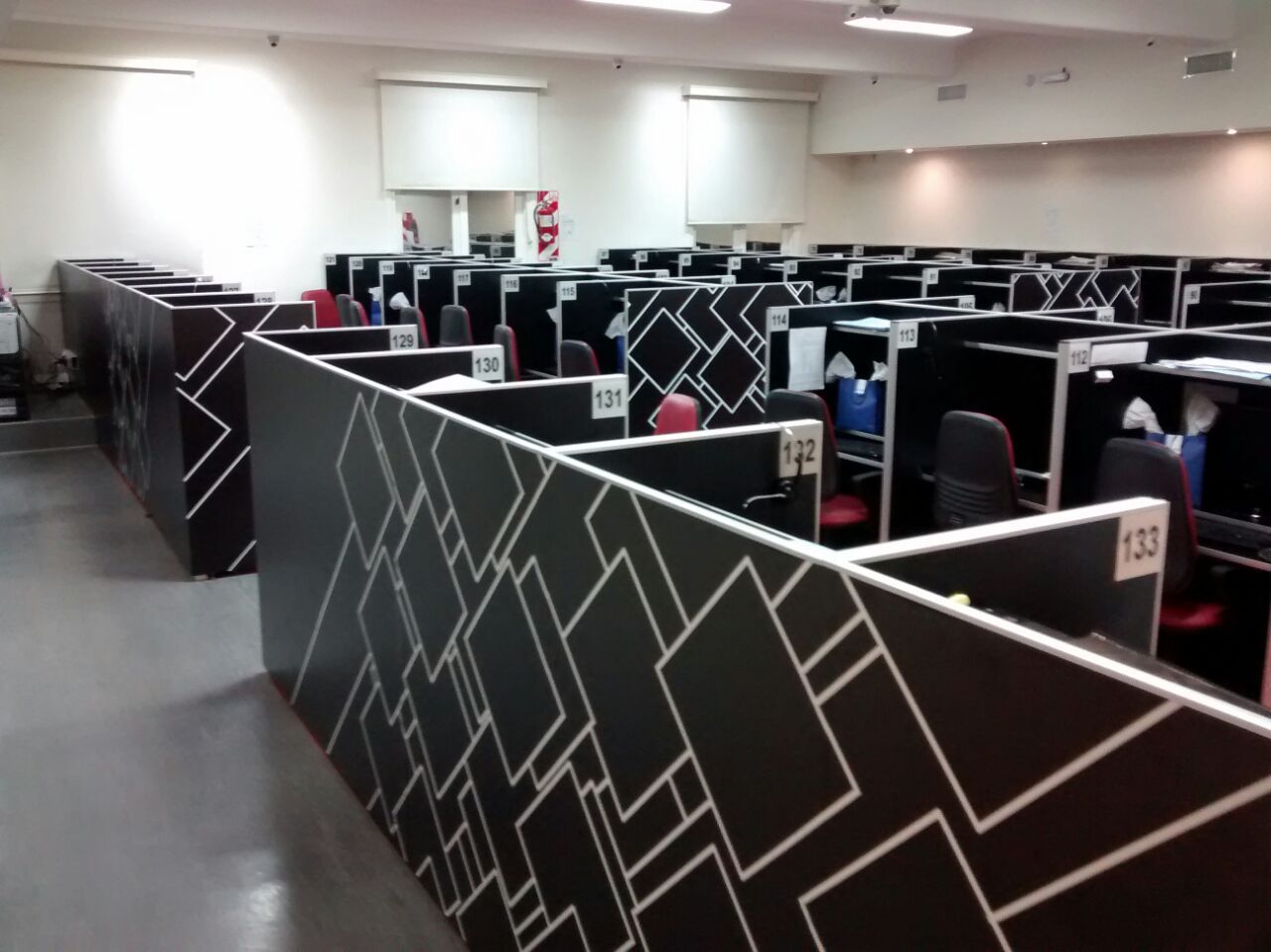 Even when multiple departments contribute to a resolution, one visible case owner prevents complaints from bouncing between teams. Image: Abmpublicidad, Wikimedia Commons, CC BY-SA 4.0.
17. Create Explicit Escalation Triggers
Do not rely on employees to “use judgment” for every serious issue. Define triggers.
Escalate immediately when a complaint includes:
- injury or safety risk;
- credible threat of litigation;
- privacy or data-security incident;
- alleged discrimination or harassment;
- suspected criminal activity or fraud;
- media inquiry;
- government or regulator contact;
- high-value loss above the employee’s authority;
- repeat product defect suggesting systemic risk;
- executive or strategically critical account;
- threats of violence or self-harm.
Employees should know who receives each escalation and what information to preserve.
18. Handle Public Reviews Differently From Private Complaints
Public reviews are both customer service and reputation management.
Do not argue point by point in public. A useful public response usually:
- acknowledges the concern;
- avoids disclosing private account information;
- invites the customer into a direct support channel;
- states a factual correction only when necessary and safe;
- remains professional even if the review is unfair.
Example: “We’re sorry the delivery experience did not match expectations. We’d like to review the tracking and replacement options. Please contact support with order number 4817 so our team can investigate.”
Never post private customer details to “prove” your side.
19. Detect Duplicate Complaints Across Channels
A customer may email, call, send a social message, and file a marketplace dispute about the same event.
Without duplicate detection, four employees can issue four different promises.
Match by:
- customer email or phone;
- order number;
- transaction ID;
- product serial number;
- date and issue description.
Link duplicate cases to one master record and preserve each channel’s original message.
20. Track Commitments as Carefully as Complaints
A complaint often becomes worse because the business makes a promise and forgets it.
Record every commitment:
- “Replacement ships Aug. 14.”
- “Supervisor will call by noon Friday.”
- “Refund processed within five business days.”
- “Engineering will provide update Monday.”
A commitment should have an owner and due date. If your help desk supports tasks or reminders, use them. If not, create a simple follow-up field and daily report.
21. Close the Loop With the Customer
Do not assume a case is resolved merely because your team performed an internal action.
If you issued a refund, tell the customer. If you shipped a replacement, send tracking. If you fixed an account, confirm the correction. If you changed a booking, provide the new details.
A closure message should summarize:
- the issue;
- what the business did;
- any next customer action;
- timing for any pending bank, shipping, or processing step;
- how to reopen the case if the result is not complete.
Then mark the case closed.
22. Distinguish “Resolved” From “Closed”
These statuses are not identical.
Resolved: the business has implemented a remedy.
Closed: all expected follow-up is complete and no further action is planned.
A refund may be “resolved” when processed but remain open until confirmation is sent and any required documentation is complete.
Clear statuses reduce the number of cases that disappear midway through the process.
23. Code the Root Cause, Not Just the Symptom
Complaint categories tell you what customers experience. Root-cause codes tell you what the business should fix.
Example complaint: “Item arrived broken.”
Possible root causes:
- insufficient internal packaging;
- wrong box size;
- supplier defect;
- warehouse handling;
- carrier damage;
- incorrect fragile-item process;
- unknown.
Do not force a root cause before investigation. “Unknown” is better than invented certainty.
24. Review Complaint Trends Monthly
Individual resolution protects one relationship. Trend analysis protects the business.
Review:
- complaints per 100 orders or customers;
- top complaint categories;
- top root causes;
- repeat complaints;
- average time to acknowledge;
- average time to resolve;
- cases reopened;
- refund and replacement cost;
- complaints by product, location, supplier, or channel;
- high-risk incidents.
Raw complaint count alone can mislead. If orders double and complaints rise 20%, the rate may actually improve. Use rates where possible.
25. Look for “Complaint Clusters”
A single complaint may be random. A cluster can reveal a process failure.
Examples:
- six damaged shipments from the same warehouse shift;
- repeated billing complaints after a software update;
- several customers misunderstanding the same product instruction;
- returns concentrated around one supplier batch;
- multiple late appointments assigned to one scheduling rule.
Create a threshold for review. For instance, three similar complaints in seven days may trigger an operational investigation even if each case is low value.
26. Feed Complaint Data Into Product and Process Improvement
ISO 10002 emphasizes using complaint information to improve products and services, not merely to close cases.
Create a monthly improvement list:
- problem;
- evidence;
- estimated customer impact;
- owner;
- corrective action;
- due date;
- measure of success.
Example: “Customers report setup failure because the printed QR code is too small. Action: redesign insert, increase QR size, add short URL, test with three phone models. Measure: setup-related tickets per 1,000 units.”
27. Train Employees With Real Scenarios
Complaint handling improves more through practice than through a long policy document.
Train on scenarios such as:
- damaged product;
- missed appointment;
- billing dispute;
- angry but valid complaint;
- unreasonable compensation demand;
- possible fraud;
- safety issue;
- public social-media complaint;
- customer who repeatedly interrupts;
- customer who refuses to provide required evidence.
For each scenario, employees should practice listening, summarizing, setting expectations, using authority limits, documenting the case, and escalating correctly.
28. Give Employees Language That De-Escalates Without Sounding Robotic
Useful phrases include:
- “Let me make sure I understand what happened.”
- “You expected X, but Y happened. Is that correct?”
- “Here is what I can do today.”
- “I cannot approve that amount, but I can escalate it to someone who can review it.”
- “I do not want to guess. I’m going to verify that and update you by 2 p.m.”
- “I understand the outcome you want. Let me explain the options available.”
Avoid:
- “Calm down.”
- “That’s not our fault.”
- “Nobody else has complained.”
- “There’s nothing I can do.”
- “It’s company policy” without explanation.
29. Protect Employees From Abuse
Customer-centered service does not require employees to tolerate threats, harassment, discriminatory abuse, or violence.
Create a conduct policy. Staff should know when they can warn a customer, end a call, block a channel, involve security, or escalate to management.
Example: “I want to help resolve the order issue, but I cannot continue the call while personal insults are being used. If that continues, I will end the call and our manager will follow up by email.”
Document abusive behavior factually.
30. Handle Refunds With Financial Controls
Complaint resolution can create fraud risk if refund authority is poorly controlled.
Good controls include:
- refund limits by role;
- separate approval for unusually large refunds;
- refund to original payment method where appropriate;
- transaction reference recorded in the case;
- duplicate-refund checks;
- manager review of unusual patterns;
- reconciliation between complaint system and accounting records.
If your business handles a significant volume of vendor or payment operations, the existing LordAI guide on accounts payable workflows may also be useful, but do not invent internal links unless the exact published URL is known in your CMS. For this article, use your site search to connect the relevant finance operations article after publication if needed.
31. Build a Clear Return and Refund Policy
Complaint handling becomes harder when policies are vague or hidden.
Your return/refund policy should state:
- time limits;
- condition requirements;
- proof-of-purchase requirements;
- shipping responsibility;
- refund method;
- non-returnable categories;
- warranty interaction;
- what happens with defective items;
- how long processing usually takes.
FTC consumer guidance encourages customers to review a seller’s return policies and deadlines. Clear policies reduce unnecessary disputes because expectations exist before the complaint.
32. Do Not Use Policy as a Substitute for Judgment
A policy creates consistency; it should not create absurd outcomes.
Example: a loyal customer reports a manufacturing defect one day outside the standard return period. A rigid refusal may cost more in reputation and future revenue than a reasonable exception.
Create a documented exception path instead of letting employees secretly break rules. That preserves both fairness and managerial visibility.
33. Treat Accessibility Complaints as Product Feedback
If a customer cannot use your website, checkout, app, support line, or physical service because of an accessibility barrier, do not classify it as merely “user difficulty.”
Record the barrier, affected device or assistive technology where relevant, task the customer was trying to complete, and any workaround offered. Escalate to the team responsible for accessibility or product design.
Accessibility complaints can reveal barriers that affect many customers who never report them.
34. Create Special Handling for Privacy and Security Complaints
Messages such as “I can see another customer’s data,” “my account was accessed by someone else,” or “you sent my invoice to the wrong person” require more than ordinary customer service.
Do not ask the customer to post sensitive data in public or send unnecessary credentials. Preserve the report and escalate according to your incident-response process.
Frontline agents should know not to promise that “no data was exposed” before investigation.
35. Build a Process for Suspected Fraud Without Accusing the Customer
Some complaint cases involve inconsistent evidence, repeated refund claims, altered receipts, or account takeover.
Create a fraud-review status that pauses ordinary compensation while the case is reviewed.
Communicate neutrally: “We need additional verification before we can complete the refund.” Do not accuse the customer of fraud unless the business has a well-supported basis and appropriate process.
36. Use Surveys Carefully
A short post-resolution survey can help measure the complaint experience, but do not confuse survey score with actual complaint quality.
Useful questions:
- Was your issue resolved?
- Was the process easy to understand?
- Were you kept informed?
- How satisfied were you with the resolution?
- What could we have done better?
Do not pressure employees to manipulate survey results by selectively sending surveys only to happy customers.
37. Measure Reopened Cases
A case that reopens often signals premature closure.
Track reasons for reopening:
- refund did not arrive;
- replacement also defective;
- customer misunderstood next step;
- promised callback missed;
- root problem not fixed;
- agent closed before customer responded.
A high reopen rate is a useful quality metric.
38. Create a Daily Complaint Dashboard
A small business dashboard can be simple:
- new today;
- open;
- overdue acknowledgment;
- overdue resolution;
- high-risk open cases;
- waiting on customer;
- waiting on internal team;
- refunds pending.
This gives managers visibility without reading every ticket.
39. Create a Monthly Management Review
Once per month, review not only numbers but decisions:
- What complaints increased?
- Which root causes are recurring?
- What failures cost the most?
- Where are customers waiting longest?
- Which policies create repeated escalation?
- Which product or supplier produces disproportionate complaints?
- Which corrective actions from last month were completed?
- Did complaint rates improve afterward?
ISO 10002 specifically includes analysis, evaluation, auditing, and review of complaint-handling effectiveness. For a small business, a disciplined monthly meeting is often enough to embody those principles.
40. Worked Example: Damaged Product Complaint
A customer emails: “My order arrived broken. This is the second time I’ve had trouble with you. I want my money back.”
Intake: Agent creates case CS-2149, links order 7712, records requested full refund, and notes prior complaint history.
Triage: Routine material complaint. No injury or safety issue.
Acknowledgment: Agent confirms receipt, apologizes for the experience, requests one photo of the damaged item and packaging, and promises an update by noon next day.
Investigation: Photo shows crushed corner. Warehouse record confirms packaging type. Another recent complaint exists for the same SKU.
Resolution: Customer receives full refund under policy. Transaction ID is recorded.
Root cause: Packaging design insufficient for item weight.
Corrective action: Fulfillment team upgrades inner protection and performs a drop test on the revised pack-out.
Follow-up: Customer receives refund confirmation. Case closes after transaction is confirmed.
The complaint process therefore solves both the individual case and the systemic packaging problem.
41. Worked Example: Service Appointment Failure
A customer says a technician did not arrive during a four-hour service window and nobody called.
Facts: Appointment existed. Dispatch log shows technician route overran by two hours. System did not automatically send delay notification.
Customer impact: Customer missed work and still needs service.
Resolution: Business schedules first appointment next morning, waives the service call fee, and gives the customer a direct escalation contact.
Root cause: No late-route alert and no responsibility assigned for notifying customers.
Corrective action: Dispatch software is configured to flag appointments predicted to run more than 30 minutes late; dispatcher must notify customer.
The financial remedy matters, but the process improvement prevents recurrence.
42. Worked Example: Unreasonable Demand
A customer buys a $40 item, uses it for 18 months, then demands a full refund plus $500 compensation because it stopped working outside warranty.
The business should still listen and investigate. If records confirm the product is outside warranty and there is no safety defect or misleading promise, the business can decline the requested compensation.
A professional response might offer paid repair, a replacement part, or a goodwill discount if commercially reasonable. The case record should show the decision and the policy basis.
Fair complaint handling does not mean approving every demand. It means giving each complaint a consistent process and reasoned outcome.
 Customers need a visible route to help. Whether the channel is a service counter, email inbox, chat, or help desk, the business should make ownership and next steps clear. Image: Wiki Farazi, Wikimedia Commons, CC0 1.0.
43. A 30-Minute Setup for a Small Business
If you have no formal complaint process today, start with this:
- Create one support email address or form.
- Create a shared complaint log.
- Add columns for case ID, customer, order, category, owner, status, due date, resolution, and root cause.
- Define four risk levels.
- Write five escalation triggers.
- Set frontline refund/credit authority.
- Create acknowledgment and closure templates.
- Schedule a weekly open-case review.
- Schedule a monthly trend review.
You can improve the system later. A simple process used consistently is better than a perfect policy nobody follows.
44. A Practical Complaint-Handling Checklist
- Capture the complaint in the system of record.
- Confirm contact and transaction details.
- Classify category and risk.
- Acknowledge receipt.
- Identify requested outcome.
- Collect proportionate evidence.
- Assign one owner.
- Escalate if required.
- Choose a proportionate remedy.
- Document the decision.
- Record financial transaction IDs.
- Communicate the outcome.
- Confirm remaining follow-up.
- Code root cause.
- Close only when commitments are complete.
- Include the case in trend analysis.
45. Common Failure Modes and How to Fix Them
“Customers keep repeating the same story.”
Your channels are not connected or case notes are too weak. Create one case record and require employees to read it before asking the customer to restate information.
“Managers approve every refund.”
Frontline authority is too low. Create role-based limits and audit exceptions instead of centralizing every decision.
“Refunds are promised but customers call again.”
Commitments are not tracked. Record refund status and transaction reference, and keep the case open until confirmation is sent.
“The same complaints keep happening.”
You are closing cases without root-cause analysis. Add category and root-cause codes, then review clusters monthly.
“Agents argue with angry customers.”
Train neutral summarization and resolution language. Separate emotional tone from factual issue.
“Filters or forms hide serious cases.”
Add keyword and category escalation for safety, privacy, injury, fraud, legal, and regulator issues, but also train staff not to rely solely on automation.
“Public reviews damage reputation.”
Respond professionally, avoid private details, move the case to a direct channel, and fix systemic causes rather than fighting reviewers.
“Complaint handling is getting expensive.”
Measure cost by root cause. The answer may be better packaging, clearer instructions, fewer billing errors, or a supplier change—not stricter refund refusal.
Frequently Asked Questions
What is a customer complaint handling process?
It is the structured method a business uses to receive, record, investigate, resolve, escalate, close, and learn from expressions of customer dissatisfaction.
How fast should a business respond to a complaint?
There is no universal time that fits every industry. Acknowledge complaints as quickly as your operation reasonably can, set a realistic resolution timeline, and update the customer before a promised deadline passes. Safety, privacy, fraud, and legal-risk complaints should be escalated immediately.
Should every complaint receive compensation?
No. Some complaints need an explanation, correction, repair, replacement, or process change rather than money. Compensation should match the actual failure and business policy.
What should be recorded in a complaint log?
Record the customer, transaction, date, channel, complaint summary, requested outcome, category, risk level, owner, status, actions, due dates, resolution, and root cause.
What is the difference between a complaint and a support ticket?
A support ticket can be a neutral request for help. A complaint expresses dissatisfaction and usually expects corrective action or explanation. A support system can manage both, but complaints should be tagged so the business can analyze them separately.
Should a business delete unfair or abusive complaints?
No, not from internal records merely because they are uncomfortable. Document the facts. Public platforms may have their own rules for content removal, and abusive customer behavior can justify ending an interaction, but the underlying case should remain auditable.
What is ISO 10002?
ISO 10002:2018 is an international guideline for complaint handling related to products and services. It covers planning, operation, accessibility, customer focus, analysis, auditing, and improvement. It is guidance rather than a substitute for local legal requirements.
How do you handle a complaint when the customer is wrong?
Investigate fairly, explain the evidence and policy, avoid insulting the customer, offer reasonable alternatives where appropriate, and provide an escalation route. Fair process does not require agreeing with an unsupported claim.
How should small businesses handle complaints on social media?
Acknowledge the concern publicly without disclosing private details, then move the conversation into a direct support channel. Keep the tone professional and link the public interaction to the internal case record.
How can complaints improve a business?
Complaint trends can reveal recurring defects, confusing instructions, weak suppliers, billing problems, service bottlenecks, training gaps, and policy failures. Root-cause analysis turns complaint handling from a cost center into an improvement system.
Conclusion: Resolve the Case, Then Fix the System
The strongest complaint process does not begin with a refund policy or a script. It begins with a reliable path from customer dissatisfaction to business learning.
Make complaints easy to report. Record them consistently. Triage by risk. Give employees clear authority. Assign one owner. Communicate realistic timelines. Match the remedy to the failure. Preserve serious evidence. Track commitments. Close the loop with the customer. Then step back and ask why the complaint happened in the first place.
The biggest mistake is treating every complaint as an isolated customer-service event. If five customers report the same defect, the problem is no longer “five difficult conversations.” It is a product, process, supplier, or policy signal.
If you take one action today, create a single complaint log and require every customer complaint to enter it. That one change gives your business visibility, accountability, and the raw material for continuous improvement.
Sources and Further Reading
- ISO 10002:2018 — Quality management — Customer satisfaction — Guidelines for complaints handling in organizations
- ISO Consumer Standards — Benefits of complaint handling
- Federal Trade Commission — Solving Problems With a Business: Returns, Refunds, and Other Resolutions
Image Credits
- “Customer Service.png” — Anshamblen15, Wikimedia Commons, CC BY-SA 4.0.
- “Call center.jpg” — Abmpublicidad, Wikimedia Commons, CC BY-SA 4.0.
- “Surian MRT Station (KG07) Customer Service Office (220724).jpg” — Wiki Farazi, Wikimedia Commons, CC0 1.0.