

 A useful emergency communication plan is written, shared, and practiced before anyone needs it. Photo by Vodafone x Rankin everyone.connected via Pexels.
A family emergency communication plan answers a deceptively simple question: how will everyone find reliable information, report that they are safe, and reunite if normal communication stops working? A phone contact list alone is not a plan. During a fire, flood, earthquake, severe storm, evacuation, extended power outage, transportation shutdown, or local network failure, family members may be in different places. Batteries may be low. Calls may not connect. A child may not have a phone. An older relative may not use messaging apps. The usual route home may be closed, and the person who normally makes decisions may be unreachable.
A workable plan therefore uses layers. It gives every person the same out-of-area contact, defines several meeting places, establishes a short message format, stores critical details on paper as well as on devices, and includes alternatives for people with disabilities, children, pets, travel, and weak cellular service. It also sets a rule for when to stop trying to communicate and move to a safe action. The aim is not to predict every disaster. The aim is to reduce confusion when information is incomplete.
This guide shows you how to design that system from the ground up, test it without causing fear, and keep it current with very little maintenance. It is written for households, roommates, couples, multigenerational families, caregivers, students living away from home, and anyone responsible for reconnecting people during an emergency. Adapt every step to local hazards, official instructions, and the emergency numbers used in your country.
Start With the Outcome, Not the Apps
Many families begin by creating a messaging group and assume the job is finished. That approach works only while the phones, accounts, networks, and chargers work exactly as expected. A stronger plan begins with outcomes. In an emergency, each person should be able to do four things:
- Protect themselves first. Nobody should delay evacuation, sheltering, first aid, or a call to emergency services merely to send a family update.
- Send a brief status report. The report should state who is safe, where they are, what they need, and what they will do next.
- Receive one clear instruction. That instruction might be to stay in place, use a specific pickup point, contact the out-of-area person, or follow an official evacuation route.
- Reunite without improvising. If communication is unavailable, everyone should already know the next safe meeting place and the conditions for using it.
Write those outcomes at the top of your plan. They keep the system practical. Whenever you consider adding an app, contact, code word, document, or device, ask which outcome it supports. If it supports none, it may be unnecessary complexity.
Also establish a hierarchy of authority. Immediate instructions from emergency services, school officials, building management, transportation authorities, or local government may override a household plan. A meeting place that was safe yesterday may be inside an evacuation zone today. Your family plan should never tell someone to cross a dangerous area, ignore a shelter-in-place order, re-enter a damaged building, or leave supervised care without authorization.
Step 1: Identify the Separations That Are Most Likely
Do not plan only for everyone being asleep at home. List where each person normally is during a weekday, evening, and weekend. Include work, school, daycare, medical appointments, sports, religious activities, public transportation, regular shopping routes, and the homes of relatives. Add people who live elsewhere but still depend on the household, such as a college student, an older parent, a co-parent, or a caregiver.
Then consider the emergencies most likely to affect those locations. A home fire can separate people within minutes but may leave the wider cellular network working. A regional storm may keep everyone physically safe while disabling power and transportation for hours. A wildfire or industrial incident may create changing evacuation zones. An earthquake may damage roads and overload communication networks. A cyberattack or technical outage may interrupt a service without damaging the neighborhood. The same contact method will not be equally useful in every case.
Create a simple separation map with three columns:
| Situation | Likely separation | Planning question |
|---|---|---|
| Home fire | People leave through different exits | Where is the immediate outdoor meeting point? |
| School-day emergency | Adults, children, and caregivers are in different buildings | Who is authorized to collect each child, and what is the school’s release process? |
| Neighborhood evacuation | Routes home are blocked | Which out-of-neighborhood location can everyone reach without returning home? |
| Power and network outage | People may remain in safe locations but cannot call | What time and place trigger applies if no messages arrive? |
| Medical emergency | One person may be transported while others lack details | Who carries medical contacts, identification, and caregiver information? |
This exercise reveals gaps that a generic checklist misses. For example, a parent may assume a child will be released to an aunt, while the school has no authorization for that aunt. A commuter may plan to drive home even though the only bridge is routinely closed during flooding. A roommate may know the building address but not the landlord’s emergency number or the location of the gas shutoff. Find these mismatches while life is calm.
Step 2: Choose One Out-of-Area Contact
An out-of-area contact is a trusted person who lives far enough away that the same local disruption is unlikely to affect them. When household members cannot reach one another directly, each person contacts this individual. The contact collects short status reports and tells callers what the others have reported. The role is a communications relay, not a remote commander.
Choose someone who is dependable, calm, reachable through more than one method, and willing to keep the plan confidential. They should understand that they may receive incomplete or delayed messages. Ask before assigning the role. Do not assume a relative wants responsibility for sensitive information during a crisis.
Give the contact a one-page briefing that includes:
- Names and current photos of household members.
- Primary and backup phone numbers.
- The household’s meeting locations, described clearly.
- Names and numbers for schools, workplaces, caregivers, and nearby support people.
- Any essential communication accommodations, such as a relay service, interpreter, or preferred language.
- A clear instruction not to publish locations on social media.
- The date the information was last reviewed.
Do not send the contact a complete archive of passports, financial accounts, passwords, or medical records. They need enough information to reconnect people, not unlimited access to the household’s identity. Separate emergency communication information from sensitive recovery documents.
Every household member should memorize or carry the contact’s number. Save it in phones under a consistent label such as “Emergency Relay — Amina.” Children who can use a phone should practice finding and calling that entry. People who cannot memorize the number should carry a printed card in a wallet, school bag, mobility device pouch, or ID holder.
Step 3: Define Four Meeting Places, Not One
A single meeting place can fail because it is inaccessible, unsafe, closed, or inside the affected area. Use four levels so the plan can adapt without a fresh discussion.
Level A: The immediate home meeting point
This is for a sudden event such as a fire, gas leak, or structural danger. It should be outside, visible, easy to reach, and far enough from the building to avoid smoke, falling debris, emergency vehicles, and utility hazards. Examples include a specific mailbox across the street, a neighbor’s front gate, or a clearly named corner. “Outside” is too vague. Everyone might leave through different exits and wait on different sides of the building.
Never choose a point that requires someone to cross a busy road during a fire unless no safer option exists. Include a secondary point on the same block in case wind, smoke, traffic, or responders make the first one unsafe.
Level B: The neighborhood meeting point
This is for situations in which the home cannot be entered but the neighborhood remains accessible. A community center, place of worship, library exterior, trusted neighbor’s home, or recognizable public landmark may work. Confirm opening hours and whether the location could become crowded or locked. The plan should describe an exact waiting area, not only a building name.
Level C: The out-of-neighborhood meeting point
Use this when local roads are closed or an evacuation affects several blocks. Choose a location reachable by more than one route and, when possible, by more than one transportation method. Consider whether children, older adults, wheelchair users, and people without cars can reach it. A relative’s home may be useful, but only if everyone knows the address and the relative agrees.
Level D: The regional destination
This is for a larger evacuation or an extended inability to return. It may be a hotel area, family home, official shelter region, or another city. The destination should not encourage anyone to ignore official evacuation directions. Instead, it gives the household a shared fallback once authorities permit travel.
For each place, record the name, full address, a short physical description, two possible routes, public transport options, accessibility notes, pet restrictions, and a “do not use if” condition. Print a small map. A device may lose power, and a location pin is less useful if the map has not loaded.
 Mark exact addresses, routes, and fallback conditions instead of relying on vague instructions. Photo by RDNE Stock project via Pexels.
Step 4: Create a Text-First Communication Rule
During a widespread incident, voice calls may fail, connect slowly, or consume more battery than short messages. Text messages can sometimes be delivered after a delay when a live call cannot connect. That does not mean texting is guaranteed. It means your plan should use short, repeatable messages and several channels rather than continuous calling.
Agree on a message format that everyone can understand under stress:
SAFE / LOCATION / NEED / NEXT / TIME
For example:
SAFE. At North Library with Lina. Need pickup only if roads open. Staying here until 6:00 p.m., then using Level C point. Sent 3:42 p.m.
This format reduces follow-up questions. It also distinguishes a current location from a planned destination. A message that says “going to your mother’s” may create confusion if the sender changes route, the destination is unsafe, or several relatives live nearby.
Set these household rules:
- Send one complete status message instead of ten fragments.
- Include the time because delivery may be delayed.
- Use plain language; avoid jokes, sarcasm, or unexplained abbreviations.
- Do not send unverified rumors or dramatic screenshots.
- Do not repeatedly call a person who may be conserving battery or following safety instructions.
- Acknowledge with a short reply such as “RECEIVED 3:47” when possible.
- If direct family contact fails, send the same message to the out-of-area relay.
- Keep emergency lines free for urgent needs; use the local emergency number for immediate threats.
Choose a primary family group, but do not make it the only channel. Record a fallback sequence such as: SMS, then another messaging service, then email, then the out-of-area contact, then the scheduled meeting rule. The exact order should match the tools your household actually uses. Installing six apps nobody opens is not resilience.
Step 5: Build an Offline Contact Card
A printed contact card is one of the most valuable parts of the plan because it works without a charged phone, login, mobile data, or memory under stress. It should be small enough for a wallet or bag but large enough to read. Use durable paper or place it in a transparent sleeve. Avoid laminating information that changes every month unless you are willing to replace the card.
Include only the essentials:
- Full name of the cardholder.
- Home address and one nearby landmark.
- Primary household numbers.
- Out-of-area contact name and number.
- Two meeting places with exact addresses.
- School, workplace, or caregiver contact as relevant.
- Local non-emergency number and the emergency number used in your country.
- A critical medical communication note only when necessary, such as “uses communication device” or “allergy information in medical ID.”
Do not put passwords, alarm codes, bank details, identity numbers, or a detailed list of valuables on the card. A lost card should not create a second emergency.
For children, use age-appropriate information. A young child may need the names and numbers of parents, the out-of-area contact, and a clear instruction to stay with the responsible adult at school or daycare. Teach children that a meeting point is not permission to leave supervised care by themselves. Review the school’s official release process and ensure authorized pickup names are current.
For an adult with memory loss or another cognitive disability, work with caregivers and appropriate professionals to create identification and communication support that respects dignity and privacy. The plan may include a bracelet, wallet card, recent photo, caregiver contacts, familiar calming phrases, and a procedure for wandering or separation.
Step 6: Assign Roles Without Making One Person Indispensable
A common failure is giving every responsibility to the most organized adult. If that person is injured, traveling, at work, or unreachable, the plan collapses. Assign a primary and backup for each role.
| Role | Primary duty | Backup question |
|---|---|---|
| Communication lead | Sends the first household status summary | Who does this if the lead is unreachable? |
| Child pickup lead | Follows school or daycare release rules | Is the backup formally authorized? |
| Accessibility support | Helps with mobility, hearing, vision, medication, or communication needs | Can the person act if roads or elevators are unavailable? |
| Pet lead | Handles carriers, leashes, records, and a pet-safe destination | Who acts if the pet lead is away? |
| Information monitor | Checks official alerts and verifies instructions | Which sources are trusted if the main device fails? |
| Kit and document lead | Takes the emergency bag and essential copies if safe | Where is it, and can another person identify it? |
Roles are not orders to take unsafe actions. Nobody should re-enter a building for a bag, pet, document, or device. Nobody should attempt a utility shutoff without knowing the safe method and conditions. The role exists to organize a safe action when it is possible, not to create a duty at any cost.
Make roles visible on the plan and rotate them during drills. A teenager who always assumes an adult will send the update may not know how to do it when the adult is absent. A second adult may not know the school pickup password or which neighbor has a spare pet carrier. Redundancy is a practical form of care.
Step 7: Plan for Schools, Workplaces, Care Facilities, and Commuting
Your household plan must connect with the rules of the places people actually occupy. Ask schools and childcare providers how they notify families, where they relocate during an evacuation, who can collect a child, what identification is required, and whether phone lines will be used for outgoing information only. Add authorized pickup people now rather than assuming an exception will be made during a crisis.
At work, learn the building’s evacuation and shelter procedures. Know whether employees are expected to report to a supervisor, where assembly points are, and whether personal calls may be delayed. If you commute by train or bus, identify two alternate routes and one safe place to wait. Keep enough practical information to navigate without a live map: major street names, station alternatives, and the address of the Level C meeting place.
For a nursing facility, assisted living setting, hospital, or home-care arrangement, ask how the organization communicates during evacuations and who is authorized to receive information. Record the facility’s main line, an alternate number if provided, and the name of the responsible department rather than relying only on one staff member.
Remote workers also need a plan. A home office may contain the only charged laptop, internet connection, or work phone, but those tools should not be treated as guaranteed. Decide when work obligations stop and personal safety procedures begin. Employers may have continuity plans, but a household should not assume the employer will coordinate family reunification.
Step 8: Add Power and Device Resilience
A communication plan fails quickly when devices are at five percent battery. Build simple habits rather than purchasing excessive equipment.
- Keep phones reasonably charged, especially when severe weather or another known hazard is expected.
- Store one compatible charging cable per essential device in the emergency bag.
- Keep a tested power bank charged according to its manufacturer’s instructions.
- Know how to enable low-power mode, reduce screen brightness, close power-intensive apps, and disable unnecessary wireless features.
- Download important maps and documents for offline access before an emergency.
- Write down essential numbers; a dead phone can still contain information you cannot retrieve.
- Consider a car charger when appropriate, but never run a vehicle in an enclosed space.
Battery conservation needs a household protocol. During a prolonged outage, agree on check-in windows rather than keeping screens active all day. For example, each person may turn on the phone at the top of every hour, check messages for five minutes, send an update, and return to low-power mode. The schedule should fit the emergency and official alerts; it is not a rigid rule when danger is changing rapidly.
Keep emergency alerts enabled where available, and learn which official local services provide warnings. Do not rely on social-media trends as an alert system. During fast events, false maps, recycled videos, fake donation requests, and impersonation accounts can spread quickly. Confirm instructions through government, emergency-management, weather, school, utility, or public-safety sources appropriate to your location.
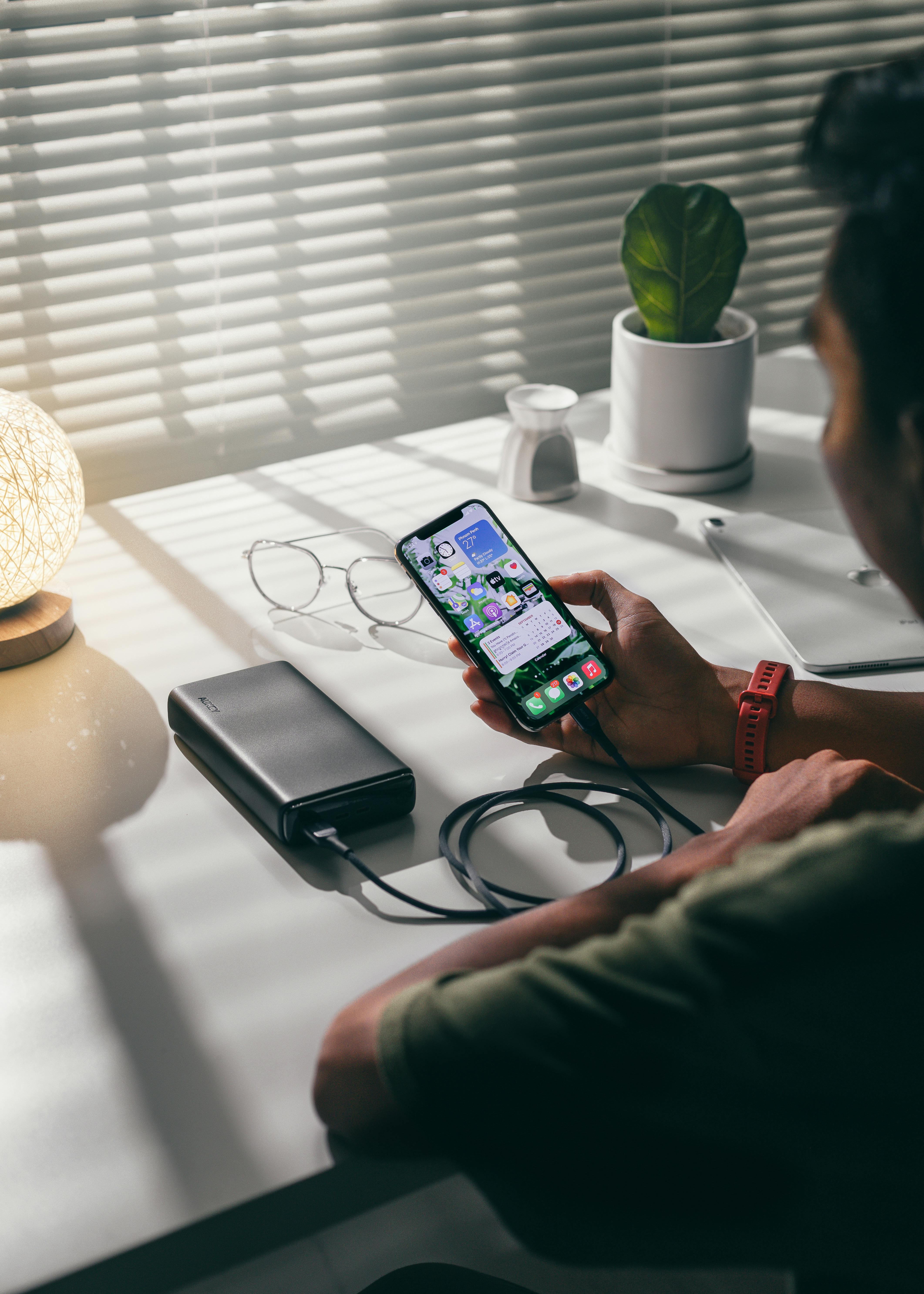 A charged power bank and the correct cable can extend access to alerts and short check-ins during an outage. Photo by I’m Zion via Pexels.
Step 9: Include People With Different Communication Needs
An equitable plan does not assume everyone can hear an alarm, read small print, speak during stress, walk down stairs, use a touchscreen, understand the same language, or remember several instructions. Ask each person what support they need and what independence they want to preserve.
For hearing differences
Use visual or vibrating alerts where available. Save text-based emergency contacts and relay information. Agree on written message templates. During a drill, test whether the person notices alerts while asleep, in another room, or without a hearing device. Keep spare batteries or charging options for essential hearing equipment when practical.
For vision differences
Use accessible digital documents, large print, high contrast, and tactile organization. Meeting places should be described with landmarks that make sense to the person, not only visual signs. Practice routes and identify who can provide assistance without separating a guide dog or service animal.
For mobility needs
Plan around stairs, elevator outages, transportation, accessible shelters, mobility-device charging, and the safe transfer of equipment. Do not create improvised lifting instructions that could injure the person or helpers. Coordinate with building management, caregivers, transportation providers, and local emergency resources before an incident.
For speech, cognitive, or developmental needs
Create a simple card or device message that explains how the person communicates, what reduces distress, who to contact, and what support is required. Use pictures or step cards if useful. Practice one action at a time. Avoid overwhelming drills, surprise simulations, or language that suggests the person is a burden.
For language access
Record preferred languages and trusted interpretation contacts. Download or print essential phrases and local emergency guidance in the needed languages. Children should not be the household’s only interpreters for complex medical or official information.
Review these accommodations with the people who use them. A plan written about someone without their participation may overlook the most practical solution.
Step 10: Connect the Communication Plan to an Emergency Kit
The communication section of an emergency kit does not need to be large. It needs to be findable, current, and usable. Put the following in a waterproof pouch:
- Printed household communication plan.
- Contact cards and one regional paper map.
- Copies of critical identification and insurance information, protected appropriately.
- A small notebook and permanent marker.
- Charging cables, power bank, and any required adapters.
- A battery-powered or hand-crank radio if suitable for local alert systems.
- A whistle or other simple signaling device where appropriate.
- Communication supports such as picture cards, hearing-device batteries, or a written medical communication note.
Keep the pouch separate from bulky supplies so it can be taken quickly if safe. Label it plainly. Every adult and capable older child should know where it is. Never store the only copy of the plan in a locked container whose key is carried by one person.
Review local recommendations for water, food, medication, first aid, lighting, sanitation, climate, infants, pets, and other supplies. This article focuses on communication, not the complete design of an emergency kit. Official guidance and individual medical advice should determine what else you need.
 Communication supplies belong within a broader, locally appropriate emergency kit. Photo by Roger Brown via Pexels.
Step 11: Protect Privacy Without Hiding Useful Information
Emergency plans contain names, routines, addresses, school details, phone numbers, medical notes, and travel patterns. Share them intentionally. A household group message may be appropriate; a public social-media post is not.
Use these privacy layers:
- Public layer: a general statement such as “We are safe and following local instructions,” with no live location unless necessary.
- Household layer: current location, next action, meeting point, and support needs.
- Trusted-contact layer: school, caregiver, accessibility, and out-of-area relay details.
- Restricted layer: identification documents, policy numbers, medical records, and financial recovery information stored separately with strong access controls.
Do not post a photo of the printed plan. Review who remains in old family chat groups and shared cloud folders. Remove former roommates, old service providers, and devices you no longer control. Use strong unique passwords and multifactor authentication for accounts that store sensitive emergency documents. Keep an offline copy because account access may fail, but protect portable drives or paper records from loss and unauthorized viewing.
During and after a disaster, be alert to impersonation and fraud. A caller or message may claim to represent a government agency, insurer, utility, charity, school, or displaced relative. Verify through a known official number rather than the contact information supplied in an unexpected message. Never make a payment solely to obtain supposed disaster assistance or to “unlock” an emergency benefit.
Step 12: Write Decision Triggers
A plan becomes useful when it tells people what to do without waiting for a group debate. Decision triggers are simple “if this, then that” rules. They should be conservative and should never conflict with official instructions.
Examples include:
- If the home alarm sounds or there is visible smoke, leave immediately, call emergency services from a safe location, and meet at Level A. Do not wait to send a family message first.
- If a school announces shelter-in-place, do not travel to the school unless instructed; monitor the school’s official channel and notify the out-of-area contact.
- If phones fail but the area is safe, remain at the supervised or secure location until the agreed check-in time.
- If the neighborhood is evacuated, follow the official route and use Level C only if it remains outside the affected area.
- If a person cannot reach a meeting place safely, they stay at the safest available staffed location and send or relay their status when possible.
- If no contact is possible by the household’s deadline, the out-of-area person begins the predefined call sequence rather than posting a public missing-person alert immediately.
A trigger should contain a condition, an action, and a stop rule. “Try to get home” has no safety boundary. “If transit is suspended, remain at the staffed workplace until 7:00 p.m.; then use the designated walking route only if authorities say travel is safe” is more useful.
Keep the number of triggers manageable. Five clear rules are better than thirty pages nobody can recall. Use the detailed plan as reference and the trigger card as the quick operating guide.
Build a Communication Ladder for Different Levels of Disruption
Not every emergency requires the full plan. A communication ladder helps the household scale its response.
Level 0: Routine disruption
Examples include a late train, a dead phone, or a short local outage. Use the normal family channel and one backup. There is no need to activate the out-of-area contact unless someone cannot be accounted for.
Level 1: Localized incident
Examples include a building evacuation, nearby fire, or school lockdown. Send the standard status format, follow the institution’s instructions, and use the immediate or neighborhood meeting place if authorized.
Level 2: Community disruption
Examples include flooding, severe weather, a prolonged utility outage, or multiple road closures. Use text-first communication, conserve battery, contact the out-of-area relay, and prepare for Level C.
Level 3: Regional emergency
Examples include a wide evacuation or major infrastructure failure. Prioritize official alerts, life safety, and shelter. Use the relay and regional destination only when consistent with current directions. Expect delayed information and avoid unnecessary travel.
Give each level a plain name rather than a frightening code. The purpose is coordination, not drama. A family can say “We are using the community disruption plan” and immediately know which meeting place, check-in interval, and contact sequence applies.
Create a One-Page Master Plan
The complete guide may be long, but the household’s operational plan should fit on one page plus contact cards. Use this structure:
- Immediate safety rule: follow emergency services and protect yourself before communicating.
- Primary family channel: group SMS or another agreed tool.
- Standard message: SAFE / LOCATION / NEED / NEXT / TIME.
- Out-of-area relay: name, phone, backup method.
- Four meeting places: exact names and addresses.
- Check-in windows: when phones will be checked during a prolonged outage.
- Roles and backups: pickup, accessibility, pets, kit, information.
- Decision triggers: the five most important “if/then” rules.
- Official sources: local emergency management, weather, school, utility, and transportation alerts.
- Review date: the next scheduled update.
Use large type, short lines, and enough white space to read quickly. Avoid decorative icons that replace words. Print copies for the emergency kit, household files, vehicles where appropriate, and people who live away from home. Store an accessible digital copy that can be viewed offline.
A 45-Minute Setup for Busy Households
If a complete plan feels overwhelming, create a minimum viable version in one focused session.
Minutes 0–10: Gather people and facts
Write every household member’s current phone number, regular location, school or workplace, and one nearby support person. Confirm the emergency number used locally and the official alert source for your area.
Minutes 10–20: Choose contacts and places
Call or message the proposed out-of-area contact and obtain consent. Select the immediate outdoor point, neighborhood point, and out-of-neighborhood point. Write exact addresses.
Minutes 20–30: Create the message protocol
Set up the group channel and type a sample SAFE / LOCATION / NEED / NEXT / TIME message. Decide the fallback channel and the check-in schedule for a power outage.
Minutes 30–40: Make cards
Write or print basic contact cards. Place them in wallets, bags, or ID pouches. Save the out-of-area number in every phone.
Minutes 40–45: Run a tabletop test
Ask: “It is 3:30 p.m. on a weekday. The neighborhood is closed, calls fail, and nobody can return home. What does each person do?” Correct any answer that depends on an unconfirmed assumption.
This version is not finished forever, but it is far better than a plan that remains on a to-do list. Add accessibility details, school procedures, maps, device backups, and drills over the next week.
How to Practice Without Creating Panic
A drill should build familiarity, not imitate trauma. Tell everyone in advance what will be tested. Never use fake emergency calls, surprise disappearances, realistic threats, smoke, alarms that could affect neighbors, or messages that could be mistaken for a real incident.
Use three types of practice:
1. Contact test
Each person sends the standard status message to the family channel and out-of-area contact. Confirm that the recipient recognizes the format and can reply. Test from ordinary locations, not only while everyone is home.
2. Tabletop scenario
Read a simple scenario and talk through decisions. Example: “A storm closes the usual road. Maya is at school, Omar is at work, and the apartment has no power. The phones have 25 percent battery.” Ask who contacts whom, which source provides official information, whether anyone should travel, and which meeting level applies.
3. Route and meeting test
Walk or drive to the chosen meeting places under normal conditions. Check accessibility, lighting, signage, public transportation, pet rules, and alternative routes. Do not conduct a route drill during hazardous weather or an actual emergency.
After the drill, ask four questions: What was unclear? What information was missing? Which step took too long? What would fail if one person or one device were unavailable? Update the plan immediately while the problems are fresh.
Practice at least when circumstances change: a move, new school, new job, new caregiver, new phone number, major medical change, or change in transportation. A short useful drill is better than an elaborate annual event that everyone avoids.
Scenario Walkthroughs
Scenario A: Fire alarm at night
The alarm sounds and smoke is visible in a hallway. The correct first action is evacuation, not collecting devices or posting in the family chat. Each person uses the safest available exit, goes to the Level A meeting point, and calls the local emergency number from a safe location. The household checks names at the meeting point and tells responders if anyone may still be inside. Nobody re-enters for a pet, medication, or phone.
Once immediate safety is established, one person sends a short status update to the out-of-area contact and any absent household member. The plan has succeeded because the meeting point prevents people from searching different sides of the building.
Scenario B: Children are at school during a regional outage
Cellular service is intermittent and transportation is delayed. The school instructs families not to arrive until a release notice is issued. The pickup lead follows that instruction instead of contributing to traffic around the school. The backup pickup person confirms that their authorization and identification are current. Adults send one text to the family group and the out-of-area contact, then conserve battery.
The child has a contact card but understands that it does not authorize leaving school. The family uses the school’s official updates rather than rumors in a neighborhood group.
Scenario C: One adult is commuting when flooding closes roads
The commuter cannot reach home safely. They send: “SAFE. Central Station upper concourse. No medical need. Staying with staff until 8:00 p.m.; then Level C only if routes reopen. Sent 5:12.” The rest of the household does not attempt a risky rescue. They acknowledge the message and share official transit updates through the relay if direct service fails.
The printed map provides an alternate staffed location if the phone dies. The plan favors a safe temporary separation over dangerous reunification.
Scenario D: Power and internet fail for twelve hours
The home is safe, but mobile data is unreliable. The household checks phones for five minutes each hour, uses battery-saving settings, and listens for official information through available channels. The power bank is reserved for the primary communication phone and an essential medical device according to household priorities. A paper list allows calls from another person’s phone if needed.
Because the plan contains a check-in schedule, nobody interprets a quiet phone as proof of danger. The family avoids draining batteries through repeated calls.
Scenario E: An older relative cannot be reached
The household follows the predefined sequence: call and text once, contact the relative’s caregiver or nearby trusted neighbor, check the facility’s or local authority’s official information, and notify the out-of-area relay. They do not publish the relative’s full address, medical condition, or identifying documents in a public group.
If there is a reasonable belief of immediate danger, they contact the appropriate emergency service and provide clear facts. The plan distinguishes a delayed reply from evidence of an emergency, while still defining when escalation is appropriate.
Common Mistakes and Their Fixes
Mistake: Depending on one messaging app
Fix: Define a sequence that includes SMS, another service, email, the out-of-area contact, and an offline meeting rule. Test the sequence.
Mistake: Choosing a meeting place everyone describes differently
Fix: Record the exact address and exact waiting area. Visit it together and choose a backup.
Mistake: Telling everyone to return home
Fix: Make safety and official instructions the deciding factors. Home may be the least accessible location during an evacuation.
Mistake: Keeping all details on one parent’s phone
Fix: Use printed cards, a one-page plan, shared offline copies, and backup role holders.
Mistake: Creating a plan that ignores schools and care providers
Fix: Verify release, relocation, notification, and authorization procedures directly with each institution.
Mistake: Overloading the plan with sensitive data
Fix: Separate contact and meeting information from restricted identity, financial, and medical documents.
Mistake: Treating social media as an official source
Fix: Preselect local government, emergency management, weather, school, utility, and transportation channels. Verify unexpected requests through known official contacts.
Mistake: Never practicing
Fix: Run a ten-minute tabletop test and a message test. Practice reveals missing permissions, outdated numbers, and unrealistic routes.
Mistake: Making the plan too frightening for children
Fix: Use calm, simple language: “We make a plan so everyone knows who will help and where to wait.” Avoid graphic scenarios and surprise drills.
Mistake: Buying equipment instead of making decisions
Fix: Finalize contacts, places, roles, and triggers first. A drawer of gadgets cannot tell a child who is authorized to pick them up.
Maintenance: Keep the Plan Alive in Ten Minutes
Review the plan every six months and after any major change. Put the review on a calendar near another recurring task, such as changing smoke-alarm batteries where recommended, renewing insurance, or beginning a school term.
Use this ten-minute audit:
- Send a test message to the household group and out-of-area contact.
- Confirm every phone number and address.
- Check school, daycare, workplace, caregiver, and pickup authorizations.
- Confirm that meeting places remain accessible and appropriate.
- Charge and test power banks and replace damaged cables.
- Update printed cards and maps.
- Review accessibility, medication, pet, and transportation needs.
- Remove old devices and former contacts from shared accounts.
- Check official alert subscriptions.
- Set the next review date.
Date every printed copy. If you make a significant change, destroy or clearly mark outdated copies so different family members do not follow conflicting instructions.
Quality-Control Checklist
- Every person knows that immediate safety comes before check-in messages.
- The household has one consenting out-of-area relay and a backup method to reach them.
- There are exact home, neighborhood, out-of-neighborhood, and regional meeting locations.
- The school or care pickup process has been verified, not assumed.
- The standard message includes safety, location, need, next action, and time.
- Important numbers exist on paper as well as in phones.
- The plan works if the most organized adult is unavailable.
- Accessibility and language needs were designed with the people affected.
- Power banks, cables, offline maps, and alerts have been tested.
- Sensitive identity and financial documents are stored separately from contact cards.
- The family has practiced at least one tabletop scenario.
- Every copy shows a review date.
Frequently Asked Questions
Should we call or text during an emergency?
Use the method most appropriate to the danger and local instructions. For an immediate life-threatening event, contact the local emergency number. For family status updates during a widespread network disruption, a short text may be more practical than repeated calls and can conserve battery, but delivery is never guaranteed. Your plan should include several channels and an offline fallback.
What if a family member does not have a smartphone?
The plan should still work. Give the person a printed card, a memorized or simple contact number, exact meeting places, and access to a basic phone or trusted staffed location where appropriate. Avoid designing essential steps that require an app, QR code, or cloud login.
How many emergency contacts should we list?
List enough to create redundancy without creating confusion. Most households need primary household contacts, one out-of-area relay, one nearby support person, and institution-specific numbers. A long directory can be stored separately. The pocket card should remain focused.
Can our family use a code word?
A code word can help confirm that a pickup instruction came from an authorized person, but it should not replace normal identity checks or institutional release procedures. Choose a word that is easy to remember but not obvious, explain exactly when it is used, and change it if disclosed. Never teach children to leave with someone merely because that person knows a word when the school or caregiver has not authorized the release.
What if our meeting place is inside an evacuation zone?
Do not use it. Follow current official instructions and move to the next appropriate level or an official shelter. Every meeting place should have a “do not use if” condition, and the household should understand that safety overrides the written plan.
Should we share live location continuously?
Continuous location sharing may help some households but can consume battery, depend on data service, and expose sensitive information. Use it only with trusted people and appropriate privacy settings. A timed status message with a current location and next action may be more reliable during a long outage.
How do we include a college student who lives elsewhere?
Add the student as a separate branch of the plan. Record campus alerts, housing procedures, local contacts, transportation options, and a nearby meeting place. The student should use the same out-of-area relay and message format while following campus and local instructions.
What should separated parents or co-parents include?
Document authorized pickups, custody-related requirements, school records, communication channels, medication handoffs, and neutral meeting arrangements as appropriate. Emergency planning should not be used to bypass legal orders or create conflict. Obtain qualified local advice when legal requirements are unclear.
How often should we practice?
Practice when you create the plan, after major changes, and periodically enough that people remember the basics. Short message tests and tabletop scenarios are easier to repeat than elaborate drills. Avoid unsafe or surprise simulations.
What if we cannot reach the out-of-area contact?
Use the backup channel or backup relay named in the plan, then follow the meeting and check-in rules. The out-of-area person is one layer, not the entire system.
Is a family emergency communication plan only for natural disasters?
No. It can help during home fires, transportation failures, local security incidents, medical emergencies, evacuations, extended utility outages, and technical disruptions. The plan should be hazard-aware but not dependent on one specific event.
Writer’s Practical View
The strongest emergency plan is usually not the longest. It is the one that removes the most dangerous assumptions. “My child knows my number.” “The school will release them to my sister.” “We can always call.” “Everyone knows where the library is.” “The battery pack is charged.” Each statement may be true, but a plan turns it into something verified.
The most valuable improvement is to make the system usable by the person with the least access, not the person with the newest phone. Once the printed card, exact meeting places, out-of-area relay, and short message protocol work, technology can add convenience without becoming a single point of failure.
Authoritative Planning Resources
- Ready.gov emergency planning and alert resources
- American Red Cross: Make a Disaster Preparedness Plan
- Federal Trade Commission: Organize Important Papers Before a Disaster
- FEMA App and emergency alert information
Final Action
Begin with one fifteen-minute conversation. Choose the out-of-area contact, name the immediate outdoor meeting point, and agree on the SAFE / LOCATION / NEED / NEXT / TIME message. Then put those details on paper. The biggest mistake is waiting for a perfectly designed plan while the essential decisions remain unmade.
A family emergency communication plan cannot guarantee that every network, road, or institution will work. It can give people a shared method when normal routines fail. Keep it short enough to use, detailed enough to remove ambiguity, private enough to protect the household, and flexible enough to yield to real conditions and official instructions.